
2015
All-American Strongman Challenge
His first major documented win on the American elite pathway, at Odd Haugen’s Los Angeles contest.
1st place
Iron Archives
2019 World’s Strongest Man • 2022 Arnold Strongman Classic • 2021 Rogue Invitational Champion
Active athlete
Mārtiņš “Martins” Līcis is a Latvian-American professional strongman, born in Riga and raised in the United States, who won the 2019 World’s Strongest Man, the 2022 Arnold Strongman Classic and the 2021 Rogue Invitational. Developed in California under the influence of Odd Haugen, Licis became one of the most complete athletes of his generation, noted for consistency, mobility, technical efficiency, squatting, stone work and grip strength. After several injury-plagued seasons and long rehabilitation periods, he returned to the world elite in 2026, placing third at the Arnold Strongman Classic, sixth at World’s Strongest Man while representing Latvia, and fifth at the Giants Live Strongman Classic. Strongman Archives lists 29 international contests and nine international wins through September 2026, while his record portfolio includes a roughly 256–257 kg Steinborn squat and a 136 kg Thor’s Hammer one-arm grip lift.
Mārtiņš “Martins” Līcis occupies a distinctive place in modern strongman history. He is not simply the 2019 World’s Strongest Man, the 2022 Arnold Strongman Classic champion and the winner of the inaugural strongman contest at the 2021 Rogue Invitational. What makes his career especially significant is the way those titles were connected. Licis built success through an unusually complete type of strength, one that depended not only on body mass or maximal barbell numbers, but also on technique, mobility, event awareness, grip, movement efficiency and the ability to adapt quickly to unfamiliar implements. He emerged during an era that included Brian Shaw, Hafþór Júlíus Björnsson and the late-career presence of Žydrūnas Savickas, then competed directly with Mateusz Kieliszkowski, Tom Stoltman and Oleksii Novikov, and eventually returned in 2026 to face a newer field led by Mitchell Hooper and other athletes who had raised the standard again. Few strongmen have remained competitively relevant across so many shifts in the sport’s hierarchy.
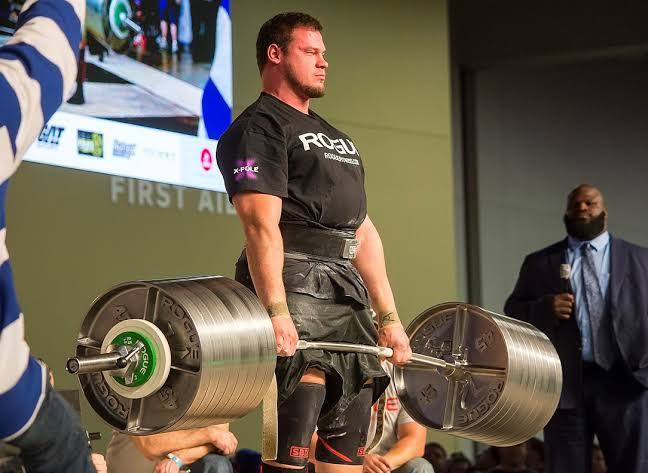
The archival record gives objective scale to that career. Strongman Archives lists Licis internationally from 2015 through 2026, with 29 international contests and nine international victories, six World’s Strongest Man finals and one WSM title through September 2026. His record includes four consecutive All-American Strongman Challenge victories from 2015 through 2018, wins at Ultimate Strongman Summermania, Arnold Europe and Arnold USA, Giants Live podiums and, most importantly, the major championships of 2019, 2021 and 2022. The same archive records a 440 kg competition deadlift, a 460 kg 18-inch deadlift, a 200 kg log lift, a 195 kg axle press and a squat of roughly 434 kg. Rogue Fitness separately documents two performances that became closely associated with his public image: a 565 lb Steinborn squat, approximately 256.3 kg, and a 300 lb, approximately 136 kg, one-arm Thor’s Hammer grip lift. None of those numbers alone explains Licis. Together, however, they show why he was so difficult to beat whenever a contest required several different expressions of strength rather than one narrow specialty.
His story also has a transatlantic dimension. Licis was born in Riga, Latvia, on September 28, 1990, and moved to the United States as a young child. Public profiles from Rogue Fitness and Giants Live describe him growing up in Amherst, Massachusetts, while spending summers in Latvia with his grandparents. Across his career he has represented both the United States and Latvia. He won the 2019 World’s Strongest Man under the American flag, competed under the Latvian flag in selected events earlier in his career and returned to explicit Latvian representation at the 2026 World’s Strongest Man. That dual identity is more than an administrative note. It connects the American infrastructure that made his professional career possible with the Latvian family history and stone-lifting experiences that shaped his earliest understanding of physical strength. For an athlete who later created a documentary project devoted to regional strength traditions, those childhood experiences are especially meaningful.
Licis was born into a Latvian family in Riga and moved to the United States at roughly four years of age. The two environments that shaped him could hardly have been more different. Amherst, Massachusetts, offered the structure of American schools, organized sport and later access to weight rooms. Summers in Latvia connected him to a rural setting in which strength was experienced more directly through physical objects and family tradition. His grandfather, Imants Līcis, is described in public biographies as a sculptor and former weightlifter who introduced young Martins to lifting stones on the family property. Natural stones are a revealing first teacher. They have no standardized diameter, no balanced center, no knurling and no guarantee that the best hand position will remain usable once the object leaves the ground. A child learning to move them is learning, even without formal terminology, to search for leverage and adapt to irregular geometry.
Rogue Fitness has noted that Licis began strength training around age eleven, initially with guidance from his father, Kristaps Licis. Biographical accounts also mention bullying during his youth as one reason he became strongly motivated to get physically stronger. That detail is best understood as one part of a larger developmental story rather than as a convenient origin myth. What mattered over time was that training became a form of agency. Long before professional strongman was a realistic career, strength gave Licis a domain in which progress could be measured and controlled. That early relationship may help explain the technical curiosity visible throughout his later career. He rarely approached strength as a single number on a bar. Instead, he seemed interested in how the body could solve different mechanical problems: squatting, carrying, pulling, gripping, shouldering stones and stabilizing awkward objects.
His athletic background was broader than lifting. Licis wrestled in school, developing balance, body awareness and the ability to produce force against another person rather than against a fixed implement. Those qualities later transferred naturally into Mas-Wrestling, a traditional strength sport in which two seated opponents pull on the same stick with their feet braced against a board. Giants Live records that Licis won the Mas-Wrestling Open World Championships in 2016. The discipline may look very different from a World’s Strongest Man final, but the physical transfer is obvious: grip endurance, posterior-chain strength, trunk rigidity, positional adjustment and the ability to respond instantly to changing force. It is one of the clearest examples of why Licis developed into a strongman whose strength seemed usable rather than merely measurable.
A decisive step came around 2010, when Licis moved to California and entered the training environment surrounding Odd Haugen. Haugen was already a veteran strength athlete, promoter and important link between American strongman and Mas-Wrestling. Giants Live describes him as Licis’s mentor, while Rogue Fitness has also credited coach Scott Brengel as part of Licis’s development. Training around Haugen, in environments associated at different times with The Training Hall and Team Valhalla, exposed Licis to a practical education that could not be gained from barbells alone. He learned logs, stones, yokes, frames, pulling events and the countless small adjustments required by equipment that behaves differently from one contest to another. Strongman is partly a sport of strength and partly a sport of solving objects under time pressure. Haugen’s environment taught both.
This period helped produce the characteristic that would define Licis at his best: efficiency. At approximately 1.91 meters tall and generally in the 150–160 kg range during elite competition, he was enormous by ordinary standards but not unusually massive within open strongman. He repeatedly faced rivals who weighed well over 180 kg. Licis compensated by wasting less movement. In stone events, his lap-to-extension transition was compact. In loading races he tended to choose short, direct footwork. In pushing and rotational events such as the Wheel of Pain, he understood body angle and rhythm. In grip events he combined strong hands with intelligent shoulder and torso positioning. Efficiency does not appear on a personal-record board, but over five or six events it becomes points. That principle would eventually define his 2019 World’s Strongest Man victory.
California also helped Licis develop a public identity that differed from the stern archetype traditionally associated with strength sports. “The Dragon” became his nickname, and his humor, expressive personality and willingness to show imperfect training sessions made him a natural fit for long-form online content. Working closely with filmmaker and collaborator Romark Weiss, Licis eventually built a YouTube presence that showed not only successful lifts but also failed attempts, rehabilitation, travel and the less glamorous mechanics of preparation. This mattered because his generation reached the elite just as YouTube and Instagram were changing the relationship between strongmen and their audience. Athletes no longer needed to appear only in annual television broadcasts. Licis could remain visible during an injury cycle, explain adjustments in training and allow viewers to understand the person behind the competition results.
Strongman Archives uses 2015 as the beginning of Licis’s international competitive record, and the season already showed the range that would become his trademark. At the All-American Strongman Challenge in Los Angeles he finished first in a 17-man field. Event results included wins in Natural Stones and Front Squat, third place in the Fishing Pole Deadlift, third in Mas-Wrestling and second in the Dumbbell Press. Later that year he placed third at the Giants Live Viking Challenge in Iceland, winning the stone-over-bar and truck-pull events, and finished second at America’s Strongest Man. Those results mattered because they came in different formats. Licis was not merely dominating a familiar local contest. He was transferring his skill set into international events and immediately collecting podiums.
In 2016 he won the All-American Strongman Challenge again and earned a route to World’s Strongest Man. His WSM debut in Botswana was unusually mature. Licis advanced through the qualifying group and finished sixth in the final. In qualification he won the Atlas Stones, squat lift and loading race, while in the final he remained competitive in the frame carry and stones. A first WSM appearance can overwhelm even very strong athletes because the contest adds unfamiliar equipment, television pacing, multiple days of competition and the psychological pressure of a field filled with established champions. Licis instead looked immediately capable of solving the format. He closed the season with second place at the Bill Kazmaier Strongman Classic and also recorded his high-level Mas-Wrestling success during the same period.
The first two professional seasons established the architecture of the career that followed. Licis did not require years simply to become comfortable at the international level. By 2015 he had podiumed at a Giants Live event; by 2016 he was already a WSM finalist. More importantly, his scoring did not depend on one exceptional lift. He had enough deadlift to avoid catastrophic point losses, strong enough overhead to remain competitive, excellent squatting, elite stone ability and the mobility required for moving events. In a cumulative scoring sport, an athlete with very few obvious weaknesses can be more dangerous than one who is unbeatable in a single discipline but vulnerable elsewhere. Licis had begun building precisely that profile.
In 2017 Licis appeared at the Arnold Strongman Classic in Columbus and finished eighth. The placing itself was modest, but the context was important. The Arnold of that period leaned heavily toward extreme static strength, with athletes such as Brian Shaw, Hafþór Björnsson, Jerry Pritchett and Mateusz Kieliszkowski at the front of the field. Licis pulled 410 kg on the Elephant Bar and gained experience with events including the bale tote, timber carry and Austrian Oak. A few months later, at World’s Strongest Man in Botswana, his progress was unmistakable. He finished fourth in the final, placing second in both the squat lift and Atlas Stones. Soon afterward he won Ultimate Strongman Summermania in England, including event wins in the deadlift and stones. Sixth at WSM had not been an early ceiling; it had been the beginning of a rapid climb.
The 2018 season was even denser. Licis placed third at Arnold Australia and won the squat event. At World’s Strongest Man in Manila he finished fourth again, including second place in the max overhead event at 200 kg and second in Atlas Stones. He repeated as Summermania champion, then finished second at the Festival des Hommes Forts de Warwick after winning events such as Hercules Hold, squat and truck pull. At the Giants Live World Tour Finals in Manchester he was runner-up again, winning the deadlift and pressing 195 kg on the axle. In September he won Arnold Europe with three event victories, including arm-over-arm pull, deadlift and frame carry, while placing second in the log. At World’s Ultimate Strongman Dubai he finished seventh overall but pulled 460 kg from 18 inches, one of the largest competition deadlifts of his career.
During the same period, Licis helped bring the Steinborn squat back into mainstream strength-sport attention. The lift begins with the bar standing vertically on one end. The athlete rocks it across the shoulders, settles under the load, performs the squat and then returns the bar under control. At the 2018 Arnold Classic, Licis exceeded the historical mark associated with Milo Steinborn with a 560 lb performance. At Rogue Record Breakers in 2019 he improved to 565 lb, approximately 256.3 kg. The lift was almost a perfect symbol for his athletic identity. It required hip and ankle mobility, trunk stability, precise timing and confidence under a load positioned in a way that most lifters would never attempt. In a sport often portrayed as frontal brute force, the Steinborn squat showed that Licis could produce elite strength in unusually complex positions.
The opening months of 2019 showed that Licis had moved beyond the category of athlete who might reach a major podium. He had become a direct threat to win. In January he took first place at Arnold USA in Santa Monica, combining wins in stone-to-shoulder and the sack carry with strong results in the deadlift and truck pull. Several weeks later he finished second at the Arnold Strongman Classic in Columbus, only 4.5 points behind Hafþór Júlíus Björnsson. The significance of the result was larger than the placing. Licis pulled 440 kg on the Elephant Bar, won the Wheel of Pain, won the Austrian Oak and placed second in Stone to Shoulder. Rogue Fitness later described the performance as an important confidence shift. Björnsson was the reigning World’s Strongest Man and one of the most dominant athletes in the sport, yet Licis had stayed close enough over a brutally heavy contest to understand that the gap was no longer theoretical. After consecutive fourth-place WSM finishes, he entered the summer with a legitimate championship case.
The 2019 World’s Strongest Man in Bradenton, Florida, rewarded exactly the kind of completeness Licis had spent years developing. In his qualifying group he won the log lift, car deadlift and giant’s medley and finished second in the truck pull, securing passage to the final without a last-event crisis. The final then became one of the clearest demonstrations of cumulative scoring in modern WSM history. Licis placed third in the loading race, second in the overhead medley, first in the squat lift with nine repetitions, second in the deadlift hold and first in Atlas Stones. He did not finish outside the top three in a single final event. In a points system, that pattern is devastating. Even when an opponent wins, only a small number of points can be gained on an athlete who is immediately behind. When Licis wins himself, the gap widens without exposing any compensating weakness.
The final standings made the scale of the performance clear. Licis became the 2019 World’s Strongest Man ahead of Mateusz Kieliszkowski and Björnsson. Giants Live records an eight-point margin over Kieliszkowski and nine over Björnsson, a substantial advantage in a final of that quality. The visual image of the championship was his Atlas Stones victory, but the title had been built event by event. Licis did not require a miracle in the last discipline because he had already protected himself from point losses across the entire final. For observers who had followed him since 2016, the championship was therefore not an inexplicable breakthrough. It was the logical conclusion of sixth, fourth and fourth at WSM, combined with runner-up at the Arnold only months earlier.
Licis continued the season with third place at Giants Live Wembley, where he won the Atlas Stones and placed second in Hercules Hold. His profile outside the competition floor also expanded rapidly. Rogue announced him as a sponsored athlete, while his YouTube presence and collaboration with Romark Weiss gave fans a more direct view of his training and personality than traditional television coverage could provide. The timing was significant. Strongman was moving into a social-media era in which athletes could build audiences independent of a single annual broadcast. Licis became both a world champion and a highly visible content creator. That second identity would prove valuable when injuries later removed him from competition but not from the public conversation around the sport.
The beginning of 2020 did not look like the start of a long absence. Licis won Arnold USA again and placed third at the Arnold Strongman Classic behind Björnsson and Kieliszkowski. He was second in the Wheel of Pain and third in the Timber Carry, remaining exactly the kind of athlete who was difficult to remove from the top of a score sheet. Yet the accumulated cost of several dense competitive seasons had become increasingly visible. Nerve and joint issues were affecting preparation, and later in 2020 Licis was struck by a car while riding his bicycle, an incident noted in the Giants Live profile of his career. The collision was not the only reason he disappeared from major contests, but it added another physical problem to an already complicated rehabilitation picture.
For an elite strongman, recovery cannot be defined simply as being pain free in daily life. The body has to regain tolerance for enormous compression, pulling forces, overhead instability, maximal bracing and the unpredictable loading created by awkward objects. A shoulder that feels acceptable under ordinary resistance may react differently to a 200 kg log. A back that tolerates walking may not tolerate a 400 kg deadlift. A knee that feels stable in a controlled squat may behave differently during a yoke run or stone series. Licis missed the 2020 and 2021 World’s Strongest Man contests, enough time for the competitive landscape to change dramatically. Oleksii Novikov became world champion in 2020, Tom Stoltman in 2021, and younger athletes gained experience that Licis could not reproduce in training alone.
Rogue Fitness later described his 2021 return as the culmination of roughly two years of rehabilitation. Licis documented much of that process publicly, discussing recovery, treatment and the need to modify training. Giants Live has also noted that he underwent stem-cell treatment in Colombia during this period. A responsible account should distinguish between documenting an athlete’s personal treatment history and making a medical claim about efficacy. Public sports sources establish that Licis pursued the intervention; they do not by themselves establish how much it contributed to his recovery. What the competition record does establish is that by late 2021 he had rebuilt enough strength, movement capacity and confidence to defeat one of the deepest fields assembled that year.
The rehabilitation period also changed the meaning of his career. The 2019 champion had been defined by upward momentum. The athlete who reappeared in 2021 was defined by reconstruction. That distinction matters. An athlete in a continuous rise can imagine progress as something close to linear; an athlete returning from injuries learns that every heavy block is a negotiation with tissue tolerance, nerve symptoms and the calendar. Licis would need that knowledge again after further setbacks in 2022 and 2024. From this point onward his career would no longer be a continuous sequence of contests. It would become a series of carefully created performance windows separated by rehabilitation, business projects and media work.
The 2021 Rogue Invitational at Dell Diamond in Round Rock, Texas, introduced a strongman competition to an event already established in strength sports. The field was exceptional. Tom Stoltman arrived as the reigning World’s Strongest Man, Oleksii Novikov had won WSM in 2020, Brian Shaw was a four-time world champion, and Mateusz Kieliszkowski was himself returning from physical problems. For Licis, the contest was his first complete elite test after the long absence. Rogue’s own coverage acknowledged the obvious question: could the 2019 world champion still perform at the level required to beat the athletes who had moved to the front of the sport while he recovered? The answer came through the same quality that had defined his WSM title, relentless consistency.
Licis pulled 411 kg on the Elephant Bar deadlift for third place, finished second on the Cyr Dumbbell Ladder, second on the Wheel of Pain and second in the yoke-and-log medley. Entering the final event, the Inver Stones, Tom Stoltman remained a major threat because stone loading is one of the Scotsman’s defining strengths. Licis responded with one of the fastest and most decisive runs of the weekend, loading all five stones in 23.53 seconds and winning the event. He finished the contest with 45 points, ahead of Stoltman on 42 and Novikov on 34. Rogue framed the win as the conclusion of a two-year rehabilitation journey, and the description accurately captures its significance. This was not simply another trophy added to an already successful résumé. It demonstrated that the competitive version of Licis from 2019 could be rebuilt after serious interruption.
The following day, Licis entered the Rogue Record Breakers Thor’s Hammer challenge. The event required a one-arm grip lift using progressively heavier hammer-shaped implements with a vertical handle and an unforgiving center of mass. After five full strongman events and the emotional load of winning the overall title, Licis lifted 300 lb, approximately 136 kg, to set the record. The performance is especially useful in understanding his versatility. Within the same weekend he moved from a deadlift over 400 kg to overhead work, a massive rotational pushing event, a moving medley, stones and then a highly specialized maximal grip challenge. Few competition formats reveal the breadth of a strongman’s physical toolkit so clearly.
Rogue 2021 fundamentally changed how Licis was positioned within the era. Before the contest he could reasonably be described as a former world champion attempting a comeback. After it, he was once again a direct contender for every major title. The victory also mattered because the Rogue Invitational rapidly became one of strongman’s most prestigious and financially significant events. Winning the inaugural edition attached Licis’s name permanently to the competition’s history. With WSM and Rogue now on his résumé, the obvious remaining target among the era’s flagship titles was the Arnold Strongman Classic.
The 2022 Arnold Strongman Classic became one of the defining contests of Licis’s career. The event returned after its 2021 interruption with a field that included Oleksii Novikov, Tom and Luke Stoltman, Jean-François Caron, Rob Kearney, Bobby Thompson, Trey Mitchell and Maxime Boudreault. The five-event format was heavy enough to reward extreme static strength but varied enough to punish an athlete who was only a specialist. Licis began with approximately 434 kg on the Double T Squat for third place. He followed with three repetitions in the dumbbell event and a 200 kg maximum log. On the Timber Carry he placed second. Entering the final Stone to Shoulder, he was in position to win the competition but still needed a strong execution rather than a conservative finish.
Stone to Shoulder became the decisive image of the contest. The scoring system assigned values to progressively more difficult stones, and Licis achieved the top result of the event. He finished with 41 points, ahead of Novikov on 37.5, and finally captured the Arnold Strongman Classic after runner-up in 2019 and third place in 2020. Historically, the title mattered enormously. It placed Licis among the small group of athletes who have won both World’s Strongest Man and the Arnold Strongman Classic, two championships that traditionally emphasize somewhat different expressions of strength. WSM often includes more movement and multi-day adaptation; the Arnold has frequently leaned toward extremely heavy static and carrying events. Winning both is evidence of exceptional range.
In May 2022 Licis returned to World’s Strongest Man for the first time since winning it in 2019. He moved through qualification convincingly, winning the loading race and deadlift ladder and placing second in the car walk and log lift. The final was strong even if it was not the near-perfect scoring performance of 2019. He finished fifth in the giant’s medley, fourth in the car deadlift, third in the Flintstone Barbell, second in the bus pull, third on the Power Stairs and fifth in Atlas Stones. The overall result was second place behind Tom Stoltman, with the tie against Oleksii Novikov resolved by the contest’s tiebreak procedure. The performance demonstrated that Arnold had not been a single favorable weekend. Licis could again handle WSM qualification, recovery between days and a completely different set of events.
At the 2022 Rogue Invitational, where he attempted to defend his title, Licis finished fourth. He placed third in the deadlift, third on the Cyr Dumbbell Ladder and won the spectacular Rogue-a-Coaster, but a biceps issue affected the remainder of the contest. Even compromised, fourth place in such a field showed the strength of his competitive baseline. The injury also reinforced the cost of maintaining a dense elite calendar after a major comeback. Following Rogue, Licis increasingly chose recovery and longer-term projects over simply entering every available event. The 2022 season therefore stands as both a second competitive peak and the point at which career management became impossible to separate from performance.
Licis did not compete in 2023, and the absence coincided with a broader professional shift. Together with Romark Weiss, he expanded Strength Unknown, a documentary project built around the idea of exploring regional, traditional and less familiar expressions of physical strength around the world. Episodes and travel material examined strength cultures in locations including Latvia, Lithuania, Norway, the Basque Country, Georgia, Mongolia, Japan and Polynesian communities, among others. The project fits Licis unusually well because it extends a curiosity that can be traced back to childhood. Strength does not exist only on calibrated equipment. It can be expressed through a stone, a local wrestling style, a ceremonial object, a rural labor tradition or a community challenge. For a World’s Strongest Man champion, turning that idea into an ongoing documentary series added a cultural dimension to his public work.
At the same time, Wreck-It Gym in El Segundo, California, became his primary training base and an important business project. Public information from the gym presents it as the training home of Martins Licis, with an emphasis on strength and functional fitness rather than only elite strongman. A dedicated facility offers obvious advantages to a professional strongman: permanent access to implements, the ability to alter or fabricate equipment, space for filming and control over training times. Wreck-It also became a setting for content, collaboration and community. By this phase of his career, Licis was operating in three overlapping professional roles: athlete, media creator and strength-industry entrepreneur.
His return at the 2024 Arnold Strongman Classic did not produce the result he wanted. Licis finished eighth in an 11-man field. He was fourth on the Apollon’s Wheels and fourth in the Timber Carry, but the overall contest never developed into a podium challenge. Soon afterward, before the 2024 World’s Strongest Man, he withdrew because of sciatica affecting his right leg. BarBend reported that Licis planned an extended break from competition, initially framed at roughly eight months, to reduce long-term risk and recover properly. The decision revealed the changed priorities of a veteran athlete. Earlier in a career, competitors often feel pressure to compete through pain. After several rehabilitation cycles, Licis had strong reasons to value future function over one additional appearance.
The break ultimately extended well beyond eight months, and Licis did not return to the biggest contests in 2025. From the outside, such an absence could easily look like the beginning of retirement, particularly as Mitchell Hooper, Rayno Nel, Ondřej Fojtů, Austin Andrade and other athletes accelerated the sport’s generational turnover. Licis nevertheless continued training and documenting progress. When he finally returned in 2026, the relevant question was no longer whether he could reproduce the exact physical version of himself from 2019. It was whether experience, technique and event intelligence could compensate for age, accumulated injuries and a field that had moved forward. His results answered that question far more strongly than a ceremonial comeback would have.
The 2026 Arnold Strongman Classic marked Martins Licis’s return to a major championship after roughly two years without consistent elite competition. The context was very different from the Arnold he had won in 2022. Mitchell Hooper had become the dominant benchmark of the circuit, Austin Andrade was established among the strongest new contenders, Trey Mitchell had made his own return from injury, and a new group of athletes had raised the standard in both static and moving events. Licis, at 35, was the oldest athlete in the nine-man field. Under those conditions, a podium could not be treated as routine. He deadlifted 411 kg on the Elephant Bar for seventh place and handled a 113 kg dumbbell for another seventh. He then shifted the contest with second place in Stone to Shoulder, a win in Carry & Drag, two repetitions with the 195 kg Austrian Oak and third place in the Loading Race. With 34 points he finished third overall behind Hooper and Andrade. The scorecard looked characteristically Licis: not the largest number in every static event, but very difficult to outscore once movement, stones and technical execution entered the contest.
At the 2026 World’s Strongest Man in Myrtle Beach, Licis competed under the Latvian flag and immediately showed why experience remains dangerous in a qualifying format. He won the truck pull and squat lift in his group, producing 14 repetitions in the squat, and placed second in both the overhead medley and stone medley. Carry & Climb was his one weak event, but the points accumulated elsewhere were sufficient to send him to another WSM final. The achievement was meaningful in itself. Licis had not appeared in the WSM final since 2022, had withdrawn before the 2024 contest because of sciatica and had spent 2025 away from the major stage. In the final he finished seventh in the Monster Box Flip & Carry, completed three repetitions with the 400 kg option in the deadlift, lifted 191 kg in the max log and remained competitive through the throwing and moving events. He closed with third place in Atlas Stones and finished sixth overall with 30.5 points.
Sixth place in 2026 should not be evaluated as though it were a failed attempt to repeat 2019. The competitive meaning was different. In 2019 Licis was 28 years old, had competed continuously for several seasons and was entering his physical prime. In 2026 he was returning after sciatica, a competition-light period and multiple previous rehabilitation cycles. The sport had also changed. Loads had increased in many events, transitions had become faster and the depth of internationally experienced athletes was greater. Winning two qualifying events and finishing in the upper half of the final demonstrated that the mechanisms that once made him champion still worked: high-repetition squatting, pulling events, stones and the ability to extract points from technical disciplines.
In July 2026 Licis also returned to the Giants Live stage at the Strongman Classic in London’s Royal Albert Hall, his first Giants Live appearance since 2019. He finished fifth of 12 with 37.5 points. He was third in the axle deadlift with seven repetitions, seventh in Conan’s Wheel, seventh in the Webster Stones and eighth in the overhead medley. The final Atlas Stones provided another recognizably Licis moment: he loaded all five in 22.29 seconds and finished second, only 0.08 seconds behind Paddy Haynes. Giants Live described the performance as solid across all five events and highlighted the comeback as one of the notable stories of the season. By September 2026, a podium at Arnold, another WSM final and a top-five Giants Live finish made his status clear. Licis was not participating as a retired legend making exhibitions; he was again an active elite strongman.
Strongman Archives currently lists Licis at approximately 1.91 meters and 154 kg, while Giants Live and other official profiles have at different times listed competition weights closer to 160–161 kg. Strongmen routinely change body mass across preparation blocks, so any single figure should be treated as a reference rather than a permanent measurement. Biomechanically, Licis occupies an interesting range. He is tall and heavy enough to generate world-class force but was rarely the largest man in an elite field. That allowed him to combine static strength with a degree of movement quality that became particularly valuable in loading, carries and rotational events. He was not always the fastest athlete in the contest and did not own the era’s largest deadlift, but the relationship between strength, mobility and technical precision was exceptional.
The squat may be the clearest single expression of his physical profile. Licis placed second in the WSM squat in 2017 with 13 repetitions, won the squat at Arnold Australia in 2018, won the 2019 WSM final squat with nine repetitions and handled approximately 434 kg in the Double T Squat at the 2022 Arnold. In 2026, after the long break, he returned to win the WSM qualifying squat with 14 repetitions. Add the Steinborn squat and the pattern becomes even more revealing. These performances require more than powerful quadriceps. They demand hip and ankle range, trunk control, breathing under enormous pressure and the ability to preserve movement quality as fatigue accumulates. The continuity of those results across nearly a decade is one of the strongest indicators of his athletic durability.
Stone events show a similar combination of physical and technical qualities. Licis won Atlas Stones in the 2019 WSM final, Inver Stones at the 2021 Rogue Invitational and Stone to Shoulder at the 2022 Arnold, then remained one of the strongest stone performers during his 2026 return. Raw pulling power is essential, but elite stone loading is often decided in the transitions: how quickly the hands move underneath the object, how efficiently the stone is lapped, whether the athlete wastes a step before extension and how precisely body height is matched to the platform. Licis has often made those phases look simpler than they are. The same problem-solving ability transfers to natural stones, where irregular surfaces eliminate the consistency available from a standardized Atlas Stone.
His deadlift was strong enough to support the entire competitive package even though it did not define the absolute record frontier of his era. A 440 kg standard competition pull and 460 kg from 18 inches are elite numbers. In 2026, at 35 and after extended interruptions, three repetitions with 400 kg at WSM showed that his static base remained formidable. Overhead strength followed a similar pattern: a 195 kg axle in 2018, 200 kg in a WSM max overhead event, a 200 kg log at the 2022 Arnold and two repetitions with a 195 kg Austrian Oak in 2026. Against dedicated overhead specialists, Licis did not always win, but he usually scored enough points that his advantages in squatting, stones and movement could decide the contest.
Training footage published by Licis and sessions documented by Rogue and other strength media reveal an approach that is broader than the stereotype of simply lifting maximal weights every day. Competition preparation includes the expected heavy squats, pulls and presses, but it also includes extensive event practice, mobility work, positional drills and recovery-oriented sessions. Licis became known online for unusual hip, shoulder and spinal mobility exercises and for discussing the practical need to reach difficult positions under load. The Steinborn squat is the most dramatic example, but the philosophy appears everywhere in his training. Mobility is not treated as decorative flexibility. It is used to increase the number of positions from which strength can be applied safely and efficiently.
Event sequencing is another important feature. A yoke performed alone is not the same problem as a yoke performed after a heavy loading implement or immediately before a drag. Heart rate, local fatigue, breathing and foot speed are completely different. Licis and his training partners have frequently practiced implements in combinations that resemble the likely contest sequence. That helps explain his efficiency in giant medleys, loading races and carry-drag combinations. When rules allow strategic choices, experience becomes another strength quality. Selecting a deadlift weight, deciding how aggressively to attack the first implement or judging whether an extra repetition is worth the fatigue can change a championship without changing anyone’s theoretical one-repetition maximum.
Odd Haugen’s influence fits naturally with that approach. Haugen has competed and promoted strength sports at ages far beyond the usual elite window, and his training culture emphasizes technical variety and continuity. Licis absorbed that mindset and added his own interest in experimentation and rehabilitation. Not every recovery intervention used by an individual elite athlete should be turned into a universal recommendation, especially when medical treatments are involved. The training principle, however, is clear and well documented: the body should remain capable of producing force across many angles and implements, not merely of demonstrating a maximal barbell number under ideal conditions.
Injury cycles eventually added a further layer to his programming. After 2020 Licis had to learn the difference between training that builds capacity and training that merely proves what capacity exists on a particular day. Elite strength athletes are constantly tempted to test themselves with loads heavy enough to confirm progress. After nerve symptoms, the cycling accident, a biceps issue and sciatica, the frequency of those tests became a career-management question. His 2026 return suggests a preparation model in which arriving functional at the contest mattered more than producing spectacular gym numbers beforehand. The Arnold podium itself demonstrated the value of that shift. Licis did not need the largest deadlift or dumbbell in the field to finish third overall.
Reliable public sources provide considerably more information about Licis’s family as an influence on his early athletic life than about his current private relationships. His father Kristaps appears in Rogue’s biographical material as one of the first people to guide his strength training, while his grandfather Imants is associated with the stone-lifting experiences of his Latvian summers. Those details are relevant because they connect directly to the athlete he became. By contrast, contemporary intimate family details are either sparsely documented or inconsistently reported. A professional biography should not fill those gaps with speculation. What is well documented is his long working friendship with Romark Weiss, the filmmaker and collaborator who became central to Licis’s vlogs, training documentation and Strength Unknown.
Licis was among the strongmen who understood early that long-form online video could provide something television could not. His YouTube channel, active since the late 2000s, grew into a major platform with hundreds of thousands of subscribers and tens of millions of views. The videos brought viewers inside training blocks, injury setbacks, travel, rehabilitation and the ordinary interactions surrounding elite strength. Importantly, the content often retained failed lifts and changed plans rather than presenting an uninterrupted highlight reel. For athletes and fans, that transparency had educational value. It showed that elite preparation is not linear and that a world champion can have sessions where the programmed weight simply does not move as expected. Licis’s energetic and self-aware style also made him recognizable beyond the narrow audience that follows competition results.
Mainstream media appearances expanded that reach. Giants Live notes appearances on American television programs such as Game On! and To Tell the Truth, and Licis also appeared in commercial campaigns that used his World’s Strongest Man status for humor and spectacle. These appearances matter for a niche sport because they create entry points for audiences who may never watch a full WSM broadcast. Strongman depends heavily on the contrast between recognizable everyday objects and extraordinary human strength. Licis’s combination of size, humor and comfort on camera made him particularly effective in that environment.
Strength Unknown took his media work in a more ambitious direction. The series is not simply a travel vlog. Its organizing question is how different cultures understand, test and celebrate physical strength. For Licis, the subject is almost an intellectual extension of strongman itself. Modern strongman was built by combining unrelated challenges, from stone lifting and vehicle pulling to overhead pressing and carrying. Traveling to document traditional stones, wrestling systems and local strength customs places the sport inside a much longer human history. It also mirrors Licis’s own background. The child who first lifted irregular stones in Latvia eventually became a world champion who returned to different communities asking how they had solved the same basic problem: what does it mean to be strong here?
A strongman career cannot be evaluated only by counting World’s Strongest Man titles. Some athletes are defined by longevity, some by records, some by several seasons of overwhelming dominance and others by breadth across different championships. Licis combines several of those categories. He owns a World’s Strongest Man title, an Arnold Strongman Classic title and a Rogue Invitational title, three championships that represent distinct peaks of modern professional strongman. He has also finished second at WSM, second and third at the Arnold, won Arnold World Series events and reached Giants Live podiums. More importantly, those results were achieved in different competitive cycles against different groups of elite opponents.
Stylistically, his legacy is the legacy of the complete strongman. If one contest had to explain Licis, the 2019 WSM final would be the obvious choice: no finish lower than third, wins in the squat and stones, enough overhead and grip to prevent anyone from opening a major scoring gap. If one lift had to represent his technical personality, the Steinborn squat would be ideal. If one moment had to represent resilience, the 2021 Rogue Invitational would be the answer. And if one result illustrates longevity, third place at the 2026 Arnold after years of interrupted preparation provides an unusually strong late-career reference point.
As of the September 2026 update of this profile, Martins Licis is not retired. He competed in three significant settings during the year: the Arnold Strongman Classic, World’s Strongest Man and the Giants Live Strongman Classic. Strongman Archives lists him as active in 2026, and the results confirm that he remains capable of elite placings. The future will inevitably depend on health and selective scheduling. His recent history suggests that selection will be cautious. Licis no longer needs to prove that he belongs in the historical elite. The open question is how far he can extend a career already defined by repeated reinvention without recreating the physical costs that fragmented the years after his world title.
This biography was assembled by cross-checking official sources and specialist archives. Strongman Archives, Martins Licis athlete profile, https://strongmanarchives.com/viewAthlete.php?id=174, was used as the principal source for competition chronology, placements and competition personal records. World’s Strongest Man results were checked against the official WSM results archive and current competition pages at https://www.theworldsstrongestman.com/results/. Arnold Strongman Classic results were compared with Arnold Sports Festival records and official event materials. Rogue Fitness coverage was used for the 2021 Rogue Invitational victory, the Steinborn squat and Thor’s Hammer record-breaker performance.
For early life and athletic development, the Rogue Fitness and Giants Live profiles were compared for the Riga birthplace, the move to Massachusetts, the influence of his father and grandfather, the later move to California, the mentorship of Odd Haugen and the role of Mas-Wrestling. Giants Live was also used for the 2020 cycling accident and his history within its circuit. BarBend reporting from April 2024 was checked for the sciatica that led to his withdrawal from the 2024 World’s Strongest Man. For the 2026 comeback, results were cross-checked through Arnold Sports Festival, Strongman Archives, World’s Strongest Man and Giants Live.
For media work and projects outside competition, the official Martins Licis YouTube channel, public Wreck-It Gym information, Giants Live profiles and public interviews were consulted. Private-life details have been included only where they are sufficiently documented and relevant to the sporting biography. Current intimate relationships or family information have not been inferred from fragmentary sources. Bodyweight figures vary by source, so the structured profile uses the current Strongman Archives value of 154 kg while noting that other official profiles have listed weights closer to 161 kg. The Steinborn figure is recorded as 565 lb, approximately 256.3 kg, although some secondary profiles round it to 257 kg. Where sources differ only because of conversion or rounding, the distinction is made explicit rather than hidden.
One of the most useful keys to understanding Martins Licis is that his athletic development never took place inside a single strength discipline. Modern strongman rewards specialization in individual events, but it also punishes athletes who cannot transfer force between different objects, angles and rhythms. Licis entered the sport with experience in wrestling and later became seriously involved in Mas-Wrestling, the traditional strength sport from Yakutia in which two seated opponents pull on the same stick with their feet braced against a board. From a distance the contest can look simple. In practice it demands integrated grip strength, back and biceps strength, hip drive, leg pressure and continuous tactical adjustment as the opponent changes position. For a strongman, those qualities transfer naturally to arm-over-arm pulls, Hercules Hold, truck pulling, carrying events and awkward-object manipulation. Giants Live records Licis as the winner of the 2016 Mas-Wrestling Open World Championships, demonstrating that this was not casual cross-training but high-level competition.
The transfer was especially visible in grip events. In a Hercules Hold, the athlete is not merely squeezing handles. The shoulders, upper back, trunk and lower body must all create a stable structure while the implements try to pull the arms apart. Small changes in posture can alter how much load reaches the hands. Licis repeatedly scored well in this family of events, but the clearest maximal measurement came at Rogue Record Breakers in 2021. One day after winning the Rogue Invitational, he lifted a 300 lb, approximately 136 kg, Thor’s Hammer implement with one hand. The vertical handle and offset center of mass made the challenge very different from simply deadlifting 136 kg from the floor. The geometry dramatically increased the demand on the fingers, wrist, forearm and the stabilizing chain above them. It was a specialized grip record achieved immediately after a complete elite strongman contest.
Mas-Wrestling also trained a tactical sensitivity that is difficult to quantify. Against a human opponent, force is never perfectly predictable. The athlete must recognize when the other person changes angle, loses balance or creates a new line of pull. Strongman implements behave in a similar mechanical way. A sandbag can slip, a natural stone can rotate, a frame can begin to swing and a yoke can oscillate after the first few steps. Very strong athletes sometimes lose entire events not because they lack physical capacity but because a small instability becomes a larger error. Licis built the opposite reputation. He adjusts quickly, usually prevents a bad first movement from becoming a failed run and uses compact corrections to recover control. That kind of motor intelligence rarely appears on a list of records, but it appears repeatedly in overall standings.
Natural stones form another bridge between disciplines and between different periods of his life. Childhood contact with stones on his grandparents’ property in Latvia came long before standardized Atlas Stones became part of his professional identity. Later, Stone to Shoulder and the Inver Stones became events in which he produced championship-deciding performances. A natural stone forces the athlete to identify a useful grip, balance point and lifting path in seconds. There is no guarantee that the object will behave the same way twice. The same fascination appears in Strength Unknown, where Licis seeks out traditional lifting objects and local strength customs rather than limiting the idea of strength to calibrated gym equipment. The documentary project therefore does not represent a new interest that appeared after his championship years. It extends a curiosity that was already embedded in his athletic development.
This broad background is why labels such as “stone specialist” or “great squatter” are accurate but incomplete. Squatting gave Licis exceptional leg and trunk strength. Mas-Wrestling and grip work developed force transfer through the hands and torso. Wrestling added balance and body control. Carry events demanded that force be converted into movement. Overhead events required coordination and stability. Stone loading combined almost all of those qualities at once. At his competitive peak, the result was an athlete capable of entering a six-event contest without an obvious family of events in which rivals could reliably take a large number of points from him. The 2019 World’s Strongest Man final remains the purest statistical expression of that complete system.
The historical value of a strongman career is inseparable from the field in which it was built. Licis entered the international elite during an unusually dense transition between generations. Brian Shaw, already a multiple World’s Strongest Man champion, was still capable of winning the biggest contests. Hafþór Júlíus Björnsson was moving toward the most complete version of his career, combining extraordinary size with world-class deadlifting and increasingly refined movement. Žydrūnas Savickas, the defining Arnold athlete of the previous era, remained part of the sport’s landscape even as his peak years were ending. Mateusz Kieliszkowski was becoming one of the most explosive and technically gifted competitors in the world. Against that background, fourth place at WSM in both 2017 and 2018 was not a period of stagnation. It meant remaining immediately behind several of the strongest athletes the sport had produced.
The competitive relationship with Björnsson is especially important in understanding 2019. Björnsson entered the year as the reigning World’s Strongest Man and had developed a remarkable combination of body mass, deadlift strength, overhead power and movement ability. At the 2019 Arnold Strongman Classic, Licis finished second to him. Instead of reading the result as evidence that the champion was unreachable, Licis interpreted the relatively small gap as proof that he could challenge him over a different set of events. Several months later in Florida, the order reversed. Björnsson was also managing a foot injury during WSM, but reducing Licis’s championship to a rival’s physical problem would misrepresent the contest. Licis won by a clear margin and did so without a single final placing outside the top three. The title was created by his own scoring consistency, not by one opponent’s misfortune.
Mateusz Kieliszkowski offered a fascinating stylistic contrast. The Polish athlete was exceptionally explosive, brilliant in specialized overhead events, carries and stones, but his deadlift could create a scoring vulnerability. Licis was more balanced. At WSM 2019, Kieliszkowski finished second, and the difference between them demonstrated the logic of cumulative scoring. Spectacular event wins can be neutralized by a large loss elsewhere. Licis’s strength was that opponents rarely received such an opportunity. Both men were technical athletes, but they expressed that technicality differently: Kieliszkowski through speed and explosiveness, Licis through efficiency and a narrower spread between his best and worst events. Their presence in the same era broadened the public understanding of what elite strongman athleticism could look like.
During Licis’s first long absence, the center of the sport shifted toward Tom Stoltman and Oleksii Novikov. Stoltman developed from an extraordinary stone specialist into a far more complete champion, while Novikov showed how speed, technique and efficiency could allow a comparatively lighter strongman to defeat much larger opponents. In that sense Novikov and Licis share an important competitive principle even though their builds and movement styles differ. The 2021 Rogue Invitational brought several eras together at once: Licis returning from injury, Stoltman as reigning WSM, Novikov as the 2020 champion and Shaw as the four-time veteran. Winning that particular field mattered because Licis did not return into a weakened transition year. He returned into a contest containing multiple established world champions.
By 2026 the challenge had changed again. Mitchell Hooper had entered strongman after Licis’s original championship peak and assembled major titles at exceptional speed, combining static strength, movement and highly precise competition strategy. Austin Andrade, Trey Mitchell and other elite athletes kept raising the standard across heavy events. Licis was no longer the 28-year-old challenger building toward his first world title. He was a 35-year-old veteran returning after sciatica and extended time away. Third place at the 2026 Arnold therefore carried a different historical meaning from his earlier podiums. It did not recreate 2019. It showed that the same underlying skill set could still produce a podium in a sport that had evolved around him. Remaining relevant across three distinct competitive contexts is one of the strongest arguments for the depth of his career.
Elite strongman is a sport of repeated exposure to extreme mechanical stress, and Licis’s career illustrates both what the body can achieve and what that achievement costs. A season is not merely the few minutes seen on a competition floor. Behind each contest are months of heavy deadlifts, squats, presses, carries, stones and event simulations. Implements are often designed to be awkward, and the same muscle groups may be loaded in very different patterns from one event to the next. When an athlete enters multiple circuits in the same year, recovery becomes as important as progressive overload. Licis competed frequently from 2015 through 2019, moving between American contests, Giants Live, Arnold events and WSM. The schedule accelerated his development and produced extraordinary results, but it also accumulated physical wear.
After the 2019 world title, physical problems became a visible part of the story. Public material and Licis’s own content documented nerve and joint issues, while the 2020 cycling collision added an external trauma unrelated to strength training itself. Such an accident cannot be evaluated only by asking whether a bone was broken. For a professional strongman, even a subtle change in shoulder function, spinal tolerance, knee mechanics or nerve symptoms can affect an entire family of events. A compensation that is almost irrelevant in daily life may become significant while stabilizing 200 kg overhead or accelerating under several hundred kilograms. The standard for a successful comeback is therefore far higher than the standard for returning to ordinary activity.
The 2020–2021 break demonstrated the potential value of a genuinely long rebuild. Licis did not return through a lightly contested regional event designed to create confidence. He returned at Rogue against a field containing the reigning and recent world champions. Victory did not prove that every physical problem had permanently disappeared, but it showed that rehabilitation had restored sufficient function across deadlift, overhead, moving events and stones. The 2022 Arnold title and WSM runner-up finish then extended that success across different formats and several months. The biceps issue at the 2022 Rogue Invitational, however, served as another warning. Once an athlete has already won WSM and Arnold, the career question changes. The goal is no longer simply to endure pain long enough to reach the next contest. It is to decide whether that contest is worth the cost imposed on the following years.
The sciatica episode in 2024 made that calculation explicit. Following eighth place at the Arnold Strongman Classic, Licis withdrew before World’s Strongest Man and announced a substantial period away from competition. Sciatica is a symptom description rather than one single diagnosis, and its causes and severity can vary. This profile therefore does not attempt to infer a medical diagnosis beyond what Licis and public reporting documented. The career-relevant fact is that the symptoms were serious enough for a former WSM champion to judge participation in the next major contest an unnecessary risk. In a culture that often celebrates competing through pain, choosing not to start can require as much discipline as completing an event.
The 2026 comeback suggests a longevity model based increasingly on selection. Licis is no longer chasing a dense calendar simply to remain visible. He can choose a small number of high-value events and build preparation around them. That resembles the way mature athletes in other sports target specific peaks, but strongman introduces an extra difficulty: the exact events may be announced late and can change. A veteran therefore needs a broad general base before specializing. Licis’s experience becomes an advantage here. After more than a decade at international level, he has encountered most major event families and can recover technical familiarity more quickly than a newcomer. At 35, that accumulated event memory functions as a form of athletic capital.
Strongman statistics can become misleading when a career is reduced to personal records. A 440 kg deadlift is extraordinary, but Licis competed in an era containing athletes capable of 470, 475 and 500 kg, as well as even larger numbers in elevated or specialized variants. A 200 kg log is elite, but it is not a world record. That is precisely why his championship record is so instructive. The objective of strongman is not to own every individual measurement. It is to maximize points across the entire contest. The 2019 WSM final expresses that principle almost mathematically: five finishes inside the top three, two event victories and no catastrophic loss. In a scoring system where dropping from first to eighth can cost seven points in a single event, avoiding a bad result can be as valuable as adding another win. Licis repeatedly built championships by controlling the floor of his performance, not only by chasing its ceiling.
His World’s Strongest Man chronology reinforces the point. After beginning his international record in 2015, Licis placed sixth in his first WSM final in 2016, fourth in 2017, fourth again in 2018, first in 2019, second on his return in 2022 and sixth in 2026. Every WSM appearance recorded through September 2026 ended in the final. There is no qualifying-round elimination in that six-appearance record. That statistic deserves attention because WSM qualification is notoriously capable of removing athletes who might otherwise belong in a global top ten. Group strength varies, event selection matters and a Stone-Off can reduce several days of work to a direct elimination duel. Licis avoided that outcome every time he actually reached the start line, which is a powerful measure of competitive reliability.
The Arnold record provides another view of the same trait. Licis was eighth in the 2017 Arnold Strongman Classic, then second in 2019, third in 2020, champion in 2022, eighth during the difficult 2024 return and third again in 2026. The Arnold has traditionally emphasized extreme static strength and brutally heavy carries, so the sequence is especially important for an athlete often described primarily in terms of mobility and technique. Technical efficiency should not be confused with insufficient raw strength. A 440 kg Elephant Bar deadlift, a roughly 434 kg squat and a 200 kg log were the numbers required merely to remain relevant in those fields. Licis possessed enough absolute strength to survive the Arnold’s heaviest tests while using movement and event skill to create separation elsewhere.
The nine international victories listed by Strongman Archives through September 2026 are distributed across different levels of the professional sport rather than concentrated in one brief period. They include circuit and qualifying contests, Arnold Europe, World’s Strongest Man, the Rogue Invitational and the Arnold Strongman Classic. The distribution shows progression. More than a decade separates his early international victories from the 2026 Arnold podium that confirmed he was still relevant. Within that decade are several extended absences, which makes the comparison even more interesting. Licis did not accumulate his record through uninterrupted participation. He created multiple distinct peaks. His total contest count is therefore lower than that of some long-running veterans, but the quality of his best finishes and the proportion of elite placements remain exceptional.
The numbers ultimately support the same conclusion visible in competition footage: Licis won through completeness. There is no need to give him records he never held or exaggerate individual lifts. His historical case becomes stronger when described accurately. Some rivals had larger deadlifts. Others had better maximum overhead numbers, faster foot speed or more dominant performances in one specialty. Very few, however, assembled those qualities well enough across enough events to win World’s Strongest Man, the Arnold Strongman Classic and the Rogue Invitational. Strongman is a sport of the sum, and Licis is one of the clearest modern examples of a sum that became greater than any single component.
In September 2026, Martins Licis’s profile has to be written in the present tense. It is not a closed historical chapter. He is a former world champion in the chronological sense, but an active professional athlete in the current competitive sense. That distinction matters throughout the structured profile: his status is correctly listed as active, his career years remain 2015–present, and his 2026 results were not ceremonial appearances. Third at the Arnold, sixth at WSM and fifth at the Giants Live Strongman Classic are genuine elite placings. They demonstrate that despite long interruptions and accumulated injuries, Licis can still influence the top of major scoreboards.
It would be irresponsible to predict how many more years he will compete or which additional titles he may pursue successfully. Strongman careers depend on health, event selection, scheduling and the form of opponents, and Licis’s own history demonstrates how quickly an injury can change a season. What can be stated without speculation is that his relationship with the sport has evolved. He no longer needs continuous competition to maintain a professional identity. Wreck-It Gym, his YouTube platform and Strength Unknown provide independent roles that exist whether the next contest ends in first place or fifth. Paradoxically, that independence may make selective competition more sustainable, because there is less pressure to enter every event simply to remain visible.
For future strongmen, his example may carry two different lessons. The first is competitive: technique, mobility and the absence of major weaknesses can defeat extreme specialization in a cumulative scoring sport. The second concerns career design. A modern strongman can build media, business and cultural projects without abandoning elite competition. Licis turned an interest in stones, wrestling and regional strength traditions into an international documentary concept and turned his training environment into a community and commercial platform. In that sense, his legacy is larger than a collection of podium photographs. It includes a model for remaining part of strength culture during periods when the body cannot sustain a full competition schedule.
If the career ended with the results available in September 2026, the résumé would already place him among the major figures of contemporary strongman: World’s Strongest Man champion, Arnold champion, Rogue Invitational champion, Arnold World Series winner, Giants Live podium finisher, holder of notable special-event records and author of multiple high-level comebacks. But the profile remains open. Any future competition will add not simply another placing but more evidence about how far the model of a complete, technical and adaptable strongman can be extended. For now, the most accurate description of Martins Licis is not “former champion.” It is a champion who has repeatedly shown that he knows how to return.
Viewed from a distance, Licis’s career divides naturally into three acts. The first, from 2015 through 2019, is a nearly continuous rise. In 2015 he won the All-American Strongman Challenge and immediately reached podiums at the Viking Challenge and America’s Strongest Man. In 2016 he repeated the All-American victory and reached the World’s Strongest Man final on his first appearance, finishing sixth. In 2017 he moved to fourth in the world and won Summermania. In 2018 he remained fourth at WSM, won Arnold Europe and collected podiums at Arnold Australia, Warwick and the Giants Live World Tour Finals. The trajectory is unusually clear: each season either adds a higher level of competition, a better placement or a new event in which he becomes internationally competitive. In 2019 those components converge. He wins Arnold USA, finishes second at the Arnold Strongman Classic, extends the Steinborn record and then becomes World’s Strongest Man. The world title does not arrive as an isolated leap. It is the endpoint of four seasons of measurable improvement.
The second act, 2020 through 2022, is less linear and therefore more revealing. Licis begins 2020 as an active world champion, wins Arnold USA and places third at the Arnold Strongman Classic. Then injuries and the cycling accident interrupt the sequence. He misses WSM in both 2020 and 2021 while Novikov and Stoltman become world champions. By the time Licis returns at the 2021 Rogue Invitational, the sport does not pause to honor his old status. He has to defeat the men who rose during his absence. Winning Rogue, followed the next day by the Thor’s Hammer record, changes the narrative immediately. In 2022 he confirms the comeback with one of the strongest seasons of his career: Arnold Strongman Classic champion, second at World’s Strongest Man and fourth at Rogue. If the first act explains how a champion is built, the second explains how one can be rebuilt.
The third act, from 2023 through 2026, concerns selection and redefinition. Licis does not compete in 2023, directing more energy toward rehabilitation, Wreck-It Gym, media production and Strength Unknown. The return at the 2024 Arnold ends in eighth place, and sciatica forces him out of World’s Strongest Man before the contest begins. He then spends 2025 away from the major competitive stage. In a conventional career narrative, such a gap can look like the beginning of retirement. Licis instead turns it into another preparation cycle. In 2026 he returns to the Arnold podium, reaches the WSM final and finishes sixth, then places fifth at the Giants Live Strongman Classic. None of those results needs to be inflated into a repeat of 2019. Their value comes from demonstrating that a repeatedly interrupted athlete can re-enter an evolved field and immediately compete for meaningful positions.
The three-act structure also captures the evolution of his identity. In the first phase, Licis is Odd Haugen’s protégé and the technically gifted outsider trying to move into the territory occupied by Shaw and Björnsson. In the second, he is the champion rebuilding both his body and his place in the hierarchy, using accumulated event knowledge to return without a long season of lower-level adaptation. In the third, he becomes a veteran with independent projects who can treat competition as one part of a broader professional life. Wreck-It Gym connects him to coaching and community. Strength Unknown connects him to the history and anthropology of strength. His media platforms maintain a direct relationship with the audience. Years without contests are therefore not empty years. They change the role he occupies within the strongman ecosystem.
This chronology also illustrates why strongman results must be interpreted within their own year. The sport does not use an unchanged set of events from season to season. Loads, surfaces, qualification formats, equipment and tiebreak rules evolve. Sixth place in 2016 and sixth place in 2026 are therefore not the same achievement repeated a decade apart. The first belongs to a 25-year-old debutant rising rapidly toward his prime. The second belongs to a 35-year-old champion returning from years of injuries and interruptions into a field built around different standards. The same caution applies to personal records. A 440 kg deadlift should be understood within its event and era rather than turned into a universal ranking of human strength. Licis’s career is better described by repeated success under changing conditions than by any single absolute number.
From an editorial perspective, that structure makes his biography unusually rich. There is an origin story between Riga, Amherst and his grandparents’ farm; an apprenticeship in California; a measurable climb through professional results; a world championship won through near-perfect consistency; an accident outside the sport; a prolonged rehabilitation cycle; a winning comeback; a second flagship title at the Arnold; a new interruption associated with sciatica; and then another return at an age when many strongmen begin reducing competitive ambitions. Across those stages run media work, travel and the exploration of traditional strength cultures. Martins Licis offers more than a list of trophies. His career is a case study in how an elite athlete adapts to changes in the body, changes in the sport and changes in professional identity.
Until the next competition adds another chapter, this is the most complete available picture: a Latvian-born, American-developed strongman who became World’s Strongest Man, Arnold Strongman Classic champion and Rogue Invitational champion; an athlete associated with remarkable grip and Steinborn performances; a long-term student of Odd Haugen; a central figure around Wreck-It Gym; a creator and traveler documenting strength cultures. The theme connecting those roles is a sustained fascination with the central strongman problem: how can strength be applied when the object, rule and context keep changing? Licis has answered that question not through a single lift but through more than a decade of adaptation. That is why his profile remains important both to the competitive history of the sport and to a broader understanding of what modern strongman can be.
Iron Hall data
440 KG
Max Deadlift — competition · 2017 World’s Strongest Man; matched at the 2019 Arnold Strongman Classic on the Elephant Bar
Verified
460 KG
18-inch Deadlift · 2018 World’s Ultimate Strongman Dubai
Verified
517 KG
Hummer Tire Deadlift · Competition lift listed by Giants Live
Verified
434 KG
Max Squat — Double T Squat · 2022 Arnold Strongman Classic; 433.5 kg commonly rounded to 434 kg
Verified
256.3 KG
Steinborn Squat / Milo Rockover Squat · 565 lb at 2019 Rogue Record Breakers; iconic event record
Verified
200 KG
Max Log Lift · 2022 Arnold Strongman Classic
Verified
195 KG
Max Axle Press · 2018 Giants Live World Tour Finals
Verified
136 KG
Thor’s Hammer — one-arm grip lift · 300 lb at Rogue Record Breakers, one day after winning the 2021 Rogue Invitational
Verified
2015
His first major documented win on the American elite pathway, at Odd Haugen’s Los Angeles contest.
1st place
2015
An early international podium in Iceland.
3rd place
2015
A rapid confirmation of his arrival at the top American professional level.
2nd place
2016
Second consecutive title.
1st place
2016
WSM debut and immediate final; strong performances in squat, loading and Atlas Stones.
6th place
2016
Professional podium to close the season.
2nd place
2017
Third consecutive title.
1st place
2017
First serious push toward the world podium, including second place in the final squat and Atlas Stones.
4th place
2017
Major international victory; he competed under the Latvian flag.
1st place
2018
Fourth consecutive title at the contest.
1st place
2018
Arnold Pro Strongman World Series podium, with an event win in the squat.
3rd place
2018
Second straight fourth-place WSM finish, with second places in max overhead and Atlas Stones.
4th place
2018
Second consecutive Summermania victory.
1st place
2018
Runner-up in a high-volume contest, with wins in Hercules Hold, squat and truck pull.
2nd place
2018
Major Manchester podium, including a deadlift win and a 195 kg axle press.
2nd place
2018
Commanding Arnold Pro Strongman World Series win with three event victories.
1st place
2018
Pulled 460 kg in the 18-inch deadlift.
7th place
2019
Victory built on excellent stone-to-shoulder, sack carry and truck-pull results.
1st place
2019
Runner-up to Hafþór Björnsson; won the Wheel of Pain and Austrian Oak events.
2nd place
2019
His first and so far only WSM title; won the squat and Atlas Stones and never finished outside the top three in the final.
Champion
2019
Podium after his WSM title, including an Atlas Stones event win.
3rd place
2020
Second consecutive victory at the Arnold USA qualifier.
1st place
2020
Another Arnold Strongman Classic podium, confirming his place among the era’s elite.
3rd place
2021
Winner of the inaugural Rogue Invitational Strongman contest after nearly two years of rehabilitation; top three in the first four events and first in the Inver Stones.
Champion
2022
The major Arnold title of his career, scoring 41 points and sealing the win on Stone to Shoulder.
Champion
2022
Runner-up to Tom Stoltman in his first WSM appearance since winning in 2019.
2nd place
2022
Attempted to defend his title; won the Rogue-a-Coaster but was affected by a biceps issue.
4th place
2024
Return after a competition-free 2023 season; he later withdrew from 2024 WSM because of sciatica.
8th place
2026
Podium on his return after roughly two years away from elite competition; won Carry & Drag and placed second in Stone to Shoulder.
3rd place
2026
Returned to the WSM final representing Latvia; won the group truck pull and squat lift and placed third in the final Atlas Stones.
6th place
2026
First Giants Live appearance since 2019; third in the axle deadlift and second in Atlas Stones, only 0.08 seconds from the event win.
5th place