
2000
World's Strongest Man
WSM final debut in Sun City, South Africa; the start of a nine-appearance run in which he reached every final.
4th place
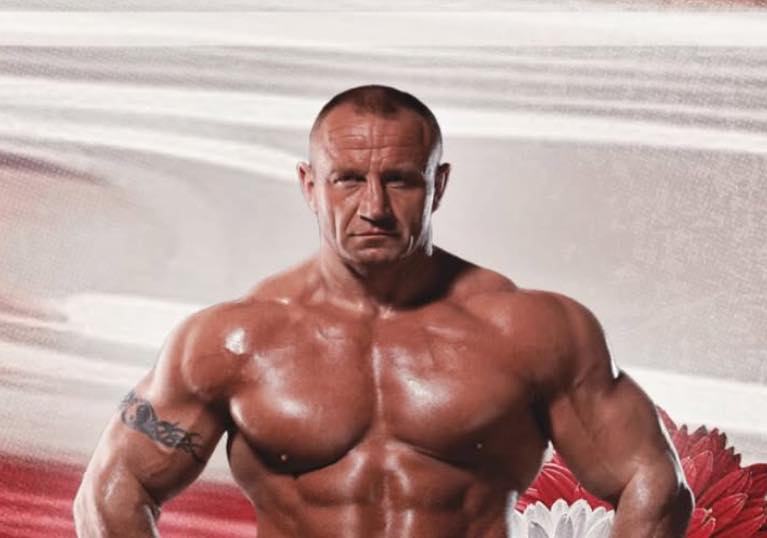
Iron Archives
Five-time World's Strongest Man, the “Dominator” who redefined 2000s strongman
Retired athlete
Mariusz Zbigniew Pudzianowski is one of the defining athletes in strongman history and the record holder with five World's Strongest Man titles, won in 2002, 2003, 2005, 2007 and 2008. Born on 7 February 1977 in Biała Rawska, Poland, he fused maximal strength with unusual speed, conditioning and efficiency in moving events, creating an athletic template that became synonymous with his era. Strongman Archives credits him with 62 international contests, 44 international victories, nine World's Strongest Man appearances and nine finals, as well as 23 WSM final event wins, the highest total in its historical database. He also won Europe's Strongest Man six times and dominated numerous Strongman Super Series, World Strongman Cup and national competitions. After the 2009 season he stepped away from elite strongman and reinvented himself as a professional mixed martial artist, becoming one of KSW's central attractions. His legacy combines an unmatched WSM title count, explosive athleticism, competitive volume and a cultural reach that extends far beyond strength sport.
Mariusz Zbigniew Pudzianowski, born on 7 February 1977 in Biała Rawska, Poland, occupies a singular position in the history of strength sports. His five World's Strongest Man titles, won in 2002, 2003, 2005, 2007 and 2008, remain the all-time championship record. The official World's Strongest Man historical record confirms those victories, while Strongman Archives credits him with nine WSM appearances, nine finals and five wins. The same statistical archive lists 62 international contests and 44 international victories, a volume that places his career far beyond the category of a short peak built around one annual championship. Pudzianowski won in Europe, North America and Asia, across World's Strongest Man, Strongman Super Series, World Strongman Cup, European championships and national contests. The sport of his era was fragmented between promoters and federations, with less standardisation than today, yet he repeatedly adapted to unfamiliar implements, surfaces, event orders and formats. His advantage was not based on one lift. It came from the interaction of maximal strength, speed, conditioning, grip, technical efficiency and the ability to recover between events.
That distinction matters because Pudzianowski is often remembered through a simplified image: a heavily muscled man who somehow moved faster than everyone else. The reality was more sophisticated. At roughly 1.86 metres and around 142 kilograms in commonly cited strongman data, he was compact compared with many rivals above 1.95 metres and 160 kilograms. He could therefore sacrifice some leverage or absolute mass in the heaviest static events while gaining extraordinary acceleration, balance and work capacity in moving events. Strongman Archives also credits him with 23 event victories in WSM finals, the highest total in its historical database. That statistic reveals the scale of his competitive dominance more clearly than titles alone. He did not merely survive diverse events and accumulate points; he repeatedly took maximum points against the best athletes in the world. His 2008 fifth WSM title at Charleston, West Virginia, established a championship record that still stands. One year later, after finishing second to Žydrūnas Savickas in Malta, he stepped away from elite strongman while still capable of winning major contests and moved into professional mixed martial arts. The result is a career with two distinct public lives: one as the defining WSM champion of the 2000s and another as a long-running KSW heavyweight whose fame carried strength sport into a different audience.
Pudzianowski grew up in Biała Rawska, a town in central Poland that remained central to his identity even after international fame. His family environment connected him to strength training early. His father, Wojciech Pudzianowski, had a background in weightlifting and became his first strength coach. The official biography on Pudzian.pl dates the beginning of Mariusz's formal strength training to 7 December 1990, when he was thirteen. That unusually precise date suggests that training was treated not as casual recreation but as a disciplined project. Strength work was only one element. Pudzianowski began Kyokushin karate at around eleven years old and later reached 4th kyu, green belt, according to official biographical material. At approximately fifteen he began boxing and trained in the discipline for several years. Before his MMA debut in 2009 he had not built a conventional professional boxing record, but the technical and conditioning value of those years was substantial. Kyokushin exposed him to contact, movement and sustained physical discomfort; boxing developed rhythm, footwork and repeated explosive effort; weight training built the strength and muscle that later became his professional foundation.
He also played rugby for Budowlani Łódź, another important piece of the athletic puzzle. Rugby rewards a combination of body mass, acceleration, contact tolerance and the ability to produce force while moving, exactly the qualities that later defined his strongman style. In his teens he entered bench press competition and, according to his official biography, pressed 160 kilograms at sixteen and approximately 205 kilograms about two years later. None of these activities alone explains the champion he became. Their interaction does. Pudzianowski did not arrive in strongman as a specialist powerlifter who had spent a decade learning only three competition lifts. He arrived with a broad movement vocabulary. He knew how to brace under load, how to accelerate his own body, how to continue working when his heart rate was high and how to accept physical contact and fatigue as normal. When he later encountered farmer's walk, yoke, loading races, vehicle pulls and power stairs, the implements were new but the underlying athletic demands were not entirely foreign. His early development therefore resembles modern multi-sport preparation more than narrow strength specialisation. Long before television audiences knew the name “Pudzian,” the physical architecture of his later dominance was already being assembled.
Before atlas stones, trucks and televised medleys became the symbols of his career, Pudzianowski was already a serious strength athlete. His official site records repeated success in Polish bench press competitions and publishes three personal gym records that have been widely quoted ever since: a 290-kilogram bench press, a 380-kilogram squat and a 415-kilogram deadlift. These values should be described carefully. They come from the athlete's own official biography rather than from a standardised powerlifting results database, so they are best treated as stated personal records rather than automatically as federation-certified powerlifting records. That methodological distinction is important in any historical profile. Strongman allows variations in bars, heights, straps, suits, implements and event rules, and gym lifts cannot always be compared directly with judged competition lifts. Even so, the figures illustrate a very high base of absolute strength. Strongman Archives provides competition context as well, including a documented 172-kilogram max log lift at the 2005 Met-Rx Grand Prix and numerous heavy deadlift, squat-machine and pressing performances.
The crucial point is that Pudzianowski did not need to be the greatest static specialist of his era. In overhead strength, Žydrūnas Savickas set standards that were historically exceptional; in deadlift, other athletes could also exceed Pudzianowski's best values. His competitive model required him to remain close enough in static events that no rival could build an insurmountable lead, then recover points aggressively wherever speed, repetition strength and transitions mattered. Rugby and boxing helped make that model possible. A large rugby player must turn mass into useful acceleration and resist contact without losing body position. A boxer learns to repeat explosive actions under fatigue and to organise movement efficiently. Those skills do not increase a deadlift by themselves, but they improve the capacity to function in a strongman contest, where an athlete may pull, press, carry, drag and load in the same day. Pudzianowski also carried unusually little visibly non-functional mass for a strongman over 140 kilograms. His official site has published body measurements such as 56-centimetre arms, 80-centimetre thighs and a 148-centimetre chest. Those figures are self-reported presentation data rather than laboratory measurements, but they fit the observable profile of a highly muscular, relatively lean heavyweight whose mass was organised around performance.
Pudzianowski's biography includes a legal episode that interrupted the early phase of his sporting rise. Polish sources, including a 2004 interview in Rzeczpospolita and a later article by the Polish Prison Service, record that he served approximately nineteen months in prison in connection with an assault conviction. Pudzianowski has publicly offered his own account of the incident, describing it as an intervention in a violent confrontation. A responsible biography should distinguish the documented legal fact from the athlete's later explanation rather than merging the two into a heroic origin story. For the sporting chronology, the central consequence is clear: imprisonment broke training and competition continuity at a moment when he was moving toward international strongman. In 2016 the Polish Prison Service reported on his return to a correctional setting for a meeting with inmates in which he discussed his own experience and the importance of not repeating youthful mistakes. That later appearance provides an unusual line of continuity between a difficult personal episode and his mature public persona without changing the historical nature of the original conviction.
Athletically, the recovery from that interruption was remarkably fast. Strongman Archives already lists him at the 2000 World's Strongest Man in Sun City, South Africa, where he reached the final and finished fourth. He was absent from the 2001 WSM, then returned in 2002 and won the championship. The transition from a fourth-place debut to a world title after a disrupted period suggests that his underlying physical base remained powerful. Years of strength training, rugby and combat sports had created adaptations that could be rebuilt more quickly than they had originally been developed. It also shows how rapidly he learned strongman technique. Once he entered a dense calendar of contests, every competition became practical education. Different yokes, handles, stones, surfaces and pulling rigs forced continuous problem-solving. Over time, that volume became part of his advantage. Strongman Archives documents 71 contests when its international and national entries are combined. He was not protecting himself for one peak each year; he was repeatedly exposing himself to the sport's chaos. The athlete who emerged from that process was unusually comfortable performing under fatigue and on unfamiliar equipment.
Pudzianowski's official biography dates his first strongman contest to 1 May 1999 in Płock, Poland. Strongman Archives begins its international record for him in 2000, with appearances at the IFSA Finland Grand Prix and IFSA Poland Grand Prix before World's Strongest Man. The difference between a local debut and the start of an international archive is unsurprising. Results databases are far more complete for major televised contests than for local competitions of the late 1990s. By the time he reached Sun City for WSM 2000, however, Pudzianowski was ready enough to survive qualification and finish fourth in the final. For an athlete with limited international exposure, that result was an immediate statement. The event took place during a transition in the sport. Champions such as Jouko Ahola and Magnus Samuelsson had shaped the late 1990s, Janne Virtanen won in 2000, and a new generation was beginning to redefine the balance between size and movement. Pudzianowski belonged unmistakably to that new direction.
What later became obvious was already visible in outline: his strongest competitive asset was not simply the ability to lift a heavy object once, but the ability to convert strength into time. In a timed carry, every fraction of a second matters. In a loading race, the path between implements matters. In a vehicle pull, losing tension for one step can cost a metre. Pudzianowski treated those details as performance variables. The early interruption in his career meant that his international résumé did not build smoothly through 2001, yet the absence did not erase the lesson of the 2000 final. He had proved that his body and technique could compete with the world's best. When he returned to the WSM stage in 2002, he did not return as a cautious outsider. He returned as an athlete capable of exploiting the very structure of the competition. World's Strongest Man awards points across unrelated tests, which means an athlete does not need the best deadlift or press on the planet if he can remain competitive there and dominate movement, repetition and conditioning. Pudzianowski's entire championship architecture was based on that principle.
The 2002 season transformed Pudzianowski from a promising finalist into a world champion. In July he won Europe's Strongest Man in Gdynia, the first of six European titles documented by Strongman Archives. Later that year he travelled to Kuala Lumpur for World's Strongest Man and won the title ahead of Žydrūnas Savickas and Raimonds Bergmanis. The podium has become historically significant because Savickas would develop into one of the greatest strength athletes ever and the defining comparative figure for Pudzianowski's era. Their profiles were different enough to create a compelling contrast. Savickas possessed extraordinary static and overhead strength and would build an exceptionally long career; Pudzianowski was more compact, faster and often devastating when strength had to be expressed while moving. Both were complete athletes, so the contrast should not be exaggerated into caricature, but the difference helps explain why various contest formats could favour them differently.
Winning WSM also changed Pudzianowski's status inside Poland. The country already had deep traditions in weightlifting and strength sports, but a televised world champion created a different level of public visibility. Pudzianowski was unusually easy for television audiences to recognise: compact but massive, visibly muscular, expressive, fast and repeatedly successful. Nicknames such as “Pudzian” and “Dominator” became part of a marketable identity. From then on, every WSM appearance carried the pressure of being a champion or favourite rather than an emerging athlete. Technically, the 2002 victory validated the central logic of his preparation. Strongman is not won by one lift. It may demand overhead pressing, deadlifting, carrying, dragging, pulling vehicles, throwing and loading within the same competition. Extreme specialisation can therefore create vulnerability. Pudzianowski had built a body that could solve many different tasks well enough and several of them exceptionally well. The first title demonstrated that this versatility could defeat larger specialists on the aggregate scoreboard. The following year would show that the result was not a one-off.
If 2002 established Pudzianowski as a champion, 2003 made him the reference point of the circuit. He won the Hawaii Grand Prix in the Strongman Super Series, the Holland Grand Prix, multiple IFSA contests, Europe's Strongest Man in Sandomierz and, in September, World's Strongest Man at Victoria Falls, Zambia. The official WSM history records him ahead of Žydrūnas Savickas and Vasyl Virastyuk. Historical accounts of the final describe a large winning margin and a performance in which Pudzianowski took four of the seven events while remaining near the top in the others. The title was only one part of the season. Strongman Archives shows him competing repeatedly across different promoters and countries before later winning the X-Treme Strongman Championships in Atlanta. In one year he faced farmer's walk, train and truck pulls, super yoke, log events, deadlifts, Conan's wheel, loading races and other variations.
The breadth of those victories explains why spectators began to experience him as almost mechanically efficient. In many events he seemed to finish while larger rivals were still fighting the implement. This image encouraged myths, but a straightforward physiological explanation exists. Pudzianowski carried less total body mass than several super-heavyweights and trained to sustain repeated bursts of work. His power-to-weight ratio was exceptional. That advantage had a trade-off. At the Arnold, where contests often emphasised maximal static strength and exceptionally heavy implements, his record was less dominant than at WSM. He finished fourth at the 2003 Arnold's Strength Summit. The contrast does not weaken his historical standing; it defines it more precisely. Pudzianowski was ideally suited to multi-event championships in which speed, recovery and transitions could create large scoring differences. Savickas and other enormous static specialists often gained more from formats built around absolute load. Strongman has always contained several meanings of “strongest,” and Pudzianowski's genius was to understand how to win the particular test presented on the day.
The 2004 season is essential to any serious account of Pudzianowski because it combines outstanding competitive results with the major anti-doping sanction of his strongman career. Before World's Strongest Man, he continued winning. Strongman Archives records victories at the Moscow Grand Prix, IFSA All Strength Challenge, Holland Champions Trophy, Turkey Champions Trophy and Europe's Strongest Man in Jelenia Góra. At Arnold's Strongest Man in Columbus he finished fifth, again consistent with a contest weighted heavily toward maximal strength. At World's Strongest Man in Nassau, Bahamas, he initially finished third behind Vasyl Virastyuk and Žydrūnas Savickas. That result was later voided. IronMind published official IFSA statements in November and December 2004 reporting that Pudzianowski had tested positive for a banned substance in violation of the organisation's Strongman Health Policy. IFSA disqualified him from the contest, removed prize money and ranking benefits and announced a twelve-month suspension, with a possibility of review under a rehabilitation process.
The IFSA communication reproduced by IronMind further stated that Pudzianowski accepted the test result and waived B-sample confirmation. That is the appropriate factual formulation. A confirmed rules violation occurred within IFSA's testing system, the 2004 WSM result was annulled and a suspension followed. It is not necessary to extrapolate from that documented episode to every year of his career or to other athletes without evidence. Strongman's anti-doping policies and testing practices in that period were inconsistent across organisers, which is precisely why the public IFSA statement is so valuable as a source. Athletically, the sanction broke a sequence that might otherwise have produced three consecutive WSM titles. Historically, however, what happened next became as important as the violation itself. Pudzianowski returned in 2005 and won World's Strongest Man again. He then added titles in 2007 and 2008, reaching the record total of five. The 2004 episode therefore belongs in the biography without concealment and without disproportionate sensationalism: it was a documented breach, a real interruption and one chapter in a much longer competitive record.
Pudzianowski's 2005 return is one of the defining sequences of his career. After the 2004 sanction, every major appearance carried a simple question: could he still perform at the level that had made him world champion in 2002 and 2003? The answer came through an exceptionally busy season. Strongman Archives records victories at the Met-Rx Grand Prix in Los Angeles, the Nautilus Grand Prix in Malbork, the Vulkan Grand Prix in Sweden, the Mohegan Sun Grand Prix in Connecticut and a World Strongman Cup event in Austria. At the Met-Rx Grand Prix he won the max log lift with 172 kilograms, one of his best documented competition values on the implement. The string of results demonstrated more than restored strength. It showed that he could repeatedly peak across different venues without an obvious collapse in performance. In a sport that loads the spine, elbows, biceps, knees and hands with enormous stress, simply remaining available for this number of high-level contests is itself a form of athletic achievement.
At World's Strongest Man in Chengdu, China, the final did not begin perfectly. Historical summaries note that after the opening events Pudzianowski was several points behind the leader and not in a comfortable overall position. He responded by winning five consecutive events and securing the championship before the final discipline. The ability to recover inside a contest was as important as physical strength. A less experienced athlete can allow an early mistake to distort strategy, chasing points recklessly and creating another error. Pudzianowski understood the scoreboard and trusted the remaining events. The third WSM title therefore carried a different meaning from the first two. It showed that the 2004 interruption had not closed his championship window. It also reinforced the role of conditioning in his success. Five consecutive event victories in a multi-day strongman final require more than isolated maximal ability. They require repeated neurological and metabolic recovery, technical consistency and emotional control. By the end of 2005, Pudzianowski was no longer merely a champion who had returned. He had demonstrated that his competitive system could survive disruption and still produce world-level dominance.
The 2006 season illustrates the difference between dominating a circuit and necessarily winning World's Strongest Man. Pudzianowski accumulated major victories at the Mohegan Sun Grand Prix, Moscow Grand Prix, Poland Grand Prix and several World Strongman Cup events. At the Poland Grand Prix in Milicz, Strongman Archives records one of his signature performances: a farmer's walk with 150 kilograms in each hand over 60 metres in 19.90 seconds. That corresponds to an average speed of just over three metres per second while carrying 300 kilograms externally. The statistic explains the visual impression contemporaries had of him. He did not merely endure heavy carries; he turned them into sprints. Across the season he also won or placed highly in power stairs, medleys, super yoke, tire flip and truck pull, reinforcing the idea that dynamic events gave him multiple routes to maximum points. This breadth made him difficult to design a contest against. Removing one preferred event simply exposed another.
Yet at World's Strongest Man in Sanya, China, Phil Pfister produced one of the decade's great championship performances and defeated Pudzianowski. The Pole finished second. The result is historically useful because it prevents the five-title résumé from becoming a myth of invincibility. In a points-based sport, a rival who strings together event wins at the correct moment can overturn a season's hierarchy. Pfister did exactly that. Pudzianowski's response over the following year also reveals his competitive maturity. He did not need to rebuild his identity after the loss because the underlying model remained sound. He continued to win international contests, refined details and returned to WSM in 2007 prepared to reclaim the title. The 2006 loss also demonstrates why strongman statistics must be read over many competitions rather than one. A single championship can be decided by an event selection, a small error, weather, surface conditions or a rival's exceptional day. Pudzianowski's greatness rests not on winning every contest but on the fact that defeats were surrounded by an extraordinary density of victories.
By 2007 Pudzianowski had reached the mature version of his strongman style. He won Pojedynek Gigantów in Łódź, the Mohegan Sun Grand Prix, Europe's Strongest Man, the Viking Power Challenge, World Strongman Cup events and the Polish championship listed by Strongman Archives. At the Viking Power Challenge he won farmer's walk and super yoke and also took the max axle deadlift with 310 kilograms, a reminder that his static strength was fully capable of winning events when the conditions suited him. At World's Strongest Man in Anaheim, California, he captured his fourth title. Strongman Archives records victories in the car walk and loading race and high placements in truck pull, car deadlift, Fingal's Fingers and the safe lift. He was only eighth in Atlas Stones, yet his earlier points were sufficient. The result is a compact lesson in strongman scoring: a champion does not need to win the final stones if the contest has already been controlled elsewhere.
At thirty years old, Pudzianowski occupied an ideal position between physical prime and accumulated technical experience. He had been exposed to strongman for almost a decade and had learned how much risk each event justified. Elite contest strategy is not the same as maximal gym training. If third place is enough to protect an overall lead, attempting a dangerous extra repetition may be irrational. Pudzianowski increasingly appeared to understand that arithmetic. He also created psychological pressure through his speed. When he set an early farmer's walk or loading time, later athletes often had to exceed their normal rhythm to challenge it, increasing the probability of mistakes. His fourth title brought him level with Jón Páll Sigmarsson and Magnús Ver Magnússon, the previous four-time WSM champions. At that point his historical status was already secure. The 2008 season would move him beyond them numerically and establish the record that still defines his name.
World's Strongest Man 2008 in Charleston, West Virginia, fixed Pudzianowski's place in the championship record book. He arrived with four titles, level with the most successful WSM champions before him, and left with five. Strongman Archives records final-event victories in the plane pull, car deadlift and power stairs, second place in the log lift and enough points elsewhere to defeat Derek Poundstone. This was not an uncontested procession. Poundstone was one of the world's strongest and most complete athletes and pushed the championship to a narrow conclusion. Pudzianowski therefore needed precisely the quality that had defined the rest of his career: converting every event with movement or transitions into a scoring opportunity. Earlier that season he had also won Europe's Strongest Man, the WSF World Cup Russia, a WSF contest in Belarus and the Polish championship recorded by Strongman Archives. The fifth WSM title was the apex of a season that confirmed he still possessed international depth, not only one championship peak.
The record deserves context. World's Strongest Man is held once per year and is unusually sensitive to injury, qualification and event selection. A torn biceps or back injury can erase an entire season. A specialist can also encounter an unfavourable sequence of implements. To win five times, Pudzianowski had to remain healthy enough to reach the final repeatedly and versatile enough to solve different programmes. His championships were not five uninterrupted years. The 2004 result was voided and 2006 belonged to Pfister, so the five titles required multiple returns to the top. That pattern arguably strengthens the record. It demonstrates not only peak ability but resilience across changing cycles. The official WSM history still identifies him as the only five-time champion. Savickas, Brian Shaw, Sigmarsson and Magnús Ver Magnússon each won four. By the mid-2020s Tom Stoltman had reached three. The sport has become heavier and more specialised, making repeated championships no easier. Pudzianowski's five therefore remain a benchmark not because the weights of 2008 were identical to those of today, but because sustained victory in a variable multi-event championship is inherently rare.
Pudzianowski did not slowly fade from strongman in 2009. He remained a major winner almost until the moment he changed sports. He won Globe's Strongest Man in Moscow and Europe's Strongest Man in Bartoszyce, giving him a sixth European championship in Strongman Archives. He also won the Polish championship entry at Trzebiatów before travelling to Valletta, Malta, for his ninth World's Strongest Man. Once again he qualified for the final. He finished second to Žydrūnas Savickas and ahead of Brian Shaw. In historical hindsight, the podium is striking. Savickas was beginning his WSM championship era after years of dominance elsewhere, Shaw would become a four-time WSM champion, and Pudzianowski represented the decade that was ending. Three athletes from different strongman generations occupied one podium, making the 2009 final a symbolic transition point in modern strength history.
Pudzianowski's event results in Malta also show that he was not leaving because he had become uncompetitive. He won the farmer's walk and placed second in the car deadlift, arm-over-arm pull and axle press. At thirty-two, he was still capable of taking maximum points in a signature moving event and challenging in static strength. His departure was therefore a choice of project rather than an athletic collapse. His official biography describes a desire for a new challenge after achieving what he had wanted in strongman. That decision was unusually risky. In strongman he had an established technical system, championship reputation and psychological authority. In MMA he was a novice in grappling, cage positioning, submission defence and the energy management of five-minute rounds. Yet his background in karate and boxing, combined with immense national fame, made the transition both plausible and commercially powerful. Within months of his last WSM, he would step into a KSW cage and begin rebuilding his identity from the ground up.
Pudzianowski is frequently called one of the most athletic strongmen ever, but the phrase is useful only when translated into specific qualities. Strongman Archives lists him at 1.86 metres and approximately 142 kilograms. Compared with rivals standing 1.95 to 2.05 metres and weighing 160 to 190 kilograms, he had a lower centre of mass and less total bodyweight to accelerate. Those dimensions could reduce leverage in certain presses or the stabilising benefit of sheer body mass, yet they were powerful advantages in timed movement. He converted muscular force into implement velocity exceptionally well. The 150-kilogram-per-hand farmer's walk over 60 metres in 19.90 seconds is an ideal example. Maintaining that speed requires far more than grip. It demands violent initial leg drive, torso rigidity, efficient step mechanics, control of implement oscillation and the metabolic capacity to continue accelerating despite enormous forearm and upper-back fatigue.
Recovery between events was equally important. A strongman final consists of repeated peaks of effort separated by imperfect rest. An athlete can possess the greatest first-event output and still lose if his lower back, grip or cardiovascular system cannot return to useful function. Pudzianowski's contest volume and repeated wins suggest extraordinary tolerance for work density. This characteristic encouraged legendary training stories, many of which have been copied online without reliable context. Exact routines should therefore be treated cautiously. What competition evidence does support is the underlying principle: he trained to repeat strength, not merely display it once. In modern terminology, his preparation integrated maximal strength, strength-speed, anaerobic capacity, general conditioning and event-specific technique. That combination remains relevant to contemporary strongman. Bigger deadlifts and logs have changed the ceiling of the sport, but championships are still decided by athletes who can translate multiple qualities into points rather than merely own the largest number in a gym lift.
Pudzianowski's public identity has long been built around regular work rather than occasional inspiration. Interviews and later social media posts repeatedly return to the same idea: results are produced by routine. In 2024 he explained in Polish MMA media that he no longer performed the “murderous” sessions of his youth and instead trained to maintain condition and enjoy movement. The statement is valuable because it indirectly describes how different his prime training years were. Elite strongman preparation required basic strength work, event practice, overhead pressing, grip training, loaded sprinting and conditioning. His background in rugby and combat sports provided an additional cardiovascular and coordination foundation that many pure strength athletes had to build separately. The result was a training identity in which hard sessions were normal rather than exceptional.
Popular articles often present a precise “Pudzianowski routine” with fixed meals, sets and times as though one schedule defined a decade-long career. Such material should be handled critically. Many versions circulate without an original source and may combine different periods. The competitive evidence is more reliable than any viral training template. Pudzianowski tolerated unusually high frequency, trained both strength and conditioning and transferred his gym work effectively to implements. Winning 44 of 62 international contests documented by Strongman Archives requires maintaining usable form across much of the year, not simply peaking once. The later MMA transition confirms another side of his discipline: the ability to change training when the task changes. He reduced bodyweight, added sparring, wrestling, grappling and technical striking, and accepted that his old training strengths were no longer sufficient. Discipline in this sense is not repetition of the same programme forever. It is consistency of effort while the programme itself evolves.
A technical profile built from Strongman Archives places moving events at the centre of Pudzianowski's identity. Farmer's walk, super yoke, car walk, power stairs, shield carry, vehicle pulls and multi-object medleys appear repeatedly among his victories. The 2006 farmer's walk is the clearest numerical example, but the pattern spans his entire championship period. At WSM 2007 he won the car walk and loading race. At WSM 2008 he won the plane pull and power stairs. At his final WSM in 2009 he again won the farmer's walk. Vehicle pulling also suited his combination of rapid leg turnover, low body angle and cardiovascular capacity. In medleys his advantage often grew through transitions. A competitor can be only one second slower at each object and lose five or six seconds over the whole event. Pudzianowski minimised exactly those dead spaces.
He was not limited to movement. Strongman Archives documents the 172-kilogram competition log lift in 2005, strong Viking press performances and many high-repetition deadlift results. In WSM qualifying rounds he could produce very high repetition counts on overhead implements, demonstrating upper-body strength endurance rather than only a one-repetition maximum. This distinction suited him. A pure max press might favour a heavier specialist, while a submaximal press for repetitions rewarded the ability to produce force repeatedly without catastrophic fatigue. Atlas Stones were more variable. Pudzianowski won stone runs in several contests but did not always dominate them in WSM finals. That variability helps demythologise his profile. There was no single event he automatically won. The championship advantage came from distribution. If he finished fifth or eighth on stones but had already taken three victories and several top-three results, the scoreboard remained favourable. Strongman is a portfolio of physical skills, and Pudzianowski's portfolio had very few severe weaknesses.
Calling Pudzianowski simply faster than his rivals understates the technical work that created that speed. In farmer's walk, the athlete must set the feet for an efficient pick, brace before the implements begin to swing, accelerate without overstriding and manage turns without losing grip. Pudzianowski executed that chain with very little wasted movement. Yoke introduces different problems: the crossbar must be positioned so that the frame does not oscillate excessively, and the first steps determine whether the implement moves with the athlete or fights him. In loading races, route selection, object height, grip choice and the angle of the final load can save or lose seconds. Pudzianowski often appeared to have rehearsed those decisions before the clock started. Speed was the visible result of organisation.
This motor intelligence is difficult to represent in personal-record tables. A database can show that a rival deadlifted more weight, but not how quickly an athlete corrected an implement that began to rotate or how efficiently he changed hand position after a bad pick. Pudzianowski seemed exceptionally good at real-time correction. On power stairs he combined hip extension with rapid foot replacement so that the next block could be attacked almost immediately. In truck pull he maintained tension rather than wasting energy through long, slipping steps. Repetition across dozens of contests sharpened these reactions. Every new promoter exposed him to different handle widths, yoke heights, tyres, stones and surfaces. By the later years of his career he possessed a large internal library of solutions. That is why his technique remains instructive to modern competitors. Strength creates possibilities; technical economy determines how many of those possibilities become points.
During his strongman prime, Pudzianowski's commonly cited bodyweight was around 142 kilograms, although exact weight varied by season and source. At 1.86 metres this represented enormous muscular mass, yet he appeared markedly leaner than many super-heavyweights. Functionally, his bodyweight solved a difficult compromise. Additional mass can improve stability and absolute force, but every kilogram must also be accelerated during yoke, farmer's walk, loading and vehicle pulls. His style depended on exceptional relative power. A relatively lean composition therefore had competitive value beyond appearance because it reduced non-contractile mass that had to be carried through every timed event. Numerous diet plans attributed to Pudzianowski have circulated online, but there is no complete independent nutritional log covering his championship years. They should be read as anecdotal snapshots rather than universal prescriptions.
MMA required the opposite transformation. Muscle that helped move a truck could become costly during five-minute rounds of wrestling, striking and isometric grappling. Across different fights Pudzianowski competed closer to roughly 120–125 kilograms, a substantial reduction from strongman form. Losing weight was only part of the process. He needed to retain enough force for clinches and takedowns while reducing the training volume and hypertrophy that did not transfer efficiently to fighting. Early MMA performances revealed how different conditioning specificity can be. Strongman events often last tens of seconds and are separated by rest; a fight demands continuous decision-making, defensive tension, scrambles and breathing under contact. The fact that he remained a professional heavyweight for well over a decade after building his body for an almost opposite task is evidence of unusual physiological adaptability. It does not make him an elite technical martial artist, but it does make the transformation itself historically notable.
No evaluation of Pudzianowski is complete without the opponents who gave his achievements scale. Žydrūnas Savickas is the central comparison. Pudzianowski defeated the Lithuanian at WSM in 2002 and 2003; Savickas defeated him in 2009. Between those points, Savickas built historic dominance in contests with a stronger emphasis on maximal loading and overhead strength. Their rivalry is compelling because it represents two forms of strongman excellence. Pudzianowski frequently held the advantage in speed, transitions and work capacity. Savickas possessed extraordinary static power and one of the greatest overhead records in the sport. Both were far more complete than those labels imply, but different event selections shifted the balance between them. The fragmentation of strongman organisations in the mid-2000s also meant the best athletes were not always competing together, which makes simplistic head-to-head conclusions misleading.
Phil Pfister became historically important by winning the 2006 WSM after Pudzianowski had dominated much of the surrounding season. Derek Poundstone pushed him hard in 2008 when the fifth title was at stake. Jesse Marunde finished second in 2005. Vasyl Virastyuk won the 2004 WSM whose third-place Pudzianowski result was later voided. Around them were Magnus Samuelsson, Svend Karlsen, Raimonds Bergmanis, Terry Hollands, Sebastian Wenta and other specialists capable of winning individual events. The density of that field matters. Five championships were not collected in an empty era. Pudzianowski lost contests, suffered a sanction and encountered athletes better than him in specific dimensions of strength. His historical importance comes partly from repeatedly returning to the top in spite of that pressure. Strongman greatness is clearer when rivals are treated as real competitors rather than background characters, and Pudzianowski's generation supplied formidable opposition.
Debates about the greatest strongman of an era often reduce Pudzianowski and Savickas to a ranking question, but the comparison becomes more informative when the format is defined first. Pudzianowski owns the record of five World's Strongest Man titles. Savickas won four WSM championships and achieved extraordinary success at the Arnold Strongman Classic and other contests oriented toward immense static loads. Saying that one was simply “stronger” obscures what strongman actually measures. A contest containing maximum log, a brutally heavy deadlift and a massive frame carry rewards a different distribution of abilities from one built around loading races, farmer's walk, truck pull and pressing for repetitions. Pudzianowski's greatest advantage emerged when force had to be expressed at speed and repeated across events. Savickas pushed absolute strength, particularly overhead, to historic levels.
The two careers therefore demonstrate strongman's central philosophical problem: there is no single universal test of strength. A sprinter can be compared by one distance and a powerlifter by a defined total, but a strongman champion is produced by an event portfolio. Change that portfolio and the balance changes. Pudzianowski mastered the WSM environment of the 2000s because his weaknesses were small enough and his dynamic strengths enormous. Savickas mastered formats in which maximal strength could be expressed more directly. Their coexistence enriched the sport. It showed that a relatively compact, conditioned athlete could defeat larger men through movement efficiency, while an enormous static specialist could remain sufficiently athletic to dominate general contests. Rather than forcing one career to invalidate the other, a historical profile should use the contrast to explain the breadth of the discipline.
Pudzianowski's six Europe's Strongest Man titles, documented in 2002, 2003, 2004, 2007, 2008 and 2009, form a second major pillar of his résumé. They demonstrate that his dominance was not confined to one annual television championship. Europe contained an exceptionally deep concentration of elite strongmen, and Pudzianowski repeatedly won against that field. His national record is reported differently by sources. Polish media often describe him as an eight-time Polish champion, while Strongman Archives currently documents nine national contests and seven victories in its database. The discrepancy may result from classification differences or incomplete archival coverage of domestic events. The correct editorial approach is not to force the numbers into artificial agreement but to preserve the distinction and identify the source behind each figure.
His influence inside Poland was much larger than championship totals. During the 2000s, televised strongman became mass entertainment, and Pudzianowski was its most recognisable figure. Spectators did not need to understand the technical difference between an axle and a log to understand a race with a yoke or a truck pull. His physique, speed and repeated victories gave the broadcasts a central character. He competed alongside important Polish strongmen such as Jarosław Dymek and Sebastian Wenta, helping create a national scene with genuine depth. Later athletes, most notably Mateusz Kieliszkowski, inherited a country in which strongman already had a large audience and commercial vocabulary. Pudzianowski did not create Polish strength culture, which long pre-dated him, but he helped convert strongman from a specialist interest into a recognisable part of popular sport.
Strongman Archives provides the clearest statistical overview of Pudzianowski's competitive volume: 62 international contests, 44 international victories, nine documented national contests and seven national wins, plus nine World's Strongest Man appearances that all resulted in final qualification. Five of those finals ended with the championship. The archive also credits him with 23 event victories in WSM finals, the highest total in its historical list. These numbers measure different aspects of greatness. WSM titles capture annual peaks. The international win total measures sustained superiority across promoters and countries. Event wins measure the frequency with which he was individually best at the highest level. Taken together they reveal why reducing his reputation to one record misses the scale of the career.
Every historical database has limits. Strongman results before comprehensive digital archiving contain gaps, especially for local contests and exhibitions. “44 international wins” therefore means 44 victories within the competitions indexed by Strongman Archives, not necessarily every event in which Pudzianowski ever participated. The distinction increases credibility rather than diminishing the achievement. The same care applies to lifting records. The 290-kilogram bench press, 380-kilogram squat and 415-kilogram deadlift come from his official personal biography and should be described as stated personal records. Competition values such as the 172-kilogram log lift, the 150-kilogram-per-hand farmer's walk and the 1,108-kilogram back lift can be tied to specific events in Strongman Archives. Strongman implements differ so dramatically that context is inseparable from the number.
Pudzianowski's sporting career developed alongside formal education and business projects. His official site states that in 2008 he completed a bachelor's degree at Społeczna Wyższa Szkoła Przedsiębiorczości i Zarządzania in Łódź, with academic work related to organisational culture and sports marketing, and later completed a master's degree in 2010. In 2005 he launched the Pudzian Academy, focused on security-personnel training, a project later connected with educational collaboration. He also developed transport and event-related businesses. Pudzian.pl identifies his transport activity and the “U Pudziana” event venue in Biała Rawska, while an interview with TruckFocus describes the gradual development of the transport company from a small beginning into a larger operation.
These activities help explain the durability of the Pudzianowski brand. Many athletes remain economically dependent on continued competition; he built projects that did not require another championship every year. At the same time, he retained a strong connection to his place of origin. Biała Rawska appears throughout his official biography, business activity and public content. His social-media persona is correspondingly practical. Training, transport, machinery, property work, sauna, food and routine appear more often than elaborate celebrity presentation. That consistency has commercial value. The message changed platforms as television gave way to social media, but the core identity remained remarkably stable: a physically powerful man who presents regular work as the explanation for results.
On 11 December 2009 at KSW 12 in Warsaw, Pudzianowski made his professional MMA debut against Marcin Najman and won quickly. The media impact was immediate. KSW gained access to the enormous audience that had followed Polish strongman, while Pudzianowski gained a new competitive stage. The first victory did not erase the technical gap between strength sports and fighting. Clinch control, takedown entries, submission defence, striking under pressure and round management required years of work. Early fights exposed that reality. He faced Tim Sylvia in the United States, James Thompson, Butterbean, Bob Sapp and opponents with very different levels and styles of combat experience. His 2011 rematch with Thompson was initially announced as a Pudzianowski win and later changed to a no contest because of judging irregularities, an important detail for understanding variations in his historical record.
Pudzianowski trained for periods at American Top Team in Florida, according to his official biography, acknowledging that fame and physical power could not replace technique. He reduced his bodyweight and gradually improved takedown use, positional control and energy management. Between 2012 and 2014, wins over opponents including Bob Sapp, Christos Piliafas, Sean McCorkle in a rematch, Oli Thompson and Paweł Nastula showed visible progress. Nastula, an Olympic judo champion, represented a particularly meaningful test of grappling credibility. Pudzianowski never became a world-class submission specialist or a polished technical boxer, and a serious profile should not pretend otherwise. The achievement was persistence. What could easily have been a two-fight celebrity experiment became a genuine second career that required him to learn publicly, lose publicly and continue.
In 2015 Pudzianowski knocked out Rolles Gracie in only 27 seconds, one of the clearest demonstrations of his striking power. Losses to Peter Graham, Marcin Różalski and Karol Bedorf later exposed continuing vulnerabilities to technical striking and submissions, but the career did not collapse. From 2016 into the early 2020s he accumulated wins over Paweł “Popek” Mikołajuw, Tyberiusz Kowalczyk, Jay Silva, Erko Jun, Nikola Milanović, Łukasz Jurkowski, Serigne Ousmane Dia and Michał Materla. Several came by stoppage. The 2022 knockout of Materla, produced by a powerful right hand, became one of the signature moments of his later fighting career and showed that even in his mid-forties his explosive force remained dangerous.
Sherdog credits Pudzianowski with 17 professional victories, including 12 by knockout or technical knockout and five by decision, together with a no contest, before treating the 2025 Eddie Hall bout separately as a professional exhibition. Those numbers matter because they challenge the idea that his MMA presence was purely ceremonial. He entered the cage repeatedly, defeated opponents from judo, grappling, kickboxing and MMA backgrounds and remained one of KSW's major attractions. At the same time, scale matters. He did not win a global MMA championship and should not be described as an elite UFC-level contender. The value of the second career lies in longevity, adaptation and cultural reach. A man who had spent years building a body for extreme loaded movement managed to re-engineer it sufficiently to compete professionally in combat sports into his late forties.
Pudzianowski's winning run ended against Mamed Khalidov at KSW 77 in December 2022, where he was stopped in the first round. In June 2023 former professional boxer Artur Szpilka defeated him by second-round TKO at KSW 83 in Warsaw's National Stadium. Competitive activity then became less frequent. In April 2025 he faced another former World's Strongest Man champion, Eddie Hall, at KSW 105. Sherdog classifies the bout as a professional exhibition and keeps it separate from the standard professional record, whereas FightMatrix incorporates the result in its total and displays a 17–10 record. Hall won by first-round TKO. The disagreement between databases illustrates why combat-sports records sometimes vary even when everyone agrees on what happened inside the cage: classification rules are not always identical.
By September 2026 Pudzianowski is forty-nine years old and remains highly visible in sport even though his elite strongman career ended in 2009 and his MMA schedule has slowed substantially. FightMatrix lists the April 2025 Hall loss as his latest bout under its methodology. Pudzianowski has not needed to compete frequently to remain culturally relevant. Training clips, business content and appearances continue to reach a large Polish audience. His 2024 comments about reducing the extreme workload of his youth also describe a natural late-career transition. For an athlete with more than three decades of serious physical preparation, maintenance and longevity become meaningful objectives in themselves. His strongman status is unambiguous: retired from elite competition. His combat-sports status is less categorical, but the rhythm of competition and age place him in the veteran phase rather than the developmental or title-chasing phase of an MMA career.
Despite extraordinary public exposure, Pudzianowski has kept much of his romantic life outside the centre of his sporting persona. Polish entertainment media have published speculation over the years, but there is no stable, well-sourced public record that justifies turning private rumours into biographical fact. He has often answered relationship questions briefly or humorously rather than offering detailed disclosure. A responsible profile should preserve that boundary. Better-documented personal relationships are those connected directly to his development: the importance of his father Wojciech as an early strength influence, family ties to Biała Rawska and the long-term integration of relatives and local activity into the broader Pudzianowski public world. His brother Krystian has also been visible publicly through music and entertainment, but Mariusz's own brand has remained overwhelmingly sport- and work-centred.
This selective privacy is notable because Pudzianowski is otherwise highly accessible through social media. Audiences see training, meals, vehicles, business activity, sauna sessions and everyday tasks. What they do not receive is unrestricted access to every personal relationship. That separation has allowed him to maintain an unusually coherent public identity over decades. He is not presented primarily as a reality-television personality who happens to train; he is presented as an athlete and businessman whose ordinary routines are themselves content. The distinction helps explain why his image has remained durable. Public familiarity is high, but the most intimate parts of private life have not become essential to the commercial story.
In 2000s Poland, Pudzianowski crossed the boundary between a niche strength athlete and mainstream popular culture. Strongman was unusually well suited to television: spectacular objects, simple clocks, visible effort and events that could be understood without technical expertise. Pudzianowski added an ideal central character. He was visually distinctive, moved with improbable speed for his size and won often enough to create continuity from broadcast to broadcast. “Dominator” required no explanation. As world titles accumulated, he became one of the country's most recognisable sports figures and appeared in entertainment, advertising and other media contexts. His fame was therefore not an accidental by-product of winning. The way he won, and how easily the performance translated to television, amplified the effect.
That popularity was crucial when he entered KSW. Viewers who had never watched grappling or analysed striking technique still wanted to know what would happen when the five-time World's Strongest Man entered a cage. Early matchmaking inevitably contained a spectacle component, but the relationship between athlete and audience survived long enough for Pudzianowski to become a genuine veteran of the promotion. In retrospect, his media migration anticipated the modern creator-athlete economy. Later strongmen such as Eddie Hall, Hafþór Björnsson and Brian Shaw built enormous digital audiences around personalities that extended beyond contests. Pudzianowski achieved an earlier version of that portability through television first and social media later. Audiences did not follow only a farmer's walk result. They followed the person performing it.
Direct comparison between the strongman of the early 2000s and the sport of the 2020s requires caution. Modern competitors benefit from more specialised coaching, instant video analysis, better access to purpose-built implements, a larger equipment industry and an information culture in which training methods circulate globally within hours. Deadlift and overhead standards have risen, and contemporary athletes have produced maximal lifts beyond many of Pudzianowski's documented bests. That does not diminish his historical standing, but it does mean that a 2005 athlete cannot simply be transplanted unchanged into a modern final and assumed to dominate. Sports evolve. The more useful question is which competitive qualities Pudzianowski made impossible to ignore. On that measure his influence remains obvious. Modern finalists cannot afford to be large and strong but immobile. They must sprint with yokes, carry sandbags, throw implements, negotiate medleys and recover through multi-day contests. The model of the massive athlete who still moves like an athlete is now normal, and Pudzianowski was one of the most visible early demonstrations of its effectiveness.
Career strategy has changed as well. During Pudzianowski's prime, one elite athlete could appear repeatedly in Strongman Super Series events, World Strongman Cup stages, European championships, national competitions and WSM within the same season. The modern sport contains bigger prize pools at selected contests, heavier event loads and a greater awareness of injury management, encouraging many competitors to choose starts more selectively. Pudzianowski's density of contests would be difficult to reproduce at equivalent modern intensity. This makes his archive remarkable in a second way. He was not merely good at peaking; he was unusually capable of remaining competition-ready. Better modern record-keeping also changes perception. Today's athletes generate precise videos, split times and verified results almost automatically. Strongman Archives has reconstructed much of the older era from available records, but local contests remain incomplete. The documented 44 international wins should therefore be understood as a conservative verified total within that database rather than necessarily the absolute count of every event or exhibition he ever won.
One striking feature of Pudzianowski's career is that his strongman prime is not defined by a catastrophic injury that abruptly ended it. Elite strongman routinely produces torn biceps, Achilles ruptures, spinal problems, knee injuries and chronic joint damage. Pudzianowski's schedule magnified those risks because every additional contest meant more maximal pulls, awkward carries and high-force efforts under fatigue. Yet he remained available often enough to build an exceptional volume of starts and then transitioned into a contact sport that imposed a completely different injury profile. This should not be romanticised as physical invulnerability. Public sources are not a medical file, and no responsible biography can claim that he avoided pain or accumulated damage. What can be observed is competitive availability. Across a decade of elite strongman and a long MMA career, Pudzianowski demonstrated unusual durability relative to the loads he repeatedly accepted.
Longevity also depends on changing objectives before the old body becomes impossible to maintain. Leaving strongman after 2009 reduced the need to chase maximal implements every week and encouraged a lighter bodyweight with more mobility. MMA introduced its own serious risks, including head impacts and joint trauma, but the training architecture changed. Later still, age required another recalibration. His public comments about no longer performing the extreme sessions of youth describe a mature version of discipline: the stimulus must change when the goal and recovery capacity change. The lesson is more useful than the mythology of endless toughness. Long careers are rarely built by pretending the body is permanently twenty-five. They are built through phases, each with different priorities. Pudzianowski's continued visible physical activity near the age of fifty reflects this adaptive approach as much as the work ethic for which he is famous.
Pudzianowski's résumé is large enough that editorial selection becomes part of accurate historical writing. Listing every victory without hierarchy can obscure rather than clarify the career. The central landmarks are five World's Strongest Man championships, two WSM runner-up finishes, six Europe's Strongest Man titles, the 44 international victories currently documented by Strongman Archives and the database-leading 23 event wins in WSM finals. Each statistic measures a different dimension. Championships capture peak annual success. European titles show repeated continental dominance. The international win total demonstrates volume. Final-event victories show how often he was directly the best athlete in a specific test on the sport's biggest stage. Super Series and World Strongman Cup wins then add evidence that he was not simply a once-a-year specialist.
The same care is necessary when discussing records. A stated 415-kilogram gym deadlift and a 1,108-kilogram competition back lift are both impressive numbers, but they are not comparable expressions of the same movement. Strongman implements change range of motion, hand position, body angle and mechanical leverage. Even events with identical names can differ substantially across promoters. That is why this profile separates personal records published on Pudzianowski's own site from competition marks linked to a documented event. Precision prevents two common errors: exaggerating the athlete by treating every number as an official world record, and diminishing him by comparing unlike lifts across generations. The record is already extraordinary without either distortion. Historical credibility is strengthened when the limits of the evidence are stated openly.
Five World's Strongest Man titles may look like a simple counting statistic, but each title depends on a chain of contingencies. The athlete must remain healthy enough to qualify, survive preliminary rounds, avoid a catastrophic zero, handle an event list that may not suit him perfectly and then outperform specialists over several days. One bad hamstring, torn biceps or dropped implement can end the attempt. Repeating that process five times demands more than peak strength. Pudzianowski's championships were spread across seven seasons, from 2002 to 2008, with interruption and defeat between them. He won twice, lost the 2004 result through disqualification, returned to win in 2005, finished second in 2006 and then won again in 2007 and 2008. The pattern demonstrates repeated reconstruction of championship form rather than one uninterrupted streak.
Modern strongman may make the record even harder in some respects. The field is globally deeper, static standards are higher and athletes increasingly specialise in individual implements. At the same time, modern competitors benefit from better training knowledge and recovery infrastructure. Historical comparison therefore cannot be reduced to claiming one era was simply harder. The durable fact is structural: a variable championship punishes narrow excellence. Pudzianowski's five wins prove that he solved that structure more often than anyone else to date. His advantage was not the largest deadlift ever performed or the heaviest log in history. It was the ability to present very few scoring weaknesses while owning several events that could produce decisive margins. Five titles are the cumulative expression of that balance.
Pudzianowski changed not only results but expectations. Before a viewer understands strongman mechanics, a 140-kilogram athlete sprinting with hundreds of kilograms is immediately legible as extraordinary. That visual contradiction became part of his appeal. He looked enormous but moved in a way audiences associated with much smaller athletes. The spectacle helped redefine what a strongman could look like and how a competition could be won. Static strength remains foundational, but Pudzianowski made speed under load culturally visible as a form of strength in its own right. A farmer's walk was not simply a grip test; in his hands it became a race. A loading medley was not merely surviving several objects; it became a demonstration of transition efficiency. Power stairs became rhythm and acceleration rather than only brute extension.
This matters because sports evolve partly through imitation. Young athletes train the qualities that champions make valuable. When a dominant champion repeatedly wins through conditioning and movement, coaches and competitors respond. The modern strongman field contains many enormous athletes who nonetheless devote significant training to foot speed, loaded carries and conditioning. Pudzianowski was not solely responsible for that evolution, and other mobile champions existed before and alongside him, but his five WSM titles provided unusually visible proof that athleticism could be a primary championship weapon. His influence is therefore both statistical and conceptual. He expanded the public meaning of what “strong” looked like.
Strength athletes have entered combat sports before and after Pudzianowski, but his crossover was distinctive in scale and duration. He moved directly from being a reigning-level strongman star into one of Poland's largest MMA promotions, bringing an audience that had known him for almost a decade. The experiment could easily have failed after the novelty of the first fights. Instead, he remained active long enough for the conversation to change from “Can a strongman fight?” to “How much has Pudzianowski improved as an MMA veteran?” That evolution is significant. Physical strength created opportunities in the clinch and made every clean strike potentially dangerous, but technical deficits repeatedly cost him. Losses became public evidence that combat skill cannot be replaced by muscle. His response was to continue training rather than retreat into exhibition-only appearances.
The crossover also extended strongman's cultural reach. MMA viewers who had never watched WSM learned the significance of five championships; strongman viewers followed KSW because one of their defining figures had entered a cage. Years later, the 2025 bout with Eddie Hall created a loop back to strength sport, pairing two former WSM champions in a combat setting. Whatever one thinks of the technical level of such matchups, they demonstrate the portability of strongman celebrity. Pudzianowski was one of the earliest athletes to prove that the identity created by lifting cars and stones could remain commercially meaningful in a completely different sporting environment.
From a sports-business perspective, Pudzianowski built a remarkably stable personal brand before athlete branding became a formal industry. The ingredients were simple: a memorable nickname, instantly recognisable physique, repeated championship success and a message centred on work. He did not need a complicated mythology. Television audiences saw the same core identity across strongman contests, interviews and later entertainment appearances. When social media became dominant, that identity transferred naturally. Training clips, transport work, machinery and everyday routines all reinforced rather than contradicted the original image. This consistency reduces the distance between athlete and audience. Fans can understand what the brand represents without needing a marketing explanation.
His businesses also benefit from this continuity. A transport company, security-related projects and an event venue fit the practical, work-oriented public persona more naturally than an unrelated luxury brand might have. The relationship is not proof that every venture succeeded equally, but it demonstrates alignment between sporting identity and commercial activity. Pudzianowski's academic interest in organisational culture and sports marketing adds another layer. Whether or not every later business decision came from formal study, he built a career that illustrates the principles: recognisable identity, repeated exposure, audience transfer and diversification beyond competition income. In that sense, the post-strongman career is part of his sporting legacy rather than an unrelated appendix.
A complete profile of Pudzianowski should resist two opposite temptations. The first is hagiography: removing the prison sentence, the 2004 IFSA anti-doping violation or the technical limitations exposed in MMA because they complicate the image of a champion. The second is reductionism: allowing those episodes to erase the scale of documented sporting achievement. Both approaches produce bad history. The appropriate method is chronological and sourced. The legal conviction belongs to his early adult biography, along with his own later account of the incident. The 2004 positive test belongs to the competitive record, with IFSA's stated consequences. The five WSM titles, six European titles and dozens of international wins are independently documented results. MMA defeats belong beside MMA victories. Each fact has its own evidentiary weight.
This approach ultimately makes the career more interesting. Pudzianowski's story does not require perfection to be historically exceptional. He encountered legal consequences, disciplinary consequences, defeats and the humiliation of becoming technically inexperienced again in a new sport. The response was repeatedly to return to structured work. That pattern should not be romanticised into a moral absolution, but it is relevant to understanding resilience as an athletic trait. The same competitor who could recover from losing points in an event also rebuilt entire phases of his life and career. Strongman history is better served by preserving those complexities than by polishing them away.
Mariusz Pudzianowski's legacy can be summarised through one principle: maximal strength becomes far more valuable in strongman when it is integrated with movement, technique and work capacity. The five World's Strongest Man titles are the most visible achievement, but the 23 WSM final event wins, six European championships and 44 international victories documented by Strongman Archives reveal the system behind them. He was strong enough to avoid catastrophic losses in static events and fast enough to turn almost every moving event into a chance to create separation. He left strongman as a WSM runner-up rather than as an irrelevant veteran and then entered a second sport that forced him to become a student again. Even with clear technical limits in MMA, the duration of that second career reinforces the portrait of an unusually adaptable athlete. For strongman history, “Dominator” is an accurate nickname not because he was literally unbeatable or best at every possible lift, but because for much of the 2000s he was the most effective competitor at turning a changing collection of strength tests into a winning total.
Primary sources consulted for this profile include the official World's Strongest Man timeline and results archive at https://www.theworldsstrongestman.com/timeline/ and https://www.theworldsstrongestman.com/results/ ; Strongman Archives athlete and record databases at https://strongmanarchives.com/viewAthlete.php?id=4 and https://strongmanarchives.com/records.php ; Pudzianowski's official biography, results, measurements and stated personal records at https://pudzian.pl/biografia/ ; the 2004 IFSA statements reproduced by IronMind at https://ironmind.com/news/mariusz-pudzianowski-disqualified-from-2004-worlds-strongest-man-contest and https://www.ironmind.com/news/More-on-Mariusz ; Sherdog at https://www.sherdog.com/fighter/Mariusz-Pudzianowski-57308 for his professional MMA record and classification of the Eddie Hall contest; FightMatrix at https://www.fightmatrix.com/fighter-profile/Mariusz%20Pudzianowski/58100/ for an alternative record methodology; the 2004 Rzeczpospolita interview and 2016 Polish Prison Service material for the imprisonment chronology; and TruckFocus for the history of his transport business. Conflicting figures were preserved with source context rather than silently harmonised.
The technical legacy of Pudzianowski is easiest to see in the way modern athletes treat moving events. A contemporary professional does not regard farmer's walk, yoke or loading as secondary entertainment between the “real” strength events. These disciplines are trained with dedicated footwork, pick mechanics, turn strategies and transition plans. Pudzianowski competed before this level of public technical analysis became routine, yet many of the habits visible in his performances resemble the principles now taught explicitly. He accelerated after the pick rather than wasting steps, controlled implement sway, positioned his body to preserve forward momentum and appeared to know exactly where each transition should occur. None of those details are glamorous in isolation. Together they can transform a mid-pack performance into an event win. His career therefore remains useful film study even when modern weights are heavier.
His example also clarifies the relationship between conditioning and strength. Strongman conditioning is not endurance training in the conventional sense. The athlete must preserve high force output while lactate, breathing demand and local muscular fatigue rise sharply. Pudzianowski repeatedly demonstrated this capacity in pressing-for-repetitions events, power stairs, long carries and medleys. The goal was not merely to be cardiovascularly fit; it was to remain technically competent while exhausted. Modern programming often separates base conditioning, high-intensity intervals and event-specific work, but the competitive objective remains the same. Pudzianowski's performances made that objective visible to a mass audience. He showed that being “the strongest” in a multi-event contest can require the heart and lungs to protect the expression of strength just as much as the muscles create it.
Pudzianowski's MMA career also provides an unusually clear experiment in the limits of transfer between sports. His raw strength transferred immediately. Opponents had to respect his clinch force, explosive takedown attempts and the possibility that one clean strike could carry extraordinary power. His general athleticism also transferred: he remained quicker than his strongman physique might have suggested and was capable of learning new movement patterns well into adulthood. What did not transfer automatically was equally important. Timing against a trained striker, submission awareness, defensive reactions, pacing through grappling exchanges and the ability to remain relaxed while being attacked all required sport-specific experience. Early losses exposed those gaps in a way no gym session could conceal.
Over time the difference between transferable qualities and specific skill became the story of his development. He learned to conserve energy more effectively, use his strength at strategically useful moments and avoid turning every exchange into a maximal effort. The process is valuable beyond MMA. It illustrates a general principle of athletic performance: physical qualities provide resources, but technique determines how efficiently those resources can be spent. Pudzianowski entered combat sports with an enormous physical bank account but limited knowledge of how to invest it. Years of competition made the spending more intelligent. That he never became technically equivalent to lifelong martial artists does not invalidate the experiment; it is precisely what makes the lesson credible.
Viewed as a whole, Pudzianowski's career is more compelling than the simple phrase “five-time World's Strongest Man.” The titles are the foundation of his reputation, but the mechanism behind them is the deeper story. Strength training, bench press, Kyokushin karate, boxing and rugby built different qualities before strongman became his defining profession. A serious interruption in early adulthood did not end his athletic development. He returned, finished fourth in his first WSM final and then turned the following decade into a sequence of championships, Grand Prix victories and major rivalries. The 2004 IFSA anti-doping violation is part of that history and should remain beside the achievements rather than being erased from an idealised portrait. He returned from the sanction, won again in 2005 and eventually reached the record of five WSM titles. Then, while still a world-class strongman, he chose a sport in which his previous reputation could not substitute for technical competence.
For current strongmen, the useful lesson is not to copy Pudzianowski's exact programme, bodyweight or career decisions. The competitive environment, recovery knowledge and event standards have changed. The durable lesson is integration. Strength without movement can lose a medley. Speed without strength cannot start the implement. Conditioning without technique wastes energy. Records without strategy do not guarantee a championship. Pudzianowski was exceptional because these qualities were organised into one competitive system. He converted gym strength into acceleration, acceleration into times, times into event victories and event victories into championships. The verified numbers remain monumental: five World's Strongest Man titles, nine finals in nine appearances, six Europe's Strongest Man titles, 23 WSM final event wins and 44 international victories in Strongman Archives. Yet the statistical record still does not fully capture what he changed. After Pudzianowski, it became harder to accept the assumption that a man weighing more than 140 kilograms had to move slowly. He made speed under load one of strength sport's most spectacular forms of power, and that may be his most durable contribution beyond the trophies themselves.
From the distance of nearly two decades, that influence may be the strongest argument for his continuing relevance. Results can be counted, but changes in expectation are harder to quantify. Pudzianowski helped make it impossible to treat speed, conditioning and transition skill as secondary qualities for a heavyweight strongman. His performances taught audiences that carrying, pulling and loading could be as technically sophisticated as a maximal lift, and taught competitors that every wasted step had a cost on the scoreboard. Even the parts of his career that do not fit an uncomplicated champion narrative contribute to the historical value of the record. The legal interruption of his youth, the 2004 sanction, the losses to major rivals and the technical learning curve in MMA all show a career shaped by correction as much as victory. That makes Pudzianowski useful not only as a subject of admiration but as a case study in elite adaptation. He repeatedly changed the physical problem in front of him: first building strength, then learning to express it while moving, then learning to conserve it while fighting, and finally adjusting training to age and longevity. In a sport famous for spectacular individual feats, his most impressive achievement may therefore be systemic rather than singular. He built an athletic profile that could solve enough different problems, often enough, to remain the most successful World's Strongest Man champion by title count and one of the most recognisable strength athletes of the modern era.
That combination of championship success, athletic innovation, public visibility and reinvention gives his career an enduring place in strength-sport history.
Iron Hall data
290 KG
Bench Press — stated personal record · Personal record published on the official Pudzian.pl website
Verified
380 KG
Barbell Squat — stated personal record · Personal record published on the official Pudzian.pl website
Verified
415 KG
Deadlift — stated personal record · Personal record published on the official Pudzian.pl website
Verified
172 KG
Max Log Lift — documented competition best · 2005 Met-Rx Grand Prix, event win
Verified
150 KG / HAND
Farmer's Walk · 60 m in 19.90 s at the 2006 Poland Grand Prix; benchmark performance in Strongman Archives
Verified
1108 KG
Back Lift — competition performance · 2004 World Muscle Power Classic
Verified
2000
WSM final debut in Sun City, South Africa; the start of a nine-appearance run in which he reached every final.
4th place
2002
Gdynia, Poland; the first of six European titles on his record.
Champion
2002
Kuala Lumpur, Malaysia; his first World's Strongest Man title.
Champion
2003
Victory at the start of an exceptionally dominant season.
1st place
2003
Sandomierz, Poland; second consecutive European title.
Champion
2003
Victoria Falls, Zambia; second consecutive world title.
Champion
2003
Atlanta, Georgia; victory in a heavy, varied contest.
Champion
2004
Columbus, Ohio; appearance in Arnold's more static-strength-oriented format.
5th place
2004
International victory during the 2004 season.
1st place
2004
Jelenia Góra, Poland; third consecutive European title.
Champion
2004
IFSA voided the result for a breach of its Strongman Health Policy and announced a one-year suspension; according to the IFSA statement published by IronMind, Pudzianowski accepted the result and waived B-sample confirmation.
Disqualified (originally 3rd)
2005
Los Angeles, California; one of the major wins of his 2005 return.
1st place
2005
US victory on the road to his third WSM title.
1st place
2005
Chengdu, China; a major comeback featuring five consecutive event wins in the final and the title secured before the last event.
Champion
2006
Strongman Super Series victory.
1st place
2006
Another international win in a high-volume season.
1st place
2006
Milicz; included the 150 kg-per-hand Farmer's Walk over 60 m in 19.90 seconds.
1st place
2006
Sanya, China; second to Phil Pfister.
Runner-up
2007
Strongman Super Series victory.
1st place
2007
Łódź, Poland; fourth European title.
Champion
2007
Gol, Norway; Strongman Super Series victory.
1st place
2007
Anaheim, California; fourth world title.
Champion
2008
Irkutsk, Russia; international victory early in the season.
1st place
2008
Szczecinek, Poland; fifth European title.
Champion
2008
Charleston, West Virginia; fifth WSM title, establishing the all-time championship record.
Champion
2009
Moscow, Russia; international victory in his final full strongman season.
Champion
2009
Bartoszyce, Poland; sixth Europe's Strongest Man title.
Champion
2009
Valletta, Malta; his final World's Strongest Man, finishing second to Žydrūnas Savickas.
Runner-up
2009
Made his professional MMA debut on 11 December 2009 against Marcin Najman, marking his public transition from strongman to combat sports.
Win