
2018
Arnold Amateur Strongwoman World Championships (Open)
Columbus, Ohio. Amateur world title, with event wins in Atlas Stones, Log + Deadlift and Dumbbell Press.
1st of 10
Iron Archives
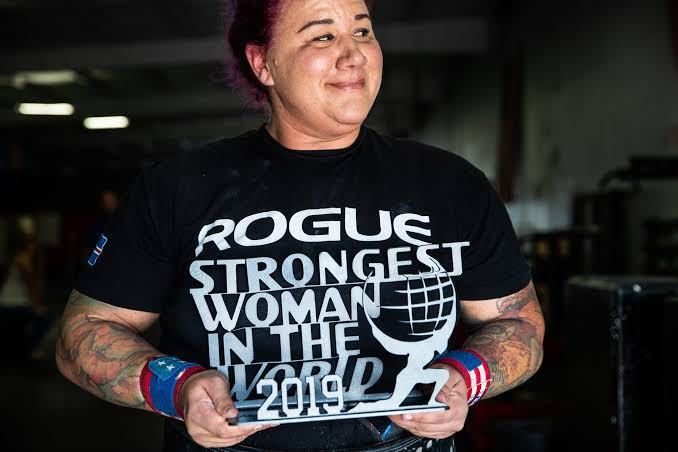
2019 Strongest Woman in the World champion · Mouser Block Press world record holder
Inactive athlete
Jessica Fithen is an American strongwoman who won the 2019 Strongest Woman in the World contest in Palmer, Alaska, and the 2018 Arnold Amateur Strongwoman World Championships. She finished third at the 2020 Arnold Pro Strongwoman and achieved a landmark 100-kg women's Mouser Block Press record in January 2021. Recognized for her overhead strength and determined contest performances, she also helped challenge misogynistic commentary about female athletes through the online project “You Look Like a Man.”
Jessica Fithen belongs to a generation of American strongwomen whose careers helped bring elite women's strength competition into wider public view. Her achievements include winning the 2018 Arnold Amateur Strongwoman World Championships, claiming the 2019 Strongest Woman in the World title in Palmer, Alaska, and finishing third at the 2020 Arnold Pro Strongwoman. She also recorded a widely reported women's world record with a 100-kilogram Mouser Block Press in January 2021. Taken together, these accomplishments establish a competitive legacy that cannot be reduced to a single photograph of a heavy lift.
Strongman Archives lists eight international competitions and two international victories in the period from 2018 through 2021. Those figures represent the events held in the archive, not necessarily every local contest or gym-based challenge Fithen ever entered. Her profile also contains an important distinction: the competition called Strongest Woman in the World, which she won in 2019, is not the same event as World's Strongest Woman, where she placed fourth in both 2018 and 2019. Keeping those titles separate makes her achievements more, rather than less, meaningful.
Fithen became identifiable for her overhead strength, adaptability with unusual implements and willingness to discuss the social pressures placed on muscular women. Through the online project “You Look Like a Man,” she challenged derogatory commentary directed at female athletes. Her story is therefore both a record of verified competition performances and an example of how an accomplished athlete can use public attention to broaden a conversation about sport, appearance and respect.
Many successful strength athletes enter their disciplines through organized school sports, weightlifting clubs or powerlifting. Fithen has described a different starting point. In a Muscle & Fitness interview, she explained that she had been attending Zumba and step-based group fitness classes before deciding that they no longer provided the challenge or progress she wanted. In 2015, she joined a gym to learn Olympic-style weightlifting. The decision eventually placed her on an international strongwoman platform, although that destination was not immediately apparent.
She quickly discovered an interesting mismatch between physical ability and technical preference. She was naturally strong, but she struggled with the technically demanding Olympic lifts. A coach suggested that strongman might suit her abilities better. The discipline allowed her to apply force to large, awkward objects rather than concentrating solely on the execution of the snatch and clean and jerk. Tire flips, carries and overhead lifts offered a different way to channel the strength that had become obvious during training.
According to the same account, she entered an amateur strongman contest soon afterward and won decisively. That early result encouraged further involvement, gradually changing a recreational fitness pursuit into serious preparation for competition. The important lesson is not that technique matters less in strongwoman. Every event has its own exacting demands. Rather, her experience illustrates how choosing an appropriate discipline can reveal abilities that a previous form of exercise had not fully expressed. Her early career is a story of adaptation and discovery, not an invented childhood destiny of world-class strength.
Moving from general fitness into strongwoman requires developing more than a large squat or deadlift. Competitors must be able to lift a maximal load, move quickly under heavy implements, coordinate their bodies around unfamiliar objects and recover sufficiently to compete across several events. The energy demands of carrying a yoke for distance are different from those of lifting a maximum-weight log. A heavy stone series calls for skills that are not identical to those used in a barbell deadlift. The best competitors prepare for this variety without neglecting their basic strength.
In 2019, Fithen told Muscle & Fitness that she trained at least four days per week. Much of her training took place at Unbreakable Athletics Academy in Plainfield, Indiana. On Saturdays, she traveled to Indiana Strong in Huntington, a dedicated strength community where she could work with specialist equipment and other competitors. These locations are documented for that stage of her career; the available sources do not establish that they remain her current training bases.
Her comments also emphasized the importance of people who cared about the sport as seriously as she did. Strongman equipment takes space, planning, physical assistance and time to prepare. Training partners can help with technique, loading implements, timing runs and recreating event conditions. In that environment, individual results rest partly on collective effort. Fithen's development shows the value of combining ordinary strength movements with specific implements and a reliable community, while reminding the reader that a training location should never be described as current when the evidence is historical.
March 2018 gave Fithen her first major international championship in the competition records. She won the women's Open division at the Arnold Amateur Strongwoman World Championships in Columbus, Ohio, finishing first among ten competitors. The Arnold Sports Festival's historical list of women's champions also records Jessica Fithen as the 2018 titleholder. This independent confirmation matters because Arnold Amateur and Arnold Pro Strongwoman are different contests and should not be collapsed into one achievement.
The individual events reveal how she assembled that victory. Fithen won the Atlas Stones with a five-stone series completed in 18.59 seconds, took first in the combined Log and Deadlift event, and placed first in the Dumbbell Press with six repetitions. She also finished second in Stone of Steel and Shield Carry. Farmer's Walk was a weaker event in this particular contest. Her overall performance nevertheless provided enough points to win a multi-event title, a reminder that the best overall athlete need not lead every single discipline.
This victory was a decisive step toward the professional stage. It demonstrated that her strength translated from training sessions into high-level competition and that she could manage the changing demands of several strongwoman events. It would be misleading to treat the title as proof that she had already defeated the professional field at Arnold. Its real significance lies in the quality of the amateur championship, the number of competitors, her event wins and the platform it provided for subsequent appearances among elite strongwomen.
In July 2018, Fithen competed at Strongest Woman in the World in Vinstra, Norway. She finished fourth out of five women, with Brooke Sousa winning the overall title. The placing should not be read in isolation. Fithen produced a first-place result in Viking Press with 14 repetitions, and she finished second in both Power Stairs and Truck Pull. These event results show a competitor already capable of defeating strong international opponents when a task suited her abilities.
Other disciplines were less favorable. She placed fifth in Hercules Hold and fourth in Atlas Stones and Super Yoke. The spread of event positions demonstrates why strongwoman is fundamentally a test of versatility. A competitor can achieve a standout pressing performance and still lose substantial points elsewhere. It does not follow that an athlete lacks a particular physical quality simply because she finishes behind other world-class participants in one event. The distance, equipment, surface and rules may all influence the outcome.
The Norwegian contest also expanded her experience with international travel and different competition formats. Overseas events can involve unfamiliar implements, schedules and technical expectations. Rather than presenting every result as a triumph, her biography benefits from acknowledging where she excelled and where other athletes gained an advantage. This was part of the development of a serious competitor and an early demonstration of the overhead strength that would become central to her reputation.
Fithen returned to international competition in December 2018, finishing fourth among ten athletes at World's Strongest Woman in Raleigh, North Carolina. The result established her ability to reach the upper portion of the field in a major Open-division championship. Crucially, this was a different competition from the Strongest Woman in the World event held in Norway earlier that year and later in Alaska. The similarity of the names makes precise labeling necessary for any reliable athlete archive.
The Raleigh event involved a demanding range of disciplines. Fithen completed five Atlas stones, from 91 to 147 kilograms, in 39.89 seconds and placed third in that event. She finished fourth in a medley featuring a 272-kilogram yoke and 100-kilogram sack, fourth in Wheelbarrow Carry and fourth in an Overhead Medley combining an axle, log, dumbbell and keg. The overhead implements were listed as 93, 93, 57 and 86 kilograms respectively, and she completed the medley in 45.12 seconds. She also completed a four-stage deadlift ladder, progressing from 166 to 234 kilograms.
These are competition performances, not automatically personal records in every lift. Nevertheless, they provide a clear picture of the strength and technical versatility required at the highest level. The fourth-place overall finish was particularly valuable because it followed her Arnold Amateur victory in the same year. The two contests together showed that she could win among amateurs and remain highly competitive against major international strongwoman fields.
At the 2019 Arnold Pro Strongwoman in Columbus, Fithen finished fifth among ten competitors. The position was an important test of the transition from amateur success to professional competition. At Arnold Pro, the level of strength and event-specific preparation can be exceptionally high. Even an accomplished athlete may find it difficult to build a large point advantage when several opponents specialize in different events.
Fithen recorded eight repetitions in Axle Press and placed fourth in that event. She completed five repetitions in Stone to Shoulder, earning fifth. Her ten deadlift repetitions also placed fifth. Stone Carry resulted in sixth and Frame Carry in fifth. Rather than one decisive win, the event sheets show a stable set of performances around the middle of a world-class field.
This fifth-place finish is essential to understanding her later Arnold podium. It offered a competitive benchmark and demonstrated her capacity to handle the professional event schedule. A year later she would return to the same stage and win three individual disciplines on her way to third overall. Seen as a sequence, those results document a concrete improvement in championship placing. Neither result should be exaggerated: the earlier fifth place did not make her an unsuccessful athlete, and the later podium did not make her the winner of the entire Arnold Pro contest. The significance lies in measured progress within a difficult field.
On August 25, 2019, Jessica Fithen won Strongest Woman in the World in Palmer, Alaska, in the women's Open division. She scored 29.5 points over five events, with Brooke Sousa in second on 19.5. The ten-point margin conveyed the scale of the victory. It was the championship that brought her wider recognition and secured an enduring place for her name in the history of the event.
The contest was unmistakably strongwoman in its variety. It comprised Keg Press, a medley, deadlift, Salmon Toss and Loading Race. Fithen finished a five-keg pressing series in 29.31 seconds, completed the medley in 28.56 seconds, achieved eight deadlift repetitions, threw a salmon 4.29 metres and recorded three successful loads in 55.59 seconds. Strongman Archives places her first across the event categories, although the points presentation indicates a shared top score in deadlift.
The title demonstrated more than static strength. She succeeded in pressing, loading, throwing and timed movement, a combination that rewarded adaptable technique and the ability to maintain performance over an entire contest. A heavy overhead implement and an awkward object thrown for distance are dramatically different tasks, yet both contributed to the same commanding outcome. The Alaska victory therefore occupies a central place in her sporting biography. It is also important to give the contest its correct name, rather than mistakenly identifying the title as a victory at the separate World's Strongest Woman championship.
For readers new to strongwoman, the naming of major events can be genuinely confusing. Strongest Woman in the World, World's Strongest Woman, Arnold Pro Strongwoman and World's Ultimate Strongwoman are not interchangeable titles. They have been associated with different organizers, dates, fields and sporting formats. The resemblance between Strongest Woman in the World and World's Strongest Woman is especially easy to overlook when a championship is mentioned in a short biography or social-media caption.
Jessica Fithen won the 2019 Strongest Woman in the World contest in Palmer, Alaska. She finished fourth at World's Strongest Woman in 2018 and again in 2019. She was fifth at Arnold Pro Strongwoman in 2019 and third in 2020. The distinction does not diminish her achievements. It makes them verifiable and allows specialists to compare like with like.
Strength sports have not always operated through a single universal championship system. Different promoters may stage prestigious international events, sometimes awarding similarly worded titles. As a result, responsible journalism should identify an event by its official name and year instead of turning every winner into an unspecified holder of every conceivable world championship. Fithen's victories and placings are impressive enough without that distortion. A detailed athlete profile earns trust by preserving these distinctions, particularly when it aims to serve as a permanent archive rather than a short promotional announcement.
In November 2019, Fithen competed at World's Strongest Woman in Daytona Beach, Florida, and finished fourth among ten women. It was her second consecutive fourth-place finish in the Open division of that event. She was again close to the podium, but the details show a highly varied competition rather than uniform performance across the board.
Her Viking Press result was outstanding: 17 repetitions and first place. She also finished second in Axle Press with five repetitions and third in Carry and Drag, recording 73.24 seconds. Other events proved less favorable. Seven completed steps in 31.59 seconds gave her sixth in Power Stairs; the deadlift ladder placed her sixth. At Farmer's Walk, 24.13 metres placed her tenth. These event-by-event distinctions explain why an athlete can win a discipline convincingly while still finishing fourth overall.
The Daytona Beach result also complements the victory in Palmer earlier that year. There is no contradiction between winning one high-level competition and placing fourth in another, because fields and disciplines change. In Alaska, Fithen performed exceptionally across a wide set of events; in Daytona Beach, her overhead superiority was clear but other disciplines cost valuable points. A full career profile should preserve both outcomes. They reveal the real competitive structure of strongwoman and help avoid a flattened story in which every result is treated as either a resounding success or a complete failure.
March 2020 brought another major achievement: third place at Arnold Pro Strongwoman in Columbus, Ohio. This was her best recorded placing at the professional Arnold event, and it came with three individual event victories. In the Last Woman Standing Stone Over Bar challenge, Strongman Archives records 34 repetitions. She also won Dumbbell Press with five repetitions using 63.5 kilograms and took first in Tire Flip with nine flips. Those event wins cover distinct forms of strength endurance, coordination and explosive movement.
The competition was not entirely favorable. Fithen completed nine repetitions in the 18-inch deadlift and placed fifth. In the carry medley, involving a 238-kilogram yoke and 104-kilogram farmer's implement, she placed seventh. Such discrepancies are central to understanding why the overall bronze medal was achieved despite three first-place event performances. A multi-event contest rewards the distribution of results, not simply the number of events an athlete dominates.
Her improvement from fifth in 2019 to third in 2020 provides one of the clearest lines of progression in the available competition data. It is also an important counterweight to any narrative that portrays the 2019 Alaska title as her only major accomplishment. The Arnold podium confirmed Fithen's ability to remain competitive against high-level professional opponents and to produce outstanding individual performances in a demanding championship environment.
The most consistent competitive strength in Fithen's documented results is overhead pressing. Her Viking Press victories in 2018 and 2019, strong Axle Press outings, Alaska Keg Press win, Arnold Dumbbell Press victory and subsequent Mouser Block Press record all point toward remarkable proficiency in lifting or propelling heavy implements above the head.
Overhead events require more than large shoulder muscles. Effective leg drive, timing, upper-back stability, trunk stiffness, grip management and an efficient lockout can all contribute. Different implements change the challenge substantially. An axle may complicate the clean, a log changes hand position and body contact, and a block can be particularly awkward to transition into a pressing position. Therefore a result in one discipline cannot simply be converted into a predicted maximum for another.
Available public evidence supports the description of Fithen as an accomplished Open-class strongwoman with a particular competitive advantage in many pressing events. It does not support speculative assertions about her muscle-fiber distribution, health markers or anatomical advantages. What matters is that the event records repeatedly place her near or at the top in overhead challenges against elite opponents. This performance-based explanation is both more precise and more respectful than attempting to explain her athletic career through unsupported physical stereotypes.
In January 2021, at the Mammoth Strength Challenge V in Bowling Green, Kentucky, Fithen achieved one of the most distinctive performances of her career: a successful 100-kilogram Mouser Block Press. The weight was approximately 220.5 pounds. Fitness Volt reported that she had previously held the women's mark at 84.4 kilograms and improved it by 15.6 kilograms. BarBend later described her as the first woman to press at least 100 kilograms with a block. The circumstances, the implement and the date make this a specific historical achievement rather than an unsourced claim of general supremacy in overhead lifting.
The Mouser Block is a solid, awkwardly shaped implement that can be loaded with plates. The competitor must lift it from the ground, move it into a position from which it can be pressed, then extend the arms overhead under the applicable rules. Unlike a standard barbell, the block provides different contact points and changes how the load can be balanced during its transition toward the shoulders. It demands strength, precise movement and control under an unfamiliar distribution of mass.
Contemporary reports described Fithen encountering difficulties as she changed her grip and stabilized the load, yet managing to secure the successful lift. The result demonstrated both the power and adaptability she had shown earlier in competition. It is correct to identify the press as a women's world record reported in 2021. Without a separate, up-to-date record registry, it would not be correct to state that the mark is necessarily still unbeaten in October 2026.
Different overhead implements share a destination but not the same mechanics. A conventional barbell has a narrow shaft and usually permits a relatively symmetrical hand position. A log offers parallel handles within a large cylindrical body and requires its own cleaning technique. A Mouser Block presents a bulky shape with different contact surfaces, which can change the position of the load against the torso and forearms.
For that reason, a 100-kilogram block press is not simply equivalent to a 100-kilogram axle or log press. Neither is it an automatic indicator of Fithen's one-repetition maximum with every other implement. The athlete must solve the coordination and balance problem presented by the particular object. In strongwoman, that capacity to find an efficient position is a legitimate component of performance rather than an accidental complication.
This distinction helps place her record in historical context. The achievement should be described using the name of the apparatus, the weight, the competition and the reported validation. Removing those details risks creating artificial comparisons with records from different disciplines. For a serious sports archive, specificity strengthens rather than weakens the sense of achievement: the 100-kilogram Mouser Block Press was an exceptionally difficult task, accomplished in a recognized strength contest, and it stood out precisely because the implement was unconventional.
Strongman Archives lists World's Ultimate Strongwoman, held in Dubai on September 17, 2021, as Fithen's most recent recorded international competition. She placed seventh among eight women, earning 14 points. Annabelle Chapman won the contest, with Donna Moore second and Melissa Peacock third. The field also included Andrea Thompson, Cori Butler, Sandra Bradley and Nadia Stowers, making it a major meeting of accomplished strongwomen.
Fithen's strongest event was the 100-kilogram log press, where she completed five repetitions and shared third place. In the Atlas Stones she lifted seven stones from the ten-stone series, which was advertised as ranging from 60 to 150 kilograms. She covered 45 metres in the Super Yoke for distance. The Chain Railway Carriage event was completed in 41.80 seconds, while her Farmer's Walk result was 8.6 metres. The combined outcome placed her seventh overall.
This contest again demonstrated a familiar pattern: effective overhead pressing alongside more difficult results in some moving events. The seventh-place finish belongs in a complete biography just as much as the victories in Columbus and Palmer. It tells the reader what actually happened rather than offering a selective collection of favorable moments. After this competition, the major archive does not provide a verified later international result. That fact alone does not confirm an official retirement. Her recorded competition years should therefore be distinguished from an asserted date on which she supposedly stopped training or competing altogether.
In her Muscle & Fitness interview, Fithen described a training approach that combined the basic movements of powerlifting with event-specific strongman work. Squatting, bench pressing, deadlifting and various types of overhead pressing created general strength, while specialized sessions prepared her for the challenges announced by competition organizers. This was a practical approach to a sport in which an athlete may need to lift a log in one contest and carry a shield in the next.
The magazine published an example of an overhead-oriented session. It included band pull-aparts, behind-the-neck pull-aparts, five sets of three on the log clean and press, three sets of five in the log lockout, face pulls, neutral-grip lat pulldowns and triceps pushdowns. The purpose of these movements can be understood in broad terms: improving pressing strength while working the upper back, shoulder control and elbow extension that support repeated overhead efforts.
However, the public material does not reveal the exact weights used in every session, a full yearly progression plan or detailed decisions about recovery and fatigue. It would be inaccurate to present one sample workout as a secret blueprint for her world record. What it offers is an authentic snapshot of the training priorities she discussed during a particular period of her career. The broader principle is transferable: maintain general strength, practice the actual implements and prepare for the demands of each contest instead of assuming that gym strength automatically produces strongwoman success.
Fithen has challenged the idea that strongman and strongwoman consist only of static feats performed by very large people. Certain events last only a few seconds and reward maximal force. Others require sustained movement while carrying an implement, pushing a vehicle or loading multiple objects. A long medley can be limited not simply by raw strength but by breathing, pacing, coordination and the ability to continue working after several hard efforts.
In 2019, she reported including conditioning or cardio work on two training days during a typical week. This detail helps explain the logic of preparing for mixed contests. The Alaska championship, for example, included fast pressing, loaded movement, throwing and deadlift repetitions. An athlete who neglects conditioning may be capable of moving a single heavy object but less able to reproduce effective efforts under time pressure or across multiple events.
The available sources do not allow a precise causal claim that a particular cardio session led to a specific victory. Training adaptations involve many interacting factors. Yet Fithen's approach clearly recognized endurance and movement as legitimate components of competitive strength. For a developing athlete, that is a useful lesson, provided it is adapted to individual readiness. The training load appropriate for an international competitor should not be copied indiscriminately by a beginner. The important idea is to prepare the body for the complete sporting task, not merely for the most spectacular weight on the program.
Muscle & Fitness also reported Fithen's comments on nutrition during her high-level competitive years. She described eating primarily to support performance and to feel capable during demanding training. Protein, rice and sufficient overall energy featured in her account. As a heavyweight Open competitor, she did not face the same strict body-weight cap imposed on competitors in lighter classes.
One widely noticed detail was her reported daily sodium intake, which she placed between 5,000 and 8,000 milligrams at that time. She related this to long events, hot training environments and high sweat losses. It is important to understand this as a historical statement by the athlete, not as dietary advice for the public or a universal recommendation for strength sports. Sodium requirements vary, and elevated consumption may be unsafe for some people, especially when health conditions are present. No conclusion about Fithen's cardiovascular health can responsibly be drawn from this comment alone.
From a biographical point of view, the information conveys her performance-oriented attitude. She emphasized the practical question of being able to train and compete rather than using appearance as the primary measure of success. That approach is consistent with a sport in which heavy carries, repeated lifts and long outdoor events can impose substantial demands. An accurate profile can report the athlete's strategy without presenting it as medical or nutritional instruction.
Indiana was an important geographical setting for Fithen's rise. The gyms identified in 2019 connected her with the equipment and training partners required for strongwoman competition. Commercial fitness facilities do not necessarily have heavy yokes, Atlas stones, circus dumbbells, loading platforms or large outdoor space for moving events. Specialized training often requires travel, planning and the assistance of a group.
The reported Saturday journey to Indiana Strong in Huntington illustrates that commitment. In a dedicated strongman environment, equipment can be adjusted, techniques discussed and events simulated under a clock. Experienced training partners may help identify inefficient transitions between implements, while a supportive group can make the demanding logistical side of training manageable. Her appreciation for such a community appeared explicitly in the contemporary interview material.
A BarBend podcast also discussed her experience being coached by Kalle Beck, a recognizable figure in the Starting Strongman community. This establishes a documented coaching connection. It does not establish that he was her sole coach throughout every phase of her sporting life. A factual biography should make room for multiple influences and the possibility of changes over time rather than asserting a complete coaching history without evidence. Taken together, these details show that her development depended on serious training, appropriate equipment and a shared sporting culture.
One of Fithen's most widely discussed contributions outside competition was “You Look Like a Man,” an Instagram project addressing disparaging comments aimed at women who lift weights. The page highlighted abusive or unsolicited remarks about women's bodies, often presenting the language in a way that exposed its absurdity. The concept turned examples of public hostility into material that other female athletes could recognize, discuss and challenge.
Fithen spoke about the project on the Iron Ladies podcast, The Future Is Female Powerlifting and BarBend. The conversations explored why female strength athletes were asked to justify their physiques, why insulting comments are sometimes excused as ordinary internet behavior, and whether those targeted should respond, block the attackers or ignore them. The debate went beyond competition results and addressed the social climate in which women train, perform and share their athletic achievements.
Accounts of the project's beginnings include her collaboration with a friend, while other sources describe her as its central creator or driving force. It is reasonable to credit Fithen's major role without erasing the collaborative aspects discussed publicly. More importantly, the project offered a language and a community for people who were tired of seeing their achievements reduced to judgments about appearance. The initiative illustrates how her sporting profile and public engagement developed together, providing influence that cannot be measured simply by kilograms or championship placings.
Women's strength sports are often evaluated under two different sets of expectations. In the competition arena, athletes are measured through objective criteria: how far an implement moves, how many repetitions are completed and how quickly a task is finished. On social media, the same bodies can be judged against unrelated ideals of beauty or conventional femininity. Fithen's advocacy emerged from this tension.
The Future Is Female Powerlifting devoted an extended November 2020 episode to her work and the wider problem of harassment. Its public description addressed derogatory comments, the way the project gathered them, and the question of whether female athletes should be expected to remain silent when they are demeaned. That discussion is a valuable record of a public conversation, although it is not a complete account of every personal incident that Fithen may have experienced.
Her contribution was to insist that physical achievement need not be justified through an outsider's aesthetic preferences. A strongwoman does not owe the internet a particular body type. This message reaches beyond elite competitors to recreational lifters, coaches and women entering weight training for the first time. It also makes her biography more complex than a list of medals. Fithen used a public platform created partly through sporting success to question the cultural standards applied to female athletes. The precise social impact of that intervention is difficult to quantify, but repeated interviews across independent outlets show that the discussion reached audiences beyond a single personal account.
The public record is extensive in some areas of Fithen's life and limited in others. Competition databases establish her appearances, placings and many event performances. Interviews describe her early interest in fitness, changes in training direction, gym communities and views on online harassment. In contrast, reliable sources do not provide enough consistent information to state an exact birth date, current height, current body weight or comprehensive family history.
Online search results also contain professional profiles bearing the name Jessica Fithen and associations with organizations or employers in Indiana. Similar names and locations alone are not adequate proof that every such document concerns the athlete. Assigning a degree, position or employer to her without a clear identity match could conflate two people. For that reason, this biography does not claim an unverified civilian employment history or fabricate details about a partner or children.
That editorial caution does not erase the person behind the athlete. Her own statements convey that she values supportive training communities, approaches food and exercise with performance in mind, and wants women to be able to pursue strength without humiliation. Those are meaningful details about the public values she has expressed. Respecting the boundary between documented experience and undocumented private life is especially important in a long-form profile, where the pressure to fill every paragraph can otherwise encourage speculation.
Strongwoman produces a variety of numbers, but not all numbers serve the same purpose. At the 2018 World's Strongest Woman, Fithen completed a deadlift ladder culminating in 234 kilograms. This proves she successfully negotiated that stage of the contest; it does not establish a lifetime deadlift maximum. Likewise, five dumbbell repetitions at 63.5 kilograms in 2020 do not automatically identify her heaviest possible single repetition. The five repetitions with a 100-kilogram log in Dubai in 2021 are a documented contest achievement, not a complete statement of her best-ever log press.
A world record is a separate classification that requires explicit evidence. The 100-kilogram Mouser Block Press has that supporting reporting, including the named event, the date and the comparison with the earlier 84.4-kilogram mark. It should therefore be treated as an important historical record. Whether the world record remains current requires another check of later results and should not be assumed.
These distinctions protect both the athlete and the accuracy of comparisons with other competitors. Lifts performed under different equipment dimensions, time limits or judging conditions cannot always be compared numerically. For an archive, clearly labeled event results are more valuable than inflated or invented personal records. In Fithen's case, the available numbers already demonstrate extraordinary strength without the need to infer unrecorded maxima.
According to Strongman Archives, Fithen's international competition record in the years 2018 through 2021 contains eight events and two overall victories. Those totals, however, only begin to describe her competitive significance. She won Arnold Amateur in 2018, achieved two fourth-place finishes at World's Strongest Woman, took the 2019 title in Palmer and stood on the professional Arnold podium in 2020. She also recorded individual event victories that demonstrate how frequently she could defeat elite opponents in a particular discipline.
Her strengths are apparent in Viking Press, Dumbbell Press, Keg Press and the exceptional Mouser Block. Her ability to complete serious Atlas Stone sequences and other mixed challenges adds depth. Certain carry events yielded much less favorable placings, and her final international result on the available record was seventh in Dubai. A balanced portrait must include these contrasts rather than selecting only photographs and statistics that convey invincibility.
Her public legacy extends beyond competition. By speaking openly about misogynistic remarks toward athletic women, Fithen helped connect two conversations that are too often kept apart: what strength athletes can accomplish and how society reacts to their bodies. Neither her sporting record nor her advocacy should be exaggerated into unsupported claims. Both are substantial enough to justify a place in a serious strongwoman archive. The lasting importance of her career comes from the combination of documented performance, technical specialization and public engagement.
Strongwoman rankings are constructed from individual event placings, not by simply adding together all the kilograms lifted in a competition. An excellent result in Viking Press may deliver a similar number of ranking points to an excellent Farmer's Walk result, although the underlying physical tasks are very different. Understanding this system is essential when interpreting Fithen's competitive history.
At the 2019 Strongest Woman in the World, her results were strong across the entire program, producing a ten-point lead over Brooke Sousa. At the 2020 Arnold Pro, she won three separate disciplines but finished third overall. Both outcomes make sense once the importance of each event is understood. Losing points in a carry can offset the advantage gained by pressing more repetitions than anyone else.
The same principle applies to less successful outings. A first-place finish in overhead pressing does not guarantee a podium in the complete contest. Each discipline introduces its own technical and conditioning requirements, and different competitors can take the lead as the event list changes. Competition analysis must also consider the number of participants, time caps, equipment, surfaces and exact weight specifications.
For Fithen, the event-by-event record reveals a specialist pressing advantage within a broader and genuinely versatile sporting career. It would be speculative to explain every lower placing through a presumed weakness of grip, mobility or motivation without direct evidence. The responsible observation is narrower: certain moving events cost her points relative to the field, while pressing events often put her near the top. That distinction is crucial to any accurate interpretation of her achievements.
Atlas Stones are among the most recognizable strongman implements, and they recur throughout Fithen's international results. At the 2018 Arnold Amateur championships, she completed a five-stone series in 18.59 seconds to win the event. At World's Strongest Woman later that year, she loaded five stones ranging from 91 to 147 kilograms in 39.89 seconds and placed third. At the 2021 World's Ultimate Strongwoman, she completed seven stones in a much longer sequence.
These performances cannot be compared as if they had identical specifications. The size, texture and loading height of stones, along with the permitted grip materials and time limit, can significantly change the nature of the task. Still, their presence across several championships demonstrates substantial experience with heavy spherical objects under pressure.
An Atlas Stone series requires a particular sequence of physical actions. The athlete must secure the stone from the floor, move it toward a position where the hips can extend, then place it on the platform. Each transition can use or waste time. The competitor must also choose an efficient pace between stones, often as the weights increase.
Fithen's Arnold Amateur victory provides clear evidence of high-level stone-loading ability. Other events show that she could complete demanding sequences on the international stage. It would be an overstatement to call her the unchallenged greatest stone lifter of her era, but her documented results justify describing Atlas Stones as an important and repeatedly tested component of her competitive repertoire.
Viking Press is one of the clearest examples of consistency in Fithen's event record. In Vinstra in 2018, she completed 14 repetitions and won the event. At Daytona Beach in 2019, she increased the listed repetition total to 17 and again placed first. These are not isolated personal training clips but officially recorded performances against international competitors.
The event differs mechanically from a free barbell press. Viking Press apparatuses typically use pivoted arms or levers, and their geometry influences the actual force experienced by the athlete. Comparing a nominal equipment weight with a log or axle weight can therefore be misleading. Repetition count, event placing and competition context are usually the safest published reference points.
The successful repetitions require power, stabilization and enough muscular endurance to sustain work over the event's time limit. Fithen showed that her overhead abilities could withstand repeated effort and competition pressure. These results are also historically interesting because they preceded her 100-kilogram Mouser Block Press in 2021. They demonstrate a documented line of outstanding pressing results across different apparatuses rather than a sudden, inexplicable record.
Her Viking Press history therefore helps the reader connect several apparently separate achievements. The Arnold dumbbell victory, the Alaska keg performance and the block record all belong to a broader pattern in which overhead tasks repeatedly became opportunities for Fithen to gain points on her opponents.
The moving events in Fithen's record were not uniformly successful. At the 2018 Arnold Amateur championships, Farmer's Walk was her lowest placing in a contest she otherwise won. At World's Strongest Woman 2019, a distance of 24.13 metres placed her tenth of ten. At World's Ultimate Strongwoman 2021, she achieved 8.6 metres and again finished last in the Farmer's Walk. At other times, however, she produced good results in mixed carrying and dragging challenges, including third place at Carry and Drag in 2019.
These contrasts need context. Farmer's Walk can vary in handle height, grip diameter, equipment weight, surface friction, race distance and rules about setting the weights down. A timed medley can include yoke, sled, sandbags, barrels or other objects and may reward an athlete with a completely different skill combination. Two competitions using similar event labels may demand different technical solutions.
There is a temptation to turn numerical patterns into an anatomical diagnosis or a psychological explanation. The evidence does not support that. We can state which events were less favorable in competition and how they affected her overall ranking. Without detailed video analysis, training logs and the athlete's own account, we should not claim to know precisely why.
Presenting the unfavorable results alongside her many victories makes the biography more useful. It shows the demanding reality of strength competition, where athletes must develop multiple abilities and where no single kind of strength guarantees dominance in every possible event.
The Palmer contest became memorable partly because of its unusual collection of events. Alongside more familiar strength tasks, competitors encountered Salmon Toss and a combination of pressing, loading and vehicle-related movement. These challenges reflected a long tradition in strongman of testing power through awkward objects rather than restricting competition to standardized barbells.
Fithen's winning salmon throw measured 4.29 metres. She completed the medley in 28.56 seconds and the five-keg press in 29.31 seconds. The diversity of these accomplishments helps explain why general-interest journalists found the story compelling. Spectators unfamiliar with strongwoman could recognize the visual challenge of lifting heavy kegs and throwing a large object even without knowing the precise rules of every event.
Nevertheless, the more colorful elements should not obscure the sporting details. The decisive facts are that six women entered the Open competition, five events determined the result, Fithen earned 29.5 points and she finished ten points ahead of the runner-up. Those figures distinguish a decisive championship from a collection of entertaining feats.
The Alaska performance also demonstrates why adaptability is central to strongwoman. A competitor rarely controls the complete event list. When organizers introduce unfamiliar implementations of strength, an athlete must find effective movement solutions in a limited preparation period. Fithen's victory across a varied program was a compelling demonstration of that adaptability.
Exceptional feats of strength often spread on social media with very little context. A caption may say that someone was the first to press 100 kilograms, even when the actual achievement concerned a particular apparatus and weight class. Fithen's Mouser Block Press shows why responsible reporting needs greater precision.
Contemporary coverage identified the competition as Mammoth Strength Challenge V in January 2021 and reported a 100-kilogram successful lift. Fitness Volt compared that mark with the previously reported 84.4-kilogram record. BarBend described the achievement in terms of the first woman's block press of at least 100 kilograms. Those details allow a reader to understand the scope of the claim and locate the historical moment.
Without them, the reader might confuse a block with a log, axle, dumbbell or barbell. It is also easy to mistake a lifetime record established in one event for an all-time record across an entire category of overhead lifting. The standards and difficulty of these disciplines are not interchangeable.
A serious archive should preserve original competition names, dates, equipment and verification sources. Where later record progressions have not been independently checked, wording such as “a women's world record reported at the time” is more accurate than a blanket assertion that no other woman has ever matched or surpassed the mark. Precision honors the lift rather than diminishing it.
Fithen's peak competitive years overlapped with an expansion of online strongwoman coverage. Results from major contests became easier to find, specialist publications increasingly reported women's performances, and athletes used their own accounts to share training and records with audiences across national borders. A lift performed in Kentucky could reach spectators who had never attended a strongman contest, while a podium at Arnold could draw attention to an athlete's wider career.
In this environment, visibility carried contradictory consequences. Athletes gained opportunities to communicate directly with fans and other competitors, yet also became targets of public commentary unrelated to athletic performance. For women with muscular physiques, insults frequently relied on familiar assumptions about how femininity should look.
Fithen's “You Look Like a Man” project developed within this broader shift. Her strength achievements gave her a recognizable platform, while the project addressed a problem extending beyond the sport's elite. The combination made her a relevant voice in both strongwoman and social discussions about the policing of women's bodies.
It would be historically misleading to claim that one athlete created the modern strongwoman movement. Competitive growth resulted from the work of many athletes, coaches, organizers and broadcasters. Fithen's distinctive contribution was to combine substantial performances in the arena with a publicly visible challenge to the attitudes that often accompany female strength online.
Podcast appearances add dimensions that cannot be obtained from competition rankings alone. Fithen spoke to the Iron Ladies podcast about her route into professional strongwoman and the origins of “You Look Like a Man.” She participated in an extended discussion for The Future Is Female Powerlifting about online harassment and the responses available to women who encounter insulting comments. BarBend brought together her record-breaking lifting, coaching experience and views on the direction of women's strongman.
These conversations document values and experiences that Fithen chose to discuss publicly. They do not provide permission to invent private details that the athlete did not disclose. A commentator can examine her arguments about social-media culture without claiming to know her family relationships, medical history or entire working life.
The interviews also offer a way to distinguish direct statements from journalists' interpretations. A competition result may be verified in an archive, while a training philosophy or personal motivation is better attributed to the source in which the athlete described it. When several independent interviews discuss a similar theme, the resulting account becomes more reliable without needing to dramatize it.
For a long-form profile, this source discipline is especially important. An athlete is more than a table of results, but writing about personality must not become permission to impose fictional characteristics. Fithen's public interviews provide plenty of meaningful information about how she approached strength, community and criticism.
Professional life outside sport deserves attention, but it is also an area where online biographies can make serious mistakes. Public results include individuals with the name Jessica Fithen connected to employers and organizations in Indiana. A matching name and state do not establish that every profile belongs to the strongwoman athlete. Even when some details overlap, the identity of a person in one record must be confirmed before importing education or employment history from another.
Accordingly, this biography confines firm professional claims to activities supported by the sports record and verified public appearances: international strongwoman competition, training relationships, published interviews and the online project associated with her advocacy. It does not present an unconfirmed job title or a complete résumé as fact.
That caution is not a refusal to recognize the many roles that athletes may have beyond training. Strongwoman competitors often manage substantial responsibilities outside sport, but general knowledge about athletes as a group cannot substitute for evidence concerning a particular individual.
If a future interview or clearly authenticated professional biography establishes further details, this profile can be updated. Until then, the most respectful and reliable approach is to acknowledge the limit rather than fill it with attractive guesses. The same standard applies to unverified birth dates, exact height and weight, family members and claims about formal retirement.
Fithen's career offers several practical insights for people considering strongwoman. First, an athlete need not follow a predetermined childhood pathway. Her transition from group fitness into weight training in 2015, followed by rapid competitive progress, demonstrates that new abilities can emerge after a change of discipline.
Second, strongwoman rewards technical breadth. The basic lifts build general strength, but contest implements require additional practice. Learning the transition of a log, the pickup of a stone or the stride length under a yoke can be as important as adding kilograms to a conventional barbell. Third, an appropriate training community matters. Her historical accounts of travelling between gyms in Indiana illustrate the value of specialized equipment and partners who understand the sport.
Finally, the social environment is part of an athlete's experience. Participation should not require accepting public humiliation about the body. Through “You Look Like a Man,” Fithen highlighted the possibility of challenging hostile attitudes instead of treating them as an unavoidable cost of lifting weights.
None of these ideas constitutes an individual training prescription. The workloads of an established international competitor may not suit a beginner. The transferable principles are adaptability, consistent preparation, attention to specific event demands and the importance of a supportive sporting culture.
A credible account of an athlete's career should include unsuccessful events and difficult competitions alongside titles and records. Fithen placed fourth at World's Strongest Woman twice, won a major contest in Alaska and stood on the Arnold Pro podium, but she also recorded weak placings in certain moving events and finished seventh at Dubai in 2021. These outcomes are not contradictory. They are the normal consequence of competing in a sport that tests several different abilities at once.
Her achievements form a coherent competitive story. Arnold Amateur established her among leading emerging athletes. Palmer demonstrated her capacity to dominate an entire international field across varied events. The Arnold Pro bronze medal showed that she could achieve a podium at the professional level. The Mouser Block Press added a distinctive historical record. Her social-media advocacy gave her a public role beyond the contest floor.
These layers are more informative than a promotional portrait presenting every appearance as a triumph. They also make clear why a contest result is not a complete definition of an individual. Fithen's record includes wins, setbacks, technical achievements and interventions in a wider public debate. The combined evidence is substantial enough to warrant a careful, full-length profile without unnecessary exaggeration.
The verified sporting chronology begins with Fithen's account of moving toward weight training in 2015. In 2018, she won Arnold Amateur, competed in Norway and finished fourth at World's Strongest Woman. In 2019, she placed fifth at Arnold Pro, won Strongest Woman in the World in Alaska and finished fourth again at World's Strongest Woman. The 2020 Arnold Pro brought her third place. January 2021 saw the 100-kilogram Mouser Block Press, followed by the September 2021 World's Ultimate Strongwoman in Dubai.
Different websites may report slightly different dates for the same multi-day championship depending on whether they list the first day, the decisive event day or the publication of final results. Strongman Archives is the primary source for the dates used in this account, while contemporary reporting provides additional context for the block record.
As of October 2026, the reviewed evidence does not securely establish a precise date of birth, complete body measurements, a verified civilian career history or an official retirement announcement. Absence from a particular archive after 2021 should not be treated as conclusive proof of retirement. This is why the competition period listed in the profile is framed as the documented international record, not as an absolute claim about every later activity.
A trustworthy digital archive should remain open to corrections and well-sourced additions. New information can be incorporated when its origin is clear. Accuracy at publication is more valuable than the appearance of knowing every detail.
1. Strongman Archives, “Jessica Fithen”: international placings and individual event results. https://strongmanarchives.com/viewAthlete.php?id=1474
2. Arnold Sports Festival, “Amateur Strongman”: official historical champions, including the 2018 women's Open winner. https://www.arnoldsports.com/sports-events/sports/strongman/amateur-strongman-1/
3. Muscle & Fitness, Kevin Gray, “How Jessica Fithen Trains to Be the Strongest Woman in the World”: interview on early training, preparation and nutrition. https://www.muscleandfitness.com/athletes-celebrities/pro-tips/how-jessica-fithen-trains-be-strongest-woman-world/
4. Fitness Volt, Derek Hall, January 25, 2021, “Strongwoman Jessica Fithen Scores New World Record With 100kg Block Press.” https://fitnessvolt.com/jessica-fithen-100kg-block-press/
5. BarBend, David Tao, “The Worst Part of Strength on the Internet (with Jessica Fithen)”: podcast covering the block press, coaching and social-media advocacy. https://barbend.com/jessica-fithen-strongman-podcast/
6. Fitness Volt, “2019 Strongest Woman in the World”: results and scoring at Palmer, Alaska. https://fitnessvolt.com/strongman/competitions/2019-strongest-woman-in-the-world/
7. Fitness Volt, “2021 World's Ultimate Strongman Results”: full Dubai rankings. https://fitnessvolt.com/2021-worlds-ultimate-strongman-results/
8. Iron Ladies Podcast, episode 21 (2019): Jessica Fithen's interview on strongwoman and “You Look Like a Man.” https://www.ivoox.com/en/episode-21-you-look-like-a-man-with-pro-strongwoman-jessica-fithen-audios-mp3_rf_43966369_1.html
9. The Future Is Female Powerlifting, episode 58 (2020): extended discussion of online harassment and female athletes. https://music.amazon.in/podcasts/3ae74b0b-7907-433d-8ca7-e2846c5750e5/episodes/c6a69647-aec4-4951-b5c4-b262f0b64f69/the-future-is-female-powerlifting-058-%E2%80%9Cyou-look-like-a-man%E2%80%9D-creator-2019-strongest-woman-world-jessica-fithen
Editorial note: Competition statistics are based primarily on the archive and event results. Training and personal motivations are attributed to published interviews. Unverified private or professional details have deliberately not been filled with assumptions.
Iron Hall data
100 KG
Mouser Block Press · One repetition, reported women's world record in January 2021
Verified
84.4 KG
Mouser Block Press (earlier mark) · Reported in 2018 and later surpassed; historical mark, not current record
Verified
100 KG
Log Press · Five reps at World's Ultimate Strongwoman, Dubai, 2021
Verified
63.5 KG
Strongwoman Dumbbell Press · Five reps at Arnold Pro Strongwoman 2020; contest result, not a 1RM
Verified
234 KG
Deadlift Ladder · Top weight in 166–234 kg ladder, World's Strongest Woman 2018; not a verified 1RM
Verified
147 KG
Atlas Stones · Final stone in the 91–147 kg run, World's Strongest Woman 2018
Verified
2018
Columbus, Ohio. Amateur world title, with event wins in Atlas Stones, Log + Deadlift and Dumbbell Press.
1st of 10
2018
Norway; 1st in Viking Press (14 repetitions), 2nd in Power Stairs and Truck Pull.
4th of 5
2018
Finalist, completed five Atlas stones from 91 to 147 kg in 39.89 seconds.
4th of 10
2019
Documented Arnold Pro appearance; 4th on Axle Press with eight repetitions.
5th of 10
2019
29.5 points. First in keg press, medley, loading race and salmon toss; top-score tie in deadlift.
Champion, 1st of 6
2019
Won Viking Press with 17 reps; 2nd on Axle Press and 3rd on Carry & Drag.
4th of 10
2020
Arnold Pro podium; event wins in Stone Over Bar (34), Dumbbell Press (5×63.5 kg) and Tire Flip (9).
3rd of 9
2021
Pressed a 100-kg Mouser block overhead, improving on the previous women's mark of 84.4 kg as reported in 2021.
World record, 100 kg
2021
14 points; five reps with the 100-kg log (joint third) and seven Atlas stones.
7th of 8