
2015
Austfjarðatröllið
In Icelandic interviews from 2021–2022, Melsteð reported entering on short notice. Exact placing is not independently verified.
Reported first strongman appearance
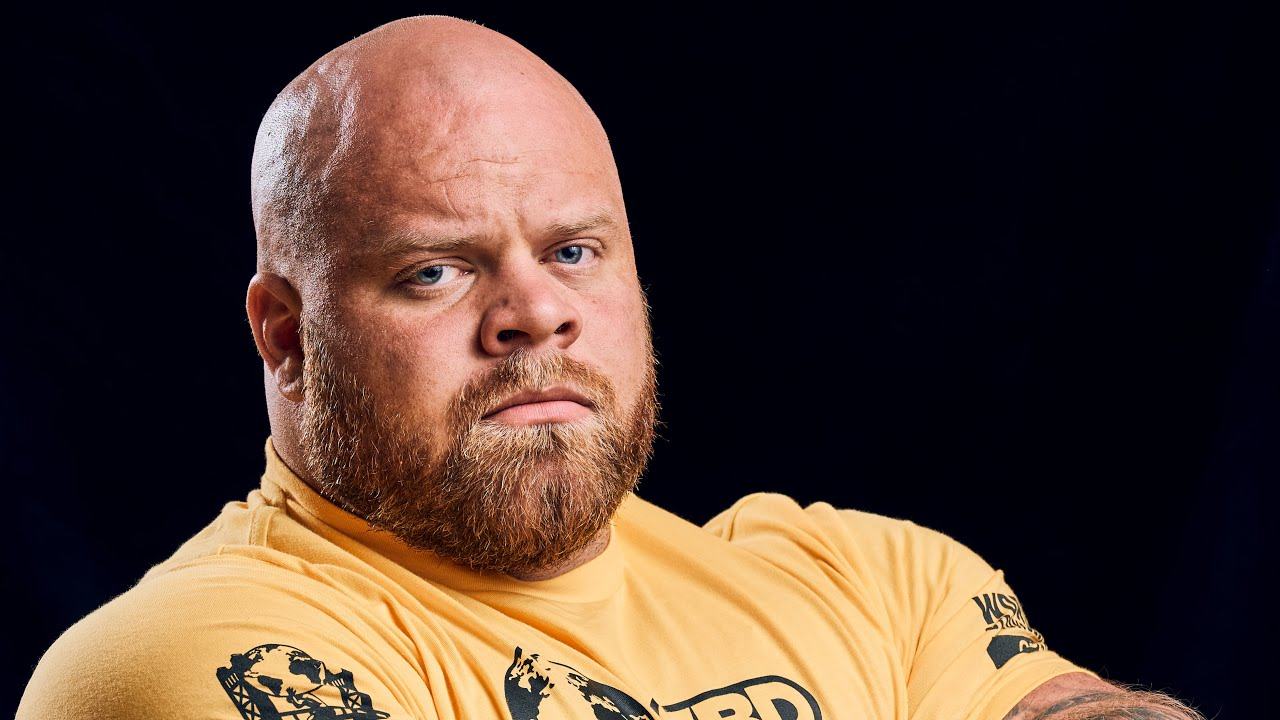
Iron Archives
Two-time World's Strongest Man finalist and two-time Strongest Man in Iceland champion
Inactive athlete
Eyþór Ingólfsson Melsteð (born 16 February 1994) is an Icelandic strongman raised in Breiðdalsvík who twice reached the World's Strongest Man final, finishing tenth in 2021 and ninth in 2022. He won Strongest Man in Iceland in both 2020 and 2021, placed fourth at the 2023 Europe's Strongest Man, and became particularly known for overhead strength, including the log lift and natural-stone press. A former fitness and bodybuilding competitor, he also described working as a firefighter and subsequently supporting young people in interviews published in 2021–2022. His latest documented strongman appearance in the major results archives consulted was in April 2023; this alone does not establish formal retirement.
Eyþór Ingólfsson Melsteð occupies a distinctive place in the recent history of Icelandic strongman. Raised in a small community in eastern Iceland, he discovered weight training at an early age, spent time competing in fitness and bodybuilding, and ultimately represented Iceland at four editions of the World's Strongest Man. Two of those appearances, in 2021 and 2022, ended in the ten-man final, where he finished tenth and ninth respectively. His path can be reconstructed from competition archives, promoters' profiles and interviews published in the Icelandic press. It is both the story of an athlete's rise onto the international stage and an example of the way a very small country's specialist strength community can produce competitors capable of performing at the highest level.
Melsteð was born on 16 February 1994. Giants Live lists his height as 1.85 metres and his reference bodyweight as approximately 142 kilograms; these are published biographical and competition figures, not verified measurements for the present day. His full name, Eyþór Ingólfsson Melsteð, often appears in English-language records in the transliterated form Eythor Ingolfsson Melsted. Understanding the alternative spelling matters when researching his career because interviews, competition records and videos are distributed across sources using different orthographic conventions. This profile uses the original Icelandic spelling, while recognising that the Anglicised form remains useful for locating international material.
Among the most valuable primary accounts of Melsteð's early life is an interview published by Fréttablaðið in February 2022. He explained that he began lifting weights at around the age of twelve in Breiðdalsvík, a community in eastern Iceland. His recollection does not describe a sophisticated youth development programme or a specialist strength academy. Instead, he said that sporting opportunities were limited and that there were very few children at his school. He therefore found something he could do himself. Weight training became an accessible form of activity long before he had an established place in Iceland's elite strength-sport circles. This background is significant because it situates his sporting origins outside the country's better-known training centres and before the network of internationally experienced athletes and coaches later associated with his development.
Breiðdalsvík also has a direct connection to the competition he identifies as the starting point of his strongman career. During an interview with DV in June 2021, he recalled watching Austfjarðatröllið when he was a child. The contest, associated with eastern Iceland, periodically took place in his home area. That is an important biographical detail: a strength competition was not merely something viewed on international television but a real event held close enough to his everyday surroundings to become familiar. Publicly available sources do not provide a reliable day-by-day account of his early training, his childhood nutrition or his first gym records, and a credible biography should not manufacture them. What the interviews establish is that his interest in strength preceded his better-known national and international results by many years.
Before specialising in strongman, Eyþór competed in fitness and bodybuilding, including at junior level, according to his own accounts in Icelandic interviews. This phase helps explain his original interest in developing muscular strength and size, but it should not be confused with the period in which he began winning major strongman contests. Bodybuilding and strongman share equipment and some basic training movements, yet the objectives of competitive participation are fundamentally different. Bodybuilding is judged on physical presentation, whereas strongman evaluates the completion of difficult tasks with heavy implements, frequently under a time limit. Looking back on his earlier experience, Melsteð said that he had not entirely found the sporting direction he wanted through fitness. His transition into strongman emerged less from a childhood master plan than from a specific opportunity that he decided to pursue.
The first strongman event he describes participating in was Austfjarðatröllið in 2015. After learning that the contest would be coming through Breiðdalsvík, he contacted Magnús Ver Magnússon and asked whether he could enter. Icelandic reporting records that he joined on short notice without extensive experience of the event's specialist demands. He enjoyed the experience and continued in the sport. Three separate chronological markers therefore deserve attention: 2015 is his self-reported first participation, 2016 is the earliest season clearly visible in the principal international competition archive consulted, and 2018 marks the beginning of the period in which he recorded prominent results at major Icelandic contests. Separating these dates prevents the misleading shorthand sometimes used in short athlete profiles, in which the year of his major competitive breakthrough is mistaken for the start of his entire strongman experience.
Strongman Archives records a tenth-place finish among eighteen athletes at the 2016 Strongest Man in Iceland contest in Grindavík. On its own, that placing would not inevitably predict two subsequent World's Strongest Man finals. Its value in reconstructing the career lies in showing Melsteð entering the established competitive environment. Strongman contests require much more than strength on a conventional gym lift: competitors must learn unfamiliar implements, maintain movement quality under fatigue and distribute their effort across several events. An early overall placing is therefore a record of a particular stage of development rather than a permanent measure of ability. His later results demonstrate substantial progress, although the public record does not establish every training change, every intermediate event or every coaching decision responsible for that development.
His results became substantially more visible in 2018. Melsteð finished second at Iceland's Strongest Man behind Hafþór Júlíus Björnsson and also took second at Strongest Man in Iceland in Grindavík. The two similarly named contests are separate events and should not have their standings combined. Björnsson was a defining figure in international strongman during that period, so finishing behind him at a major domestic competition placed Melsteð alongside exceptionally accomplished opposition. The result does not imply that their overall strength levels were equal, but it does demonstrate that Eyþór had moved into the leading group of Icelandic competitors while developing the experience required to compete abroad. This season is consequently a useful starting point for the period of his career most commonly highlighted in international athlete profiles, even though his participation in the discipline began earlier.
On 26 January 2019, Melsteð competed at the Strongman Champions League event in Vinstra, Norway, finishing eleventh of fourteen. Giants Live identifies this appearance as his international circuit debut. Moving from domestic contests to a major event abroad introduces challenges that cannot be described solely by comparing the weights of individual implements. Regulations, event order, travel logistics, venue conditions and the calibre of an unfamiliar field may all vary. These observations concern the general nature of international strongman competition and should not be presented as Melsteð's own retrospective explanation for his result: the verified evidence establishes the event, date, location and placing, not every tactical or psychological detail of his experience in Norway.
Back in Iceland, he finished second at Strongest Man in Iceland in Suðureyri and won the competition recorded by Strongman Archives as the 2019 East Coast Giant. In interviews conducted during 2021–2022, Melsteð recalled winning Austfjarðatröllið in 2019 with particular satisfaction because he had watched it since childhood. The regional connection gives the result a personal significance that cannot be communicated by placing and points alone. There is also an important archival detail concerning Iceland's Strongest Man 2019: the principal international archive records him fourth in the ranking it uses, whereas reporting about the national component of the event lists him second among Icelandic entrants. These accounts should not simply be treated as contradictory statements about one identical set of results. They refer to different competition classifications, a distinction that matters when compiling a precise athletic record.
The 2019 East Coast Giant, associated in Icelandic coverage with Austfjarðatröllið, provides an opportunity to study a victory that meant much more to Melsteð than the addition of another line to his competition record. He had first entered the local contest in 2015 and later described its importance to his childhood in Breiðdalsvík. The edition held on 16 August 2019 is recorded in Strongman Archives as a win in a seven-man field. The distribution of individual results was unusually decisive: Eyþór won seven of the eight recorded events. These included a four-stone natural-stone series using implements weighing 90, 120, 140 and 150 kilograms, completed in 24.84 seconds, and an arm-over-arm pull finished in 26.02 seconds. Although both events depend on considerable strength, they test different skills. The former requires rapid adjustment between irregular lifting implements, whereas the latter places particular demands on repeated pulling force and rhythm. His results demonstrate a broader range of competitive ability than the later public emphasis on overhead stone lifting alone might suggest.
At the same competition, Melsteð lifted 360 kilograms in the Elevated Deadlift and 170 kilograms in the Max Log Lift, winning both events. He also finished first in Atlas Stones, a 110-kilogram Block Press for four repetitions and the Distance Throw with a recorded mark of 10.35 metres. Farmer's Walk was the only discipline he did not win: a distance of 35.5 metres placed him third. Technical interpretation requires care. An elevated deadlift should not automatically be equated with a conventional deadlift from the floor, so the local contest's 360-kilogram result cannot simply be relabelled as a standard lifting record. Similarly, throwing and carrying events depend on rules that affect the meaning of the numerical result. Biographically, the 2019 performance brings together two different kinds of evidence: a successful return to an event linked to his childhood and a record of varied capabilities across a complete regional competition. His own recollections of the contest and the archived results therefore complement one another.
Melsteð's victory at Iceland's Strongest Viking on 5 July 2020 offers an especially useful example of his versatility. The archived event had ten competitors and six disciplines. Eyþór won Sandbag Toss with a 32-kilogram implement, won the Dumbbell Medley after completing four dumbbells weighing between 70 and 110 kilograms in 23.09 seconds, and won the Natural Stones event after completing four lifts in 33.88 seconds. That stone event required two objects, weighing 108 and 122 kilograms, to be taken to the shoulder before two further stones, of 137 and 173 kilograms, were loaded onto a platform. This was not the same test as pressing one irregular stone overhead for maximum weight or loading five standardised Atlas stones onto progressively higher platforms. Different implement shapes and finishing requirements changed how the athlete had to grip, position and accelerate each object. His winning results at throwing, dumbbells and stones show competitive contributions from several distinct types of event.
The remaining events complete the picture. Melsteð placed second in the Max Deadlift with 350 kilograms, third in the Arm Over Arm Pull in 38.83 seconds, and fourth in a medley involving a 130-kilogram Farmer's Walk, a 190-kilogram Duck Walk and a 140-kilogram object carry. The overall win therefore came not from a clean sweep but from combining three event victories with sufficiently strong results elsewhere. This is a central feature of multi-event strongman: an athlete can win a contest without being the best at every movement, just as winning a majority of the individual events does not always guarantee the overall title. In this particular competition, the throwing implement, heavy dumbbells and natural stones produced Melsteð's wins, while the loaded-carry medley left room for competitors to outperform him. Recognising the complete distribution of results helps explain his later international placings, where individual highlights and overall position also differed substantially.
On 9 August 2020, Melsteð finished second among seven athletes at Iceland's Strongest Man. The archived results reveal a somewhat different competitive profile from the previous month's Viking victory. He did not win any of the six recorded events, yet placed second in four and third in the other two. His 70.26-metre Húsafell Stone carry was subsequently included by Giants Live among his notable competition achievements. He also completed an Overhead Medley in 23.30 seconds, pressing two 81-kilogram dumbbells, a 95-kilogram dumbbell and a 140-kilogram log for second place. Five repetitions with 340 kilograms in the deadlift earned him another second-place event result. Unlike a single maximum lift, this deadlift format tested the ability to reproduce very heavy efforts within the contest's requirements. Taken together, the statistics help explain why an athlete may finish near the top of a national contest without winning an individual event.
Melsteð also completed five throwing implements weighing between 22 and 30 kilograms over a 4.5-metre barrier in 25.68 seconds, again finishing second. Third places came from the Arm Over Arm Pull in 32.80 seconds and a Farmer's Walk and sandbag medley completed in 48 seconds. The overall runner-up result demonstrates the importance of consistency when competition points accumulate across disciplines. A competitor who repeatedly places near the front can remain in contention even without individual victories, although an opponent who wins enough events may still establish a decisive advantage. The 2020 competition is informative for another reason: it makes the difference between two similarly titled Icelandic contests explicit. Eyþór was the runner-up at Iceland's Strongest Man while also winning Strongest Man in Iceland in the same year. Conflating those events would produce a misleading account of the season, whereas describing both accurately illustrates the breadth of his domestic campaign.
In 2020, Melsteð won both Iceland's Strongest Viking and Strongest Man in Iceland. At the latter event, held in Grafarvogur, he finished first in an eight-man field. He was also runner-up at Iceland's Strongest Man in Reykjavík that August. These results establish a successful domestic season across more than one competition. Icelandic strength contests draw on both familiar modern strongman events and disciplines with a more traditional regional identity. Winning an individual lift does not guarantee a contest victory, so multiple strong overall results across the season provide more substantial evidence of competitive consistency than an isolated highlight. They also illustrate why the distinction between the two national contests matters: his victories at Strongest Man in Iceland should not be rewritten as victories at the differently named Iceland's Strongest Man.
The year also brought another notable international result. In September, Melsteð placed third among twelve competitors at Pasaulio Taurė in Kaunas, Lithuania, according to Strongman Archives. Some secondary summaries differ in their description of that placing, so this profile follows the dedicated competition database. In November, he made his first documented World's Strongest Man appearance in Bradenton, Florida, finishing fourth of five in his qualifying group and missing the final. Read in the context of his subsequent career, this first world-championship appearance marks a stage rather than an endpoint: he would reach the final at both of the next two editions. No reliable source establishes that one particular change in training fully explains that improvement, and it would be misleading to turn a progression in competition results into an invented account of a sudden personal transformation.
In September 2020, Melsteð competed at Pasaulio Taurė in Kaunas, Lithuania, adding an important international podium to his record. The third-place finish in a field of twelve is meaningful in its own right, but the individual results provide a more detailed picture. He finished second in Crucifix Hold after maintaining the prescribed position for 55.54 seconds and third in Front Hold with a time of 35.76 seconds. Both disciplines involve sustained static exertion, but the position of the arms and the relationship between the load and the body's mechanical levers differ substantially. The results show that his contributions were not limited to dynamic overhead lifting and stone loading. Sustaining force for time can have a substantial effect on the overall score when the competition programme includes such events. This is a technical interpretation of the competition record, not a speculative claim about the athlete's individual physiology or his undocumented methods of preparing for static holds.
Melsteð also completed five implements in the Sandbag Toss in 16.79 seconds, finishing fourth. He was fourth again in the Log Lift after completing five repetitions with 150 kilograms, and fifth in the squat event after performing five repetitions with 300 kilograms. In a medley, the database shows a fourth-place ranking despite marking his technical result as unfinished, an example of why event placing and successful completion of all tasks should be recorded separately. These results combined to earn third place in the overall standings. The Lithuanian competition should not simply be absorbed into the story of his later World's Strongest Man appearance, because it constituted a separate international achievement under different rules and with a different selection of disciplines. Where secondary accounts disagree on the overall placing, this profile follows the detailed competition archive and preserves the identity of the source used.
In Group Four of the 2020 World's Strongest Man, Melsteð finished second in two events for which the archive provides detailed results: Log Lift and Loading Race. He completed six log repetitions in 48.79 seconds, demonstrating repeat-effort overhead strength rather than simply making one maximal attempt. In the Loading Race, he moved five irregular objects, including vehicle components and wheel-related implements, in 52.10 seconds. Successfully completing a sequence of unlike objects requires continual adaptation of grip and body position even though the event is scored as a single timed task. Both performances established that he could already achieve high individual event placings in a world-level qualifying group. However, the championship's format rewarded the accumulated points from a diverse programme. Two second places therefore did not guarantee that his other results would be sufficient to advance.
His five repetitions in the squat event placed fourth among the five athletes, while his 5.3-metre Farmer's Walk was the group's lowest recorded distance. The resulting fourth-place overall group finish left him outside the final. Reducing the entire appearance to the Farmer's Walk would be simplistic, but highlighting only the successful log and loading events would be equally misleading. The qualification round provides a useful objective reference point for assessing his later international progression. Melsteð reached the final in both 2021 and 2022 through Stone-off victories, showing an improvement in championship outcome without proving that every difficulty from 2020 had disappeared. Later competitions continued to reveal substantial variations in his event-by-event placings. That combination of development and fluctuation offers a more realistic account of strongman performance than a narrative in which an athlete simply improves on every discipline at every successive appearance.
Melsteð's connection with natural stones is one of the defining characteristics of his athletic record. Giants Live reports that he surpassed an overhead natural-stone benchmark associated with Magnús Ver Magnússon by successfully pressing a stone weighing 137 kilograms. The same load appears as a winning Max Stone Press result at the 2021 Magnús Ver Magnússon Strongman Classic, while Strongman Archives later records a 138-kilogram Rock Press victory at the 2022 edition. It is important to report these figures separately. The documented 137-kilogram record discussed in Icelandic journalism and the later 138-kilogram contest performance are related achievements, but a later and heavier lift should not automatically be described as another formally recognised world record under identical rules without evidence of the precise record category and its recognition.
An overhead lift with a natural stone creates demands that differ from pressing a calibrated barbell or a conventional strongman log. The object's irregular shape changes how it can be secured against the body and stabilised before the final overhead extension. Those are general technical observations, not claims about a personal training method used by Melsteð. His results demonstrate the ability to perform at a high level in this traditional discipline while also recording important performances on modern overhead implements. His later results in Húsafell carries, stone-to-shoulder events and multi-stone loading series add another dimension to the picture. In a sport whose event selection frequently changes, experience across several different stone disciplines is useful, but each event still requires separate interpretation rather than the assumption that a competitor who performs well at one must be equally effective at all the others.
A substantial biography should document an athlete's life beyond competition when the relevant information has been made public and can be verified. In a June 2021 interview with DV, Eyþór was described as a former firefighter who, at that time, worked with young people facing difficult circumstances. In February 2022, he told Fréttablaðið that he worked for Klettabær, an organisation providing residential support and other services for children with complex needs. He described the work as rewarding, though potentially demanding, alongside the substantial time required to prepare for elite strength contests. These details challenge the easy assumption that appearing at World's Strongest Man necessarily means having no occupation outside professional sport. The public record instead shows that Melsteð combined international competition with an ordinary working life during this period of his career.
The reliable material consulted does not establish a complete and current account of his education, employment after 2022 or present contractual arrangements. Jobs described in historical interviews should not automatically be written about in the present tense. What can be said is that the former firefighter and youth-support worker publicly described the practical difficulties of combining full-time employment with the preparation needed for major strongman events. In a discussion of his training routine, he acknowledged that the demands of work meant some days were better organised than others. That is a more useful biographical observation than speculation about his finances, sponsorship income, professional qualifications or present schedule. The distinction between a verified historical statement and an unsupported contemporary claim is essential to a trustworthy athlete profile.
The Giants Live athlete profile, prepared during the period of his international success, stated that Melsteð lived in Reykjavík and identified his partner, Ásrún Vilmundardóttir, as an Icelandic IFBB professional figure competitor. Some later secondary biographies use the longer name Ásrún Ösp Vilmundardóttir and state that the couple married and have a daughter. Those later details have not been independently confirmed here by a recent primary source and should therefore be treated as secondary reporting rather than a certified, up-to-date account of his family situation. The same caution applies to his place of residence today. A responsible sports biography can include publicly discussed personal context while avoiding unnecessary speculation about relatives or presenting historical information as current.
In his DV interview during the 2021 World's Strongest Man, Melsteð spoke warmly about the supportive culture among Icelandic strength athletes. He mentioned training partners Ari Gunnarsson and Stefán Karel Torfason, as well as coach Stefán Sölvi Pétursson, emphasising mutual encouragement and friendships that developed through the sport. This matters in a discipline whose television image often concentrates on spectacular one-on-one rivalry. In a relatively small national community, competitors may simultaneously be domestic opponents, training partners and sources of practical expertise. Acknowledging that environment does not diminish Eyþór's individual achievements or assign his results to other people; it recognises that athletic development can take place within a shared network of specialist knowledge, equipment and experience.
The February 2022 Fréttablaðið interview offers a more reliable description of Melsteð's routine than isolated social-media clips. At the time, he said he completed four heavy training sessions per week, each lasting roughly two to three hours. He explained that training demands increased progressively as competition approached and that food intake was adjusted alongside the rising workload. He named Jakaból and Thor's Power Gym as the two facilities he used because both had the specialist equipment required for his sport. These details provide an informative historical snapshot, but they should not be treated as a training schedule verified for 2026. Publicly available interviews do not disclose every exercise, every working weight or every phase of his periodisation.
Melsteð also explained that standard commercial gym equipment was not necessarily suitable for the loads and implements used by an international-level strongman. Bars, plates and benches may differ in capacity, while many event-specific implements are absent altogether. As a general matter, athletes preparing for strongman must develop familiarity with logs, stones, loading platforms, yokes, carries and pulling apparatus in addition to conventional strength exercises. This explains the relevance of specialist facilities without suggesting that the sport can be reduced to any one collection of exercises. Because the interviews do not provide a complete microcycle, this profile does not attribute invented sets, repetitions, training percentages or programming theories to Melsteð. Such information would require direct evidence from the athlete or his coaching team.
In the same February 2022 interview, Melsteð said that eating enough was among the most difficult aspects of strongman for him. He reported consuming approximately 5,000 to 6,000 kilocalories per day at that time and described increasing intake closer to important contests. This is a historically reported personal figure, not dietary advice and not evidence of his present energy requirements. His larger point was that preparation extends well beyond the training session. Eating, recovering and managing everyday obligations occupy much of the athlete's time, helping explain why maintaining elite performance can be challenging alongside full-time employment. The source does not provide a complete diet log or scientifically verified energy-expenditure measurement, so any more detailed claim about his calorie balance would be speculative.
Melsteð identified sleep as the most important component of recovery and said he tried to obtain about eight hours per night. He also mentioned massage, alternating hot and cold-water exposure, walking and supplementary work for his knees on days without heavy training. These were activities he described using; they should not be presented as universal recommendations or clinically proven interventions. He also recalled that he had entered Iceland's Strongest Man 2021 approximately five weeks after knee surgery, information he offered to contextualise the circumstances of that contest. A biography can report his own statement, but the public material reviewed does not support reconstructing his precise medical diagnosis, treatment plan or present health. Respecting that limitation keeps the account informative without inventing private medical facts.
Competition results tell only part of the story, while interviews reveal how Melsteð himself described his involvement in strength sport. He spoke about the satisfaction he found in trying to improve continually, including through better training, nutrition and sleep. Opponents are integral to any contest, but his public account suggests that individual progress provided an equally important organising principle for his preparation. This reading is grounded in his statements rather than an attempt to diagnose his personality or assign hidden psychological motives. He also said that he approached competitions with the objective of winning while acknowledging that switching off and relaxing outside training could be difficult for him. These statements belong to the period in which the interviews were conducted, not to a presumed permanent description of his state of mind.
When asked what advice he would give someone interested in following a similar path, Melsteð emphasised beginning the process and finding a good coach, including through remote coaching where appropriate. He framed the development of strength as a long-term pursuit rather than an immediate result. That account is consistent with his documented chronology: early exposure to lifting, the local competition in 2015, the 2016 national result, prominent domestic placings in 2018 and the subsequent appearances at major international events. Public evidence does not establish a perfectly uninterrupted progression between every stage. Rather, it shows the accumulation of competitive experience across different seasons and the eventual achievement of results at the highest level of the sport. His own remarks help place the numbers in context without turning the biography into a motivational fable.
The 2021 season provided an important international breakthrough. In March, Melsteð competed at the World's Ultimate Strongman Strength Island event in Bahrain, finishing ninth among fifteen athletes. In June, immediately before travelling to Sacramento, he won Strongest Man in Iceland for the second consecutive year, this time in a thirteen-man competition in Hafnarfjörður. The sequence illustrates a defining feature of the strongman calendar: an important domestic competition may be followed only days later by the qualification rounds of a world championship. Interviewed by DV as the 2021 World's Strongest Man began, Melsteð discussed the proximity of the two events and his efforts to arrive properly rested. With an international contest, a domestic title and the start of a world championship all appearing in the first half of the year, the schedule was a demanding one even before his most visible result of the season.
At the World's Ultimate Strongman Strength Island event in Bahrain on 13 March 2021, Melsteð placed ninth among fifteen competitors. The archived results show nine Atlas-stone loads completed in 101.17 seconds in a series featuring stones between 100 and 200 kilograms, giving him seventh place in that event. A separate Loading Race required competitors to carry a 100-kilogram tyre, a 120-kilogram stone and a 140-kilogram shield over specified distances; Eyþór finished sixth. These results show that events involving several implements offered opportunities to collect points, even when their rules and structures differed from those found at domestic Icelandic contests. A multi-stone loading race must not be evaluated by comparing only its heaviest implement with a maximum natural-stone overhead press. Although both involve stones, the tasks measure different combinations of movement, strength and efficiency. The relevant comparison is with opponents completing the same task under the same conditions.
Elsewhere in the Bahrain competition, four Dumbbell Press repetitions earned ninth place and three Flag Hoist repetitions in 41 seconds produced another ninth. The Axle Death-Lift contributed particularly heavily to his lower overall placing: he ranked fifteenth of fifteen, even though the technical record shows three lifts completed in 17 seconds. The ladder-style format with multiple bars and ascending weights should not be confused with a conventional maximum-deadlift record. This is a useful case study in the uneven results that characterise multi-event strongman. Only a few months later Melsteð would reach the World's Strongest Man final, yet the different programmes and qualifying mechanisms make it inappropriate to treat the Bahrain placing as a simple prediction of what happened in Sacramento. Each competition had to be approached as a separate challenge, and the archival evidence describes the results rather than supplying a single causal explanation for them.
Melsteð's 2021 World's Strongest Man appearance cannot be understood through the final result and the Stone-off against Robert Oberst alone. Competing in Group Three, he won the Train Push in 37 seconds and placed second in the Pickaxe Hold after maintaining the implement for 43.67 seconds. These disciplines made very different demands. Pushing a train tested the application of force while moving a heavy object over distance, whereas the static hold required control of a prescribed position for as long as possible. The two results show that strong qualifying performances were not confined to his later signature stone and overhead events. In the Overhead Medley he completed four implements in 39.77 seconds, including dumbbells of 95 and 100 kilograms, a 155-kilogram barbell and a 163-kilogram axle, finishing third. This series provided another example of his ability to produce points in a timed multi-implement pressing event.
Two further events completed his recorded group campaign. Seven repetitions in the squat earned third place, while three completed stages of the Loading Medley in 39.81 seconds resulted in fourth. The medley featured two 100-kilogram barrels and a 125-kilogram anvil followed by a 380-kilogram frame carry, with different movement requirements at each stage. The group results did not earn direct qualification, but they established the position from which Melsteð could contest the decisive Stone-off. The distinction matters when reconstructing the championship: reaching the final required performing across five varied qualifying events and then prevailing in a separate elimination contest. The event wins and other strong group placings help describe his versatility that week; the Stone-off was the specific competition mechanism that finally determined his advancement. Reporting only one part would make the first world final appear either more straightforward or more dependent on a single lift than the evidence supports.
Progress to the 2021 World's Strongest Man final was not automatic. The competition used a group structure in which the final qualifying position could depend on a Stone-off, a decisive head-to-head confrontation using Atlas stones. According to Giants Live, Melsteð defeated American competitor Robert Oberst in this contest and secured his first place among the ten finalists. He finished tenth in the final at Sacramento. Neither portion of the achievement should obscure the other. Reaching the final is a specific, documented competitive accomplishment; the tenth-place finish is the equally specific result of the final itself. The two stages involved different tasks and different demands on the competitors. An accurate record distinguishes qualification from final placing rather than presenting them as interchangeable or selectively omitting whichever statistic appears less impressive.
The qualifying Stone-off has particular interest in the career of an athlete also known for his performances with natural stones, but the two disciplines should not be confused. A Stone-off requires repeated loading of a stone over a bar while responding to an opponent's attempts and managing rapidly accumulating fatigue. A natural-stone overhead press is a different movement involving a different balance problem and final lifting position. The disciplines may draw on overlapping qualities of strength and coordination, yet success in one does not guarantee success in the other. Melsteð's 2021 qualification establishes that he performed effectively in the specific elimination contest against Oberst. It does not provide evidence for claiming superiority over every possible opponent in every form of stone lifting, which would be an unwarranted extension of the result.
Tenth place in the 2021 World's Strongest Man final can look like a simple position at the bottom of the standings, but the individual events tell a more detailed story. Melsteð placed third in Titan's Turntable with a time of 52.83 seconds and fifth in the Keg Toss after achieving a height of 6.75 metres. His placings were lower in other events: eighth in the deadlift after seven repetitions and eighth again in Max Log Lift with a successful 185-kilogram press. This difference illustrates an important principle in analysing strongman. A 185-kilogram log is a meaningful individual lifting achievement, but the number of competition points it produces depends on what the other finalists lift that day. Personal records and competitive placings are different kinds of information, and both belong in an accurate biography. A report that ignored his third place in the Turntable event would overlook a substantial performance; a report based entirely on that result would misrepresent his overall final.
In Atlas Stones, Melsteð completed four of the five implements, drawn from a series weighing between 140 and 210 kilograms, in 33.65 seconds to finish ninth. The Giants Medley, which combined a 440-kilogram yoke and a 350-kilogram frame, produced his lowest result in the final: he completed only the initial ten-metre segment, ranking tenth. The spread from a third-place event finish to last place in another demonstrates the range of demands that a complete championship imposes. Such differences do not justify inventing psychological explanations or assuming that one movement permanently defined his abilities. Instead, they illustrate how aggregate points shape the final order. For Melsteð, the first world final represented both the achievement of entering that edition's ten-man field and a direct encounter with the exceptional breadth of the programme. Recording the full distribution is more informative than describing the final with an unsupported overall label.
In August, Melsteð finished second at Iceland's Strongest Man in Reykjavík, behind Stefán Karel Torfason. The event records offer two important details. Eyþór won the Atlas Stones event, loading a five-stone series ranging from 120 to 202 kilograms in 31.77 seconds, and also won a 300-kilogram squat event with five repetitions. These results demonstrate the difference between winning individual disciplines and winning an entire strongman contest. An athlete can lead the field in multiple events while losing sufficient points elsewhere to finish second overall. In his February 2022 interview, Melsteð also stated that he had entered this competition roughly five weeks after knee surgery. This is relevant historical context supplied by the athlete himself; without independent clinical evidence, it should not be expanded into speculative medical explanations for individual event results.
In November, he placed second among fourteen competitors at the Magnús Ver Magnússon Strongman Classic, behind Maxime Boudreault. Strongman Archives records a winning 137-kilogram performance in Max Stone Press, a 42.2-metre Húsafell Stone carry for third place in that event, and strong results in Stone to Shoulder and Log Medley. The competition's setting connects an international field with events associated with Iceland's traditional strength culture. For Melsteð, the podium represented another significant international finish in a year that had already included his first World's Strongest Man final. The event-by-event distribution is more informative than the silver medal alone, highlighting consistent contributions from stone events and overhead lifting while making clear that overall success still depended on points from the complete programme.
The detailed record of Iceland's Strongest Man on 8 August 2021 is among the most revealing results from Melsteð's career. In a nine-man competition in which he finished second overall, he won five of the eight archived events. He loaded five Atlas stones, weighing between 120 and 202 kilograms, in 31.77 seconds. He completed five repetitions with 300 kilograms in the squat and lifted 360 kilograms in Max Deadlift, a figure subsequently recognised among his documented competition bests. He also won the Overhead Medley, which combined a 94-kilogram natural stone, an 81-kilogram Inch-type dumbbell, another 90-kilogram dumbbell and a 140-kilogram log. His fifth individual victory came in the Truck Pull. This range of event wins illustrates why a runner-up overall finish cannot automatically be interpreted as a lack of strength or evidence that the eventual winner outperformed him in every discipline. He had substantial strengths across multiple forms of lifting and pulling on that particular competition day.
Two events nevertheless affected his challenge for the overall title. Melsteð placed seventh in Deadlift Hold and eighth in a medley combining a sack carry, Farmer's Walk and chain drag. He carried the Húsafell Stone for 54.1 metres, securing second in that event. The final standing demonstrates that aggregate scoring can heavily penalise a small number of low placings even when an athlete wins a majority of the individual disciplines. There is consequently no contradiction in describing Eyþór as the winner of five events and the overall runner-up. His February 2022 interview adds personal context: he stated that he had entered the 2021 competition approximately five weeks after knee surgery. This may be reported as his own historical statement, but it does not provide grounds for assigning a precise medical explanation to every result. The competition data and interview evidence are most useful when retained as two complementary but distinct forms of documentation.
Melsteð made his Europe's Strongest Man debut in Leeds in April 2022, finishing seventh among twelve athletes. His most clearly identifiable individual result was a successful 185-kilogram log lift. Strongman Archives lists him joint second by the load achieved in that event within the contest, which also incorporated the 2022 World Log Lift Championships. It is important not to confuse an individual event placing with the contest's overall standing. The 185-kilogram log is a specific performance on a specific implement; seventh place at Europe's Strongest Man reflects the accumulated points from the competition as a whole. Giants Live independently lists the same load among his competition achievements, separately from a 190-kilogram log lift reported in training. This distinction helps maintain a consistent record across different sources and settings.
Other events at Leeds demanded very different combinations of strength, movement and timing. Melsteð completed all five Atlas stones, weighing between 100 and 180 kilograms, in 25.02 seconds and finished fifth in the event, while the recorded results for Power Stairs, Carry & Drag and Deadlift Ladder were less favourable. This variation helps explain why success with a very heavy overhead implement does not automatically result in a contest podium. Strongman measures an unusually broad collection of capabilities, including maximal lifting strength, the ability to accelerate under load, efficient transitions between implements and recovery across a full competition. In Leeds, his final position reflects that diversity rather than an isolated interpretation of his best lift. A serious profile can recognise a strong overhead result and still record the overall seventh place accurately.
At the 2022 World's Strongest Man in Sacramento, Eyþór entered the fifth qualifying group and advanced through the Stone-off for a second consecutive year, this time against Jean-Stephen Coraboeuf. His recorded qualifying performances included eight repetitions in the log event and a completed Loading Race in 49.69 seconds. He completed three of the five lifts on the Deadlift Ladder in 40.88 seconds, placed third in his group at the Wrecking Ball Hold with 63.42 seconds and recorded 29.07 seconds in the Car Walk, also good for third in his group. Taken together, these results show how the group stage created the opportunity for a decisive final challenge. The Stone-off was not simply another event added to everyone's overall score; it operated as a separate elimination stage for the athletes involved.
Melsteð finished ninth among ten finalists in 2022, improving his final standing by one place on the previous year. His individual final results included eight repetitions in the car deadlift, a 190-kilogram Flintstone Barbell overhead press, six completed steps in 35.78 seconds in the Power Stairs, a 51.32-second Bus Pull and four Atlas stones from a series ranging from 140 to 200 kilograms in 28.87 seconds. He completed the Giants Medley in 37.61 seconds but ranked tenth in that event. An accurate account should not turn the car deadlift result into an imagined conventional deadlift weight or conceal an event in which he finished last. The central verified achievement is his second successive appearance in the final of the world's best-known strongman competition, with a ninth-place overall result.
The 190-kilogram Flintstone Barbell lift deserves particular attention. This event involved pressing a barbell overhead from behind the neck rather than pressing a strongman log. Consequently, the 190 kilograms recorded in the 2022 final should not be presented as an additional log record. His documented competition log figure is 185 kilograms, while Giants Live separately reports a 190-kilogram training log lift. Although the numbers are close, the implements, starting positions and lifting mechanics differ. The technical distinction respects rather than diminishes his achievements. Overhead lifting was an identifiable strength in Melsteð's competitive profile, and the documented figures are meaningful precisely because they are attached to the correct event, conditions and date.
In the autumn of 2022, Melsteð joined the Rogue Invitational field in Texas after Evan Singleton withdrew from the original roster, as reported by specialist strength-sport media. Eyþór finished ninth of ten in a contest combining established strength events with challenges designed for the occasion. The archived performances include completing all five Inver Stones in 66.43 seconds for fifth place, lifting two implements in the Cyr Dumbbell Ladder in 20.93 seconds, and completing the Rogue-a-Coaster in 87.62 seconds. The events demanded different skills, and individual results should not be treated as equally representative of his complete athletic profile. What the appearance demonstrates is participation in another major international setting with novel implements and formats, extending his competition history beyond national contests, Giants Live and the World's Strongest Man.
The Inver Stones provide a particularly useful example of how to interpret strongman statistics. Completing five progressively heavier natural stones, approximately 125 to 191 kilograms, is not equivalent to attempting a single maximum-weight stone. The event measures both the ability to complete every load and the speed of transition between implements. Melsteð finished the complete series at Rogue, yet his overall placing remained ninth because the other events made substantial contributions to the points total. These two facts are not in conflict. They describe the breadth of competitive strongman, in which an athlete may execute one demanding discipline successfully but lose ground through the distribution of results across the whole event. The distinction is essential for understanding an athlete whose public highlights include memorable individual stone lifts.
At the 2022 Magnús Ver Magnússon Strongman Classic, Melsteð placed third among fourteen competitors. The detailed results reveal both his principal strengths and the value of examining every event. He won Rock Press with a 138-kilogram lift and also won the recorded deadlift event with seven repetitions. He finished second in Log Medley, Stone to Shoulder and Natural Stones. His placings were lower in Farmer's Walk, the edition's circular Húsafell Stone carry and Hammer Throw. This distribution demonstrates why calling a competitor simply good at stones is too broad. Pressing a natural stone overhead, lifting a stone to the shoulder, loading successive stones and carrying a large stone for distance place different demands on technique and physical capacity. A single athlete can produce markedly different results across those disciplines within one competition.
The Húsafell Stone offers an additional example of the need for precise context. At the 2022 Magnús Classic, Eyþór covered 48.9 metres on the event's circular course. Giants Live also lists a 70.26-metre Húsafell carry associated with another competition and a linear route. The distances should not be treated as directly interchangeable. Course geometry, turning points, surface conditions and event-specific rules may affect performance. Recording a best reported mark alongside the result from a particular edition makes the athlete's record clearer rather than less impressive. In this respect, the Magnús Classic podium is more than another medal in Melsteð's competition history. It provides an unusually detailed illustration of how Icelandic stone disciplines and modern multi-event strongman intersect.
Melsteð returned to Leeds on 1 April 2023 and finished fourth among thirteen competitors at Europe's Strongest Man, scoring 45.5 points according to the official Giants Live standings. This was his highest overall placing in his documented appearances at that event. The detailed scores are revealing: third in the Log Ladder after pressing four logs in 40.98 seconds; third in Conan's Wheel with 760 degrees; joint fifth by the recorded event result in the deadlift, with six repetitions; tenth in Load & Push in 54.89 seconds; and third in Atlas Stones after loading all five stones in approximately 21.77 seconds. The overall position reflects the accumulated value of these performances. Multiple top-three event results contributed to a strong total despite the substantially lower placing in Load & Push, illustrating the importance of the complete event distribution.
His 2023 Atlas Stones performance is particularly informative. The five-stone series ranged from 100 to 180 kilograms, and he completed it quickly enough to place third in the event. At Conan's Wheel, 760 degrees earned another third place. Those performances demonstrate observable qualities in the context of that competition: the capacity to keep moving with a heavy supported load and the efficiency needed to complete a timed series of stones. They do not license invented explanations about hidden training methods, physiology or the athlete's unreported psychological state. Conversely, tenth place at Load & Push demonstrates how a single event can have a significant effect on the overall ranking in a competition comprising only five disciplines. His fourth-place finish is best understood as the product of that specific combination of results.
At the 2023 World's Strongest Man in Myrtle Beach, Melsteð competed in Group Five against athletes including Trey Mitchell and Evan Singleton. He finished third among six in the group and advanced to the Stone-off, but did not progress to the final on this occasion. The event statistics show why the outcome deserves more context than the word elimination. He won his group's Conan's Wheel with 629 degrees, finished second in the Loading Race after completing all five implements in 56.41 seconds, and took second in the Kettlebell Toss with six implements in 27.66 seconds. He was third in the Log Ladder with four logs in 39.93 seconds and fourth in the Deadlift Machine with five repetitions. These results establish a qualifying campaign containing several strong individual performances despite the eventual failure to reach the final.
The decisive 2023 Stone-off was against Evan Singleton. Available result tables show a contest in which both athletes completed eight repetitions, with the order of attempts and the advantage awarded to the better-placed group competitor proving relevant under the competition's format. Melsteð did not advance, unlike in the previous two editions. The result should not be recast as a final appearance or interpreted as evidence of some general collapse in ability. It was a specific outcome in an elimination contest following a group campaign with several high event placings. Because World's Strongest Man uses a qualifying format in which not every high-scoring athlete reaches the final automatically, it is possible for a competitor to deliver strong individual performances and still fall outside the ultimate ten-man field.
Giants Live usefully separates lifts achieved in competition from performances reported in training. Its published competition figures for Melsteð include a 360-kilogram deadlift, a 400-kilogram Silver Dollar Deadlift, a 185-kilogram log lift, a 137-kilogram natural-stone overhead press and a 70.26-metre Húsafell Stone carry. The training figures listed by the organiser are a 380-kilogram deadlift, 190-kilogram log lift, 125-kilogram dumbbell press, 350-kilogram squat and 230-kilogram bench press. A serious record should preserve that separation rather than place every number into an undifferentiated list of certified competition bests. Competition and training may differ in equipment, judging, event rules and validation conditions. The dates and contexts accompanying the numbers are therefore central to their meaning.
For readers familiar with powerlifting, some of these numbers may invite direct comparison, but caution is necessary. A Silver Dollar Deadlift is not biomechanically identical to a conventional deadlift from the floor. A bench press performed in training should not be described as an officially judged powerlifting competition record without evidence. Similarly, a 190-kilogram Flintstone Barbell push press belongs to a specific strongman discipline rather than creating a second 190-kilogram contest result for the log. This precision matters in Melsteð's case because his genuine overhead performances are already a significant feature of the documented record. They need no enhancement through imprecise event labels. Each recorded achievement becomes more meaningful when attached to the correct implement, occasion and competition conditions.
Iceland has a particularly visible place in strongman history through figures including Jón Páll Sigmarsson, Magnús Ver Magnússon and Hafþór Júlíus Björnsson. Melsteð belongs to the generation that continued representing the country internationally as the domestic competitive landscape changed following Björnsson's period of dominance. His importance does not depend on describing him as a World's Strongest Man titleholder, which he is not. Two consecutive world finals, two Strongest Man in Iceland titles, podium finishes at the Magnús Classic and fourth place at Europe's Strongest Man in 2023 are substantive documented results in their own right. His natural-stone achievements also connect contemporary international competition with a local sporting culture in which irregular objects and historically distinctive events retain a prominent role.
Another relevant element is his documented coaching relationship with Stefán Sölvi Pétursson, himself fourth at the 2010 World's Strongest Man. An experienced international competitor working with an emerging athlete creates opportunities for practical knowledge transfer, although the public material reviewed does not identify every programme decision made by the coach or quantify the contribution of every individual involved. It would therefore be inappropriate to invent detailed accounts of coaching sessions, nutrition planning or an extensive support team without direct testimony. The published information is nevertheless sufficient to place Melsteð within an identifiable Icelandic training community and to distinguish his documented coach from other national athletes who trained alongside him.
In the major strongman competition archives consulted for this profile, Melsteð's latest recorded appearances are Europe's Strongest Man and World's Strongest Man in April 2023. Strongman Archives accordingly ends the active-years range displayed on his profile in 2023. An archival endpoint, however, is not evidence of a formal retirement announcement. The sources reviewed did not establish sufficiently reliable strongman results for the period from 2024 through September 2026, nor did they establish a recent primary statement definitively clarifying his sporting status. This profile therefore uses inactive as an administrative description of his documented strongman competition activity, not retired as a statement about his personal intentions. A confirmed return or explicit retirement announcement should prompt an update with a date and verifiable source.
The same caution applies to his employment and personal life. Interviews from 2021 and 2022 are valuable evidence of what was happening at those times, but they do not establish his present family circumstances, residence, employment, coaching arrangements or day-to-day training routine. Athlete biographies easily become outdated when a historical statement is endlessly repeated as if it described the current year. Melsteð's documented story is compelling without resorting to that practice. He began lifting in a small community, discovered strongman through a local event, balanced competition preparation with employment and reached two finals at the most internationally recognisable contest in his sport. Saying precisely what the sources establish gives those achievements greater credibility than attempting to fill every gap with conjecture.
Eyþór Ingólfsson Melsteð's documented career illustrates several important features of modern strongman: the possibility of transitioning from fitness into strength athletics, the role of an established national training community, the difficulty of accumulating points across widely different events and the importance of interpreting individual performances alongside overall competition outcomes. Strongman Archives credits him with four World's Strongest Man appearances, including two finals, and a best final placing of ninth. Two consecutive Strongest Man in Iceland titles, additional domestic victories, international podium finishes and fourth place at the 2023 Europe's Strongest Man complete the central competitive picture. These are concrete and verifiable reference points rather than generic assertions about prestige or talent.
His story also has dimensions that cannot be captured by points alone. Icelandic interviews describe his childhood in Breiðdalsvík, an almost accidental entry into a first local competition, the satisfaction of later winning an event he had followed from an early age, professional responsibilities outside the gym and a national community in which competitors support one another. Such information does not replace competitive results; it locates them within an identifiable human life. The resulting portrait is that of an athlete who developed an international career over several seasons, achieved substantial and measurable success and left enough public testimony to illuminate the journey while still preserving important limits of documentation. For an international strongman audience, that combination of exact results, technical context and publicly supported personal history is more useful than an embellished legend.
A comparison of the seasons from 2019 to 2023 reveals details that a simple list of finishing positions cannot communicate. At the 2019 East Coast Giant, Melsteð won seven of the eight recorded disciplines. At Iceland's Strongest Viking the following year, he won three of six and accumulated enough points in the remaining events to take the overall victory. Only a month later, at Iceland's Strongest Man, he finished second or third in every archived event and ended the contest as runner-up without winning an individual discipline. In 2021, the same national competition produced almost the reverse pattern: Eyþór won five of the eight recorded events, yet lower placings in two disciplines left him second in the general standings again. These observations do not prove a simple progression or decline because neither the event programmes nor the opposition were identical. Instead, they demonstrate a structural feature of strongman: an overall placing depends on the complete set of demands and the points system, not merely on the number of events won.
A similar pattern can be observed internationally. At the 2020 World's Strongest Man, two second-place group results were insufficient to overcome lower placings elsewhere. In 2021, a victory in Train Push, second place in Pickaxe Hold and reasonable results across the remaining events allowed him to contest a Stone-off that he won. He advanced through the same elimination mechanism in 2022, under a different event programme, and finished ninth in the final. At the 2023 Europe's Strongest Man, third place in three of the five disciplines contributed heavily to an overall fourth-place result, despite a significantly lower placing in Load & Push. This sequence cannot establish that Melsteð became steadily stronger in every movement, because comparable longitudinal measurements are unavailable. It does document an athlete who achieved increasingly prominent overall results at major international competitions and who performed across sufficiently varied programmes to reach two consecutive world finals.
The published evidence allows several categories of performance to be distinguished without turning contest results into an unsupported individual physiological assessment. Maximal strength is represented by figures such as the 360-kilogram competition deadlift, the 185-kilogram competition log and the overhead natural-stone performances of 137 kilograms and, subsequently, 138 kilograms at the Magnús Classic. Repeated effort with heavy implements is illustrated by five repetitions with 340 kilograms in a 2020 deadlift event, five repetitions with 300 kilograms in a 2021 squat event and various timed log medleys. Movement under load appears in the Húsafell carries, Train Push and complex loading challenges, while static endurance is visible in the recorded times for Crucifix Hold and Pickaxe Hold. These are different, measurable demands. Describing them all as raw strength may be convenient, but it conceals information that helps explain why the same athlete can achieve sharply different event placings within one contest.
The log lift offers a useful chronological reference, provided the measurements are not misrepresented. At the 2019 East Coast Giant, Melsteð won the maximum-log event with 170 kilograms. He lifted 185 kilograms during the 2021 World's Strongest Man final and reached the same figure at Europe's Strongest Man in 2022. Giants Live additionally reports 190 kilograms in training, which must not be relabelled as an official competition lift. Subsequent log-ladder appearances were scored by the number of implements completed and the time required rather than by one maximal attempt. Efficiency in a ladder can improve without any change to an isolated personal record. The apparent sequence of 170, 185 and 190 kilograms therefore needs explanatory labels because the figures do not all arise from identical conditions. That distinction is essential when comparing athletes or trying to trace genuine long-term development from incomplete public records.
Reconstructing the life of an Icelandic athlete competing internationally requires several levels of source verification. Strongman Archives is especially useful for identifying competitions, individual event results and overall placings, but it is not a complete source for employment, family circumstances or current intentions. Giants Live publishes valuable career and lifting information, although its narrative sections primarily reflect the period when Melsteð competed on its circuit; historical claims written in the present tense should not automatically be treated as current. Interviews in Fréttablaðið and DV provide more direct evidence of the athlete's own descriptions of childhood, employment, training and his early contests. Even these have limitations. A statement from 2021 about a particular job or personal relationship is not equivalent to verification for 2026. Specialist reporting and video material can add context, but more speculative interpretations are most useful when they can be checked against primary interviews, organiser records and detailed competition tables.
Names and competition terminology introduce additional risks. Eyþór Ingólfsson Melsteð frequently appears without Icelandic letters in international publications, while Iceland's Strongest Man and Strongest Man in Iceland are distinct competitions despite the near-identical English names. Certain editions also produced separate overall and Icelandic-participant classifications, accounting for differences between some published placements. The same attention to context applies to the technical records. Conventional, elevated and Silver Dollar deadlifts are not interchangeable; maximum-log lifts differ from timed log ladders; and a linear Húsafell carry cannot be compared without qualification to a circular course. These distinctions may appear minor until their omission produces an inaccurate career narrative or an inflated personal record. A substantial biography should give readers enough context to understand exactly what an athlete achieved and enough documentation to check the claims independently.
Strongman Archives, athlete profile and individual event results: Eythór Ingólfsson Melsted, ID 195
Giants Live, promoter profile, body measurements, career and lifts: Eythór Melsted
Fréttablaðið, 15 February 2022, interview on childhood, career, employment and training: “Endalaus barátta við sjálfan sig”, p. 2
DV, interview and athlete portrait, 15 June 2021: Eyþór Melsteð ahead of World's Strongest Man
Giants Live, official results: Europe's Strongest Man 2023
Breaking Muscle, reporting on his addition to the 2022 Rogue Invitational roster: Eythór Melsted joins the Rogue Invitational
Editorial note: competition figures are linked to their named events and editions; training lifts, the athlete's personal accounts and secondary biographical reporting are distinguished explicitly. The available sources were reviewed on 30 September 2026.
Iron Hall data
360 KG
Max deadlift in competition · 2021 Iceland's Strongest Man
Verified
380 KG
Training deadlift · training best reported by Giants Live
Verified
400 KG
Silver Dollar Deadlift · competition best reported by Giants Live
Verified
185 KG
Competition log lift · 2021 WSM / 2022 Europe's Strongest Man
Verified
190 KG
Training log lift · training best reported by Giants Live
Verified
138 KG
Natural stone overhead press · 2022 Magnús Ver Magnússon Strongman Classic; earlier documented record was 137 kg
Verified
190 KG
Flintstone Barbell / behind-the-neck press · 2022 World's Strongest Man Final
Verified
350 KG
Training squat · training best reported by Giants Live
Verified
230 KG
Training bench press · training best reported by Giants Live
Verified
125 KG
Training dumbbell press · training best reported by Giants Live
Verified
2015
In Icelandic interviews from 2021–2022, Melsteð reported entering on short notice. Exact placing is not independently verified.
Reported first strongman appearance
2016
Early documented appearance in Strongman Archives, held in Grindavík.
10th of 18
2018
Runner-up in the recorded standings behind Hafþór Júlíus Björnsson.
2nd of 10
2018
Documented placing at the event in Grindavík.
2nd of 8
2019
Early major international circuit appearance in Vinstra.
11th of 14
2019
Contest held in Suðureyri.
2nd of 11
2019
Note: the event also included a challenge/separate national ranking; some reports list him second among Icelandic entrants. This entry follows the Strongman Archives listing.
4th of 5 in the main archive
2019
Victory at an Icelandic contest associated with the region where he grew up.
1st of 7
2020
National-level Icelandic contest victory.
1st of 10
2020
First of two consecutive wins in this event, held in Grafarvogur.
1st of 8
2020
Runner-up at the Reykjavík competition.
2nd of 7
2020
International podium finish in Kaunas, according to Strongman Archives.
3rd of 12
2020
First documented WSM appearance, in Bradenton, Florida; did not reach the final.
4th of 5 in his heat
2021
International contest held in Riffa, Bahrain.
9th of 15
2021
Second consecutive victory in this contest, held in Hafnarfjörður.
1st of 13
2021
First WSM final, after advancing past Robert Oberst in the Stone-off in Sacramento.
10th of 10
2021
Runner-up in Reykjavík; recorded event win in Atlas Stones.
2nd of 9
2021
International podium in Iceland; first in Max Stone Press with 137 kg.
2nd of 14
2022
In Leeds, pressed 185 kg on the log; the event also featured the 2022 World Log Lift Championships.
7th of 12
2022
Second consecutive WSM final in Sacramento, after the Stone-off against Jean-Stephen Coraboeuf.
9th of 10
2022
Competed in Texas after joining the roster in place of Evan Singleton; completed all five Inver Stones in 66.43 seconds.
9th of 10
2022
Won the 138 kg Rock Press and the recorded deadlift event, with second places in several stone events.
3rd of 14
2023
Leeds: 45.5 points, third in the Log Ladder, Conan's Wheel and Atlas Stones.
4th of 13
2023
Myrtle Beach; won his heat's Conan's Wheel with 629° but did not qualify for the final after the Stone-off.
3rd of 6 in his heat