
2022
Beerstone
Runner-up in Mission, Texas; event wins in the Truck Pull and Atlas Stones.
2nd place
Iron Archives
“Smash” — WSM finalist, 2026 Arnold runner-up and a leading Mexican-American force in modern strongman
Active athlete
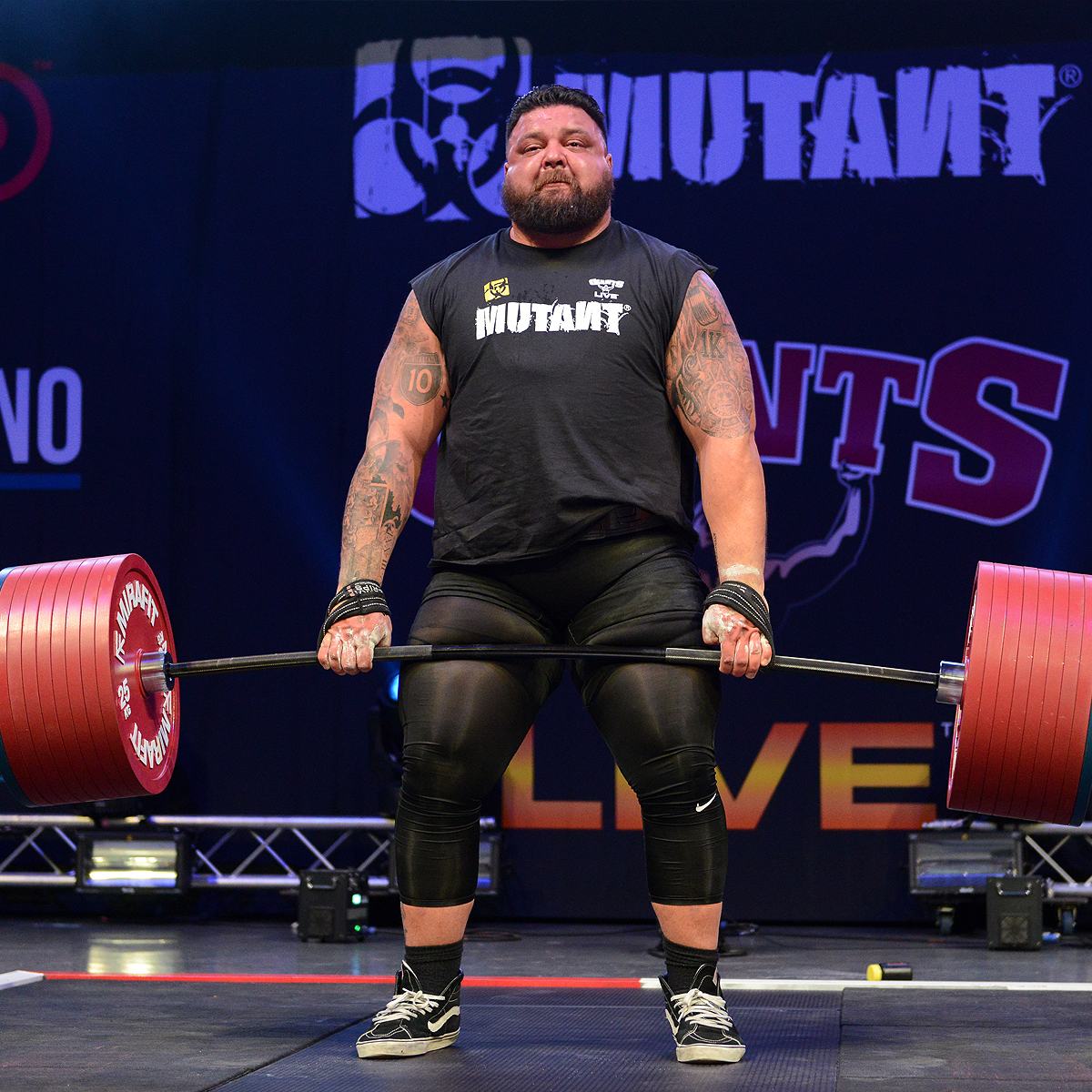
Austin “Smash” Andrade is an American professional strongman of Mexican heritage, based in San Antonio, Texas, who rose from local strength competition to the world elite in only a few years. Born on January 20, 1994, and formerly a collegiate wrestler and American-football player, Andrade is known for exceptional static strength, powerful overhead pressing, stone lifting and a 470 kg deadlift. He won the SCL World’s Strongest Latino and the Shaw Classic Open in 2023, finished 7th at the 2024 World’s Strongest Man, placed 4th at both the 2025 Arnold Strongman Classic and Strongest Man on Earth, then took 2nd at the 2026 Arnold Strongman Classic, only one point behind the winner. He reached the World’s Strongest Man final for a second time in 2026. As of September 28, 2026, Strongman Archives credits him with 15 international contests, two international wins, three WSM appearances and two finals. His competitive representation has included both the United States and Mexico, and Andrade has repeatedly spoken about pride in his Latino heritage and his goal of showing the strength of the community he represents.
Austin “Smash” Andrade belongs to a generation of strongmen who entered the world elite after the sport had become visibly more professional and performance standards were rising from one season to the next. Born on January 20, 1994, and developed athletically in the American Southwest, Andrade has come to be associated with Texas, where he lives and trains, with the United States, his primary country of representation in international statistical databases, and with his Mexican heritage, which he embraces publicly and has represented in multiple contests. That dual identity explains why some sources present him as an American strongman while others list him under the Mexican flag. Rather than being a substantive contradiction, it reflects a Mexican-American biography and a deliberate choice to use the strongman stage to represent the Latino community.
His competitive height is approximately 188 cm, while his bodyweight has generally been reported in the 172–179 kg range during his peak years, depending on the point in the season and the source. Strongman Archives lists him at roughly 179 kg, whereas Giants Live previously published a figure closer to 172 kg. Those numbers place him clearly in the open heavyweight class and help explain some of his advantages in static-strength events such as the deadlift, log lift, axle press, heavy stones and elevated pulling variations. Yet Andrade is not simply a static specialist. His results in the yoke, truck pull, medleys and World’s Strongest Man qualifying rounds show an athlete who has learned to move both his own mass and extremely heavy implements with increasing efficiency. That development, particularly from 2022 through 2026, is one of the central themes of his career.
As of September 28, 2026, Strongman Archives credits Andrade with 15 international contests, two international victories, three World’s Strongest Man appearances and two WSM finals, with seventh place in 2024 standing as his best finish at the event. Those numbers become more meaningful when placed in sequence. Andrade did not spend a decade slowly moving through the professional ranks. He went from regional and open-level competition to victories at the SCL World’s Strongest Latino and Shaw Classic Open in 2023, reached the WSM final in 2024, finished fourth at both the Arnold Strongman Classic and Strongest Man on Earth in 2025, and then climbed to second at the 2026 Arnold. Finishing only one point behind Mitchell Hooper in Columbus confirmed that he was no longer merely an outsider capable of a spectacular individual event, but a complete contender for major podiums.
The nickname “Smash” fits both his physical presence and competitive style. His approach is direct, built on a base of raw strength developed through years of American football, wrestling and weight training, then refined through strongman-specific technique. In interviews and content produced around “The Texas Boys,” Andrade comes across as intensely competitive without relying on the theatrical persona sometimes associated with the sport. His public story centers more on work, family, the gym, cultural representation and proving that he belongs among the strongest men in the world. The combination of an enormous frame, a multisport background and a close connection to the San Antonio strength community has made him one of the recognizable figures of the newer North American generation.
The public record of Andrade’s early life crosses several geographic reference points. Giants Live lists Mexico as his place of birth and presents him under the Mexican flag, local San Antonio reporting emphasizes his deep Texas connection, and college archives identify Tucson, Arizona, as his hometown during his student-athlete years. Those different descriptions should not be forced into an artificial single-line narrative. What the sources clearly establish is that Andrade grew up between family environments in San Antonio and Tucson and publicly identifies with Mexican heritage that matters deeply to him. In interviews and promotional material he has spoken about wanting to show how strong Latino people can be, and he has carried the Mexican flag on competition stages. At the same time, his education, employment, training base and much of his athletic pathway are rooted in the United States.
KSAT’s local reporting describes a childhood in which Austin divided time between his father’s home in San Antonio and his mother’s in Tucson. That movement meant more than two cities; it exposed him to two athletic communities. In Tucson he became a prominent high-school athlete, while his Texas family roots remained strong enough that San Antonio later became the place to which he returned after college. Andrade has spoken about his father and grandfather as reference points for the idea of family name, responsibility and legacy. For an athlete competing individually, that family logic helps explain the tone of many of his public comments: the result is not only his own, but an extension of the people and name he carries with him.
An Adams State wrestling biography provides several additional early personal details, naming his parents as Kim Ershin and Allen Andrade, an older brother, Dan Ershin, and a younger brother, Paul Andrade. The same profile listed music among his interests and the Houston Texans as his favorite professional team at the time. These are fragments rather than a complete portrait of private life, and a responsible profile should not extrapolate beyond them. They are useful, however, because they show that long before the image of a nearly 180 kg professional strongman, Andrade was a conventional student-athlete whose identity revolved around football and wrestling. Later EliteFTS material has also publicly mentioned his wife, Maisy, and the family dogs, Bruno and Baya.
Andrade has also spoken in local media about strongman giving him the opportunity to travel with his wife and experience places they might otherwise never have visited. Portugal, other parts of Europe and major host cities therefore became not only professional stops but chapters in their shared life. That dimension matters because a professional strongman career is not limited to the few minutes spent on the competition floor. Behind it sit months of preparation, travel, work adjustments, costs, recovery, eating and long periods away from home. Andrade has not built his public image around intimate disclosure, but the available sources outline an athlete whose wife, family, training partners and gym form a stable network around high-level performance.
Before strongman, wrestling was the sport that most clearly demonstrated Andrade’s competitive ceiling. At Amphitheater High School in Tucson, Arizona, he was a varsity heavyweight and became a state champion in 2012. Public sources differ slightly on the exact final record from that title season. The Adams State biography lists him at 54–0 with 52 falls, while Arizona documents and contemporary reporting give nearby but not identical totals. All of them agree on the essential point: Andrade finished his championship campaign undefeated and dominated the heavyweight division. For his later strongman career, the precise difference of one or several matches matters less than what the season taught him about pressure. Every opponent entered with the incentive to become the first person to beat him, and Andrade learned to perform while carrying that target.
Heavyweight wrestling developed qualities that would later reappear in strongman: base, balance, control of the center of gravity, hip explosion, controlled aggression and the ability to produce force from imperfect positions. A barbell or stone does not behave like another wrestler, but irregular strongman objects demand comparable adaptability. An Atlas Stone rotates, a sandbag shifts, a yoke oscillates and traction changes during a truck pull. Athletes who understand where their body is in space can correct those problems before they become failed attempts. Andrade eventually entered strongman with exceptional mass, but his athletic reflexes were not built solely on gym machines. They came from years of fighting for position and learning how to use every kilogram dynamically.
At the same time, Andrade played American football, particularly on the line, where body mass, contact tolerance, leg drive and the ability to absorb collisions are fundamental. MaxPreps recorded him at Amphitheater as an offensive and defensive lineman, while later college rosters confirm that he continued in football. His Adams State biography also notes track and field participation in high school. That combination of wrestling, football and track is not unheard of among American strength athletes, but for Andrade it produced an unusually broad base: the ability to move under load, survive contact, accelerate a very large body and compete across energy systems. When he eventually discovered strongman, those qualities already had years of repetition behind them.
Andrade has said that he began lifting weights around the age of twelve. That detail, reported by San Antonio media, does not mean his childhood lifting resembled his professional preparation, but it shows that the weight room was present through most of his athletic development. As a teenager, weights supported wrestling and football goals; later they became the main language of his career. There is an important distinction between being generally strong and converting strength into strongman performance. After 2018, Andrade began learning how to apply his long-developed base to the log, axle, stones, yoke, farmers, sandbags and different deadlift configurations. The raw horsepower was already there; specialization gave it direction.
After high school, Andrade continued athletics at the collegiate level. Adams State sources connect him with both the football and wrestling programs in Alamosa, Colorado. He appeared as an offensive lineman at roughly 6 ft 2 in and 300 lb on the 2014 football roster, while the 2015–2016 wrestling profile listed him at 285 lb. The weight difference is logical: collegiate heavyweight wrestling imposed a ceiling, whereas offensive-line play often rewarded additional mass. Moving between those demands gave Andrade early experience managing bodyweight for performance. Strongman would later allow him to exploit a considerably larger frame, but the ability to function at different weights remained relevant to conditioning and seasonal planning.
A major football milestone came in 2015, when Adams State named Andrade one of its offensive captains. The university’s official announcement emphasized leadership and the respect he had earned within the offensive unit, while the coaching staff noted his starting experience from the previous season. Offensive linemen are rarely the most visible players to spectators, yet the role demands discipline, communication and shared responsibility in a unit that works only when its members coordinate. That background offers useful context for Andrade’s later development inside Heavy Metal Fitness. Strongman is scored individually, but elite preparation is deeply collaborative: training partners, spotters, loaders, coaches, nutrition professionals and other athletes all contribute to the performance that eventually appears under one person’s name.
In wrestling, Andrade remained a heavyweight, and the Adams State biography highlighted his Arizona state-championship background. His collegiate wrestling career did not become as visible as his later strongman trajectory, but those years preserved the one-on-one competitive element in his athletic identity. When a strongman attacks a personal-record deadlift or an object he has never lifted, the immediate contest can feel similarly individual: the opponent in that moment is the task itself. Andrade was already accustomed to executing alone while teammates and coaches watched. Later, that composure became visible in competition attempts beyond 450 kg and in overhead events where a small technical mistake could instantly cost points.
His university profile listed Sport Management as his major, while later local reporting described his graduation in broader business terms. Because the wording differs, the most careful formulation is that Andrade left Adams State with education oriented toward sport and business rather than assigning a more specific degree title than the public record supports. He did not pursue a professional football or wrestling career after college. Like many former student-athletes, he then entered a difficult transition in which the structured competitive calendar suddenly disappeared. In his case, returning to San Antonio brought stable employment and weight gain, but also the sense that something was missing. The competitive void would eventually be filled by a sport he had not originally planned to pursue: strongman.
After college, Andrade returned to San Antonio with his wife and entered a phase of life that looked far more ordinary than collegiate athletics. The San Antonio Report has described him working at the Bexar Appraisal District, while Giants Live identifies his profession as residential real estate appraiser. It was real employment with hours and responsibilities, not a period in which he could live exclusively for sport. At the same time, the loss of organized competition and the change in routine brought weight gain and a sense of dissatisfaction that Andrade connected to the absence of a competitive target. He still lifted, but training without a destination did not reproduce the urgency of a wrestling or football season. He needed an environment in which strength had stakes.
Around 2018 he found Heavy Metal Fitness in San Antonio, in part through material he saw on Instagram. The gym was the opposite of an anonymous fitness center: it was a space populated by strongmen, unusual implements and a culture built around strength. Tim Ingram, the owner and coach associated with Heavy Metal Fitness, became one of the central figures in Andrade’s development. His first encounters with strongman appear to have been organic. Andrade arrived with the background of a very large, already strong former collegiate athlete, saw people training the log, yoke, stones and other implements, and was encouraged to enter an amateur contest. He has described being immediately drawn in by the experience. Once his general strength had rules, a clock and a scoreboard, the old competitive instinct returned.
Local reporting suggests that the first results came quickly. Andrade did not need years to discover whether he possessed potential. He won early contests and realized that his size, leverage and strength base could carry him further. Yet the transition from “very strong man” to professional strongman is more complicated than it appears. An athlete must learn dozens of objects, rule sets and techniques that can change every weekend. A deadlift might use a standard bar, axle, wagon wheels, Hummer tires, an Elephant Bar or an 18-inch start. Pressing can involve a log, axle, dumbbell, Viking press or medley. Carrying events may combine yoke, frame, farmers and sandbags. Andrade entered a sport in which adaptability is itself a competitive skill, and Heavy Metal Fitness gave him the implements and partners necessary to build it.
Over time Heavy Metal Fitness became more than an address. It became the professional base of his strongman career. Material from 2024 through 2026 regularly shows him training there in the afternoons, working with Tim Ingram and sharing heavy sessions with Nick Guardione and other athletes. The gym’s culture has often been presented as one in which performance is built collectively without removing individual responsibility. Andrade developed not only his deadlift and overhead strength there, but also event tolerance, stone technique and the ability to execute multiple demanding tasks while already fatigued. Joining Heavy Metal Fitness effectively marks the beginning of his strongman career: from that point forward, strength training stopped being preparation for another sport and became the sport itself.
Between joining Heavy Metal Fitness and his documented international appearances in 2022, Andrade spent several essential years building strongman technique. That period is less visible in global databases because many local and regional competitions never enter international archives, but San Antonio reporting and Andrade’s own recollections point to rapid progression. He started in amateur shows, where his physical gifts were immediately obvious, yet every contest exposed a new technical problem: footwear for the yoke, how to rack a log, when to accelerate with farmers, how to preserve grip, how to breathe around a sandbag and how to turn a heavy deadlift into a repeatable competition movement. Those details are largely invisible to spectators, but they are what separate a powerful lifter from a complete strongman.
A major part of his development was access to training partners chasing similar goals. Nick Guardione, who would later also reach World’s Strongest Man, trained alongside Andrade at Heavy Metal Fitness. The pair became known online as “The Texas Boys,” and their sessions illustrated the value of a partnership in which each athlete could push the other without turning every workout into an uncontrolled contest. In 2025 local media, Andrade described a relationship built across roughly five or six years of shared training. For strongman, where many implements are difficult to prepare alone and immediate technical feedback matters, such continuity is a genuine advantage. Heavy Metal became the laboratory in which raw strength was converted into points.
The 2022 season is the first for which Strongman Archives provides a consistent international chronology for Andrade. At Beerstone in Mission, Texas, he finished second in a field of eight. He won both the Truck Pull and Atlas Stones, two very different events. Truck pulling demands rhythm, traction and conditioning, while stones reward extension strength, positioning and efficient lapping. Winning both suggested a broader profile than that of a pure deadlift specialist. He tied Josh Hatfield on overall points before the countback placed him second, but the performance made clear that he was ready for stronger fields.
In August 2022 he entered the Shaw Classic Open, which functioned as a gateway into the competitive environment built around Brian Shaw’s professional contest. Andrade finished sixth out of sixteen, a strong result in a high-volume format filled with athletes attempting to convert open-level success into professional opportunity. More important than the final position was exposure to a longer contest in which technical errors and points dropped on weaker events accumulate rapidly. The jump from a regional show to a multi-event weekend is not simply a matter of heavier implements; it is a jump in strategic complexity. Andrade was learning to manage energy for an overall leaderboard rather than treating every event as an isolated test.
At America’s Strongest Man 2022 he finished fifth in a field of thirteen and produced one of the performances that remains in his record profile: a 209 kg Max Sandbag Load that won the event. A sandbag above 200 kg combines brutal lifting strength with the difficulty of a soft object that offers no handles and changes shape in the arms. The victory confirmed Andrade’s aptitude for loading and awkward objects, while fifth overall placed him close to the national podium. By the end of the season he was not yet an international star, but the ingredients were in place: top finishes, event wins, a specialized gym, coaching, powerful training partners and a body capable of handling open-class loads. The following year would turn that potential into titles.
The 2023 season was the point at which Austin Andrade stopped being merely a promising name from the American circuit and began collecting results that carried international weight. The first major confirmation came at the SCL World’s Strongest Latino in Matosinhos, Portugal. Andrade won the competition in a twelve-man field, earning the first major international victory of his career. The title also carried obvious personal significance. For an athlete who had spoken about representing the Latino community and who sometimes competed under the Mexican flag, victory in a contest explicitly built around elite Latino strength athletes connected sporting achievement with the identity he had already discussed publicly.
Only weeks later, he followed the Portugal win by taking first place at the 2023 Shaw Classic Open. This time the competitive stakes were different. The Open acted as a direct proving ground for athletes seeking access to the professional level of one of America’s heaviest contests. Andrade scored 65 points and finished first in a sixteen-man field. He won the Medley and Atlas Stones, again displaying versatility. A medley rewards transitions, speed and the ability to change the nature of the effort within seconds; stones demand power, technique and endurance at the end of a long show. Winning both across a multi-event weekend demonstrated more than a high one-rep maximum. It showed the capacity to compete under accumulated fatigue.
The two victories created an acceleration effect. Instead of being evaluated through the question “can he reach the professional level?”, Andrade entered the second half of 2023 with that question already answered. He could win international fields and control an open-format contest. In strongman, that psychological threshold matters. Before a first major victory, an athlete can interpret podium finishes as evidence of potential; after winning, first place becomes lived experience rather than an abstraction. For Andrade, 2023 provided exactly that recalibration. The podium was no longer an imagined destination. It was a result he had produced and now needed to reproduce against stronger and stronger lineups.
The Giants Live World Open in September gave him his first significant test inside the Giants Live ecosystem. He finished ninth out of eleven, a much more modest position than his previous two wins, but the context was crucial: the level of the field was higher, and the deadlift saw him pull 430 kg. That weight was already world-class in ordinary strength terms, yet in modern elite strongman it was not enough to dominate a maximum-deadlift event. The contest functioned as an honest measurement of the distance between open-level success and established world-class consistency. Andrade could lift enormous weights and win competitions, but WSM and Giants Live podiums would require even more strength, precision and balance across events.
Paradoxically, ninth place at Giants Live is almost as important to his development story as the two victories. Elite strongman punishes over-specialization. One zero, one technical mistake or one poor event can move a potential top-five athlete into the lower half of the standings. Andrade entered the following season having experienced both ends of that reality: he knew what it felt like to control a contest, and he knew how little margin existed when the lineup was full of WSM-caliber athletes. In 2024 that lesson translated into a major jump. At his first World’s Strongest Man appearance, he would not simply participate; he would reach the final.
World’s Strongest Man 2024 was Andrade’s first test in the contest that, for mainstream audiences, most clearly defines the summit of the sport. A WSM debut is difficult for two reasons. First, the implements and opponents are generally heavier and stronger than those encountered in most qualifying shows. Second, the group format makes strategy essential: it is not enough to lift well, an athlete must collect enough points to secure one of the limited places in the final. Andrade survived the heats and reached the ten-man final on his first attempt. The results from 2023 could no longer reasonably be treated as isolated successes. Reaching a WSM final on debut demonstrated that his level functioned under the pressure of the sport’s most famous contest.
In the final, Andrade finished seventh. The placing was especially meaningful because his competitive profile was still developing. He did not have the experience of a veteran with many WSM finals, yet he produced high-end results in several events. He placed second in the Giant’s Medley, confirming that his loaded movement had advanced far beyond the image of a purely static athlete. In the Max Axle Press he lifted 190 kg and finished fourth, while the Tire Deadlift saw him complete six repetitions for another competitive top-half event result. Medley, overhead and deadlift together describe what Andrade was becoming: a massive heavyweight who had learned to move without surrendering the strength advantages of his size.
Seventh place did not mean the profile was complete. In a WSM final, the difference between fourth and tenth can be created by only a handful of points lost in an unfavorable event, an imperfect transition or one missing repetition. Andrade still needed to convert his strengths into more event wins against the very best and minimize damage on weaker events. Yet that is precisely why the debut mattered. It gave him a precise map of the world level. He was no longer preparing for a hypothetical WSM final; he knew the warm-up conditions, the pace, the waiting periods, the media pressure and how quickly recovery had to occur after a maximal effort.
San Antonio media treated the qualification and final as a significant moment for the local strength scene. Heavy Metal Fitness was no longer simply a gym producing good regional competitors; it was the training base of a World’s Strongest Man finalist. Coverage reconstructed Andrade’s path from a childhood between San Antonio and Tucson through Adams State and back to Texas, creating a clear narrative: a former wrestler and offensive lineman had found a third sport and, comparatively late relative to some rivals, reached the world top ten. That story increased his visibility beyond the narrower strongman audience.
From a career perspective, 2024 changed the standard by which future results would be read. After seventh at WSM, a routine top-ten finish could no longer automatically count as a major breakthrough, and Andrade had legitimate reasons to target podiums. That additional pressure is itself evidence of progress. The athlete who two years earlier had been trying to prove he belonged on the professional circuit had become someone audiences could expect to score heavily in the deadlift, overhead events and stones. Results at the Arnold and Strongest Man on Earth in the following season would confirm that his WSM final was not an anomaly.
After the World’s Strongest Man final, Andrade entered the 2024 Strongest Man on Earth with a different status. The contest, developed from the Shaw Classic ecosystem, assembled a large professional field and a format designed to test a very broad range of abilities. Andrade finished fifth out of sixteen. That position matters because it came in a show where he could not rely on only two or three strengths. The volume of events and variety of implements required strength, recovery and adaptability across an extended weekend. Fifth place in such a field demonstrated that the spring WSM result had not been a short window of form. It was the beginning of a stable presence in the sport’s first tier.
One of the defining performances came in the Manhood Stone. Strongman Archives records Andrade lifting a 249 kg stone for one repetition, enough for second place in the event. Extremely heavy stones demand more than back and hip strength. The athlete must create purchase on a round surface, lift it from the floor, lap it, reconfigure the grip and then extend violently. At nearly a quarter of a metric ton, any positioning error becomes expensive. For Andrade, the result reinforced a theme visible as early as 2022: stone events are among the areas where his wrestling background and ability to control awkward loads translate most naturally.
At the same contest he also produced a deadlift of roughly 436 kg in a raw-with-straps format, enough for a high placing in the event. In the chronology of his career, the number forms a bridge between the 430 kg pull at Giants Live in 2023 and later jumps to 454 kg and then 470 kg. The progression matters because maximum deadlift strength does not increase linearly at this level. Every additional ten or twenty kilograms beyond 430 requires substantial adaptation in the posterior chain, bracing, setup and tolerance to axial load. Andrade did not become a world-class puller through one isolated breakthrough. He accumulated that status across seasons.
At the Giants Live USA Strongman Championships in September 2024 he finished fourth. There he crossed the symbolic 1,000 lb barrier in competition for the first time, pulling approximately 454 kg in the Max Deadlift. Among North American strength athletes, 1,000 lb remains a psychological threshold even though international scoring is conducted in kilograms. Clearing it on stage placed Andrade within a relatively small group capable of pulling more than 450 kg under competition conditions. Fourth overall simultaneously demonstrated that he could convert that static strength into a complete contest rather than a single highlight.
By the end of 2024, Andrade’s résumé already included an SCL title, a Shaw Classic Open title, a WSM final, fifth at Strongest Man on Earth and fourth at a Giants Live event in the United States. In only two seasons, the frame of reference had shifted from “can he win an open?” to “can he reach a major podium?”. The 2025 season would be central to answering that question. The Arnold Strongman Classic, historically built around maximum strength and brutally heavy implements, looked particularly compatible with Andrade’s developing profile. His result would validate that assumption.
The 2025 Arnold Strongman Classic became one of the most important moments of Andrade’s career to that point. The Columbus contest has a distinct tradition: compared with more speed-oriented formats, the Arnold has historically rewarded maximal strength, unusual lifts and exceptionally heavy objects. For an athlete who had built a reputation around the deadlift, overhead strength and stones, the invitation provided a favorable framework but an unforgiving test. Andrade finished fourth with 38.5 points in a field where every event could rapidly separate podium candidates from the rest. It was his first top-four finish at an established major and showed that his results from the previous season could transfer to one of strongman’s most prestigious stages.
On the Elephant Bar Deadlift he pulled approximately 436 kg. The long, flexible bar changes the mechanics of the lift compared with a standard deadlift bar: the plates leave the floor progressively, more deformation is present, and the athlete must control a pull that can amplify movement and timing errors. For Andrade, the event continued a clear deadlift progression. It was not the largest number of his career, but in a multi-event competition the energy cost of each attempt matters. A maximum deadlift is never isolated. Other events still demand the back, grip, trunk and nervous system afterward, so remaining competitive across the rest of the weekend is part of the value of the result.
One of the edition’s more spectacular events was “The Big Jerk,” where Andrade lifted 232 kg and remained highly competitive in the standings. The event demands more than strict upper-body pressing strength. The athlete must turn leg drive and trunk stiffness into a stable overhead finish under a massive implement. For Andrade, who already possessed a 190 kg axle and substantial log experience, the event showed that his pressing ability was portable across implements. That versatility is essential in modern strongman. A career cannot be built around only one form of overhead press because promoters deliberately change objects in order to test adaptation.
His strongest moment at the 2025 Arnold came in the Stone to Shoulder, which he won. The event combines stone-lifting technique with an additional control requirement: the object must be brought to the shoulder and stabilized sufficiently for the referee. Andrade’s wrestling background again offers a useful biomechanical analogy. He is comfortable wrapping an awkward object, bringing it close to his center of mass, changing body position and creating full-body extension. The win was not an isolated favorable outcome. It continued a pattern that included sandbags, Atlas Stones and Manhood Stones.
Fourth overall carried more significance than the sum of the individual events. Andrade had finished close enough to the podium that the following training year could be built around a concrete target: turning several fourth- and fifth-place event results into top-three scores. In elite strength sport, that final step can be more difficult than moving from mid-pack into the top five because the last few athletes are themselves exceptional and possess few obvious weaknesses. Andrade needed to gain points without sacrificing the qualities that had brought him there. The 2026 Arnold would show how effectively that process had been executed.
World’s Strongest Man 2025 introduced a note of frustration into an otherwise very strong year. Andrade entered the heats as a finalist from the previous edition, but his qualifying group did not produce another trip to the final. Strongman Archives records him fifth in the group. That result does not erase his level; it demonstrates how unforgiving the WSM format can be. Unlike a standard contest where every point contributes to one overall table, group qualification creates scenarios in which a world-class athlete can be eliminated before the final if points are lost in exactly the wrong events. For Andrade, the outcome was a setback, but not evidence of a broader collapse in performance.
His response in August was convincing. At the 2025 Strongest Man on Earth, Andrade improved from fifth in 2024 to fourth in a sixteen-man field. The long format again tested his adaptability. Among his most impressive results was a 643 kg Super Yoke completed in 17.94 seconds, good for second in the event. Such a load massively exceeds the athlete’s own bodyweight and turns every step into a compromise between speed and stability. A strongman can possess enormous static strength and still be slow or unstable under a yoke. Andrade managed to move a load above 600 kg fast enough to challenge for the event win, directly countering any simplistic view of him as a static-only competitor.
In the Max Trap Bar Deadlift he reached 475 kg, one of the largest documented loads of his career, and finished fourth in the event. The trap bar changes hand position and load distribution compared with a straight bar, but 475 kg remains an extraordinary demonstration of total-body strength. In the same contest he also lifted a 202 kg log, the competition best catalogued by Strongman Archives. One weekend therefore produced reference performances in three distinct areas: a gigantic yoke, a near-half-ton trap-bar deadlift and an overhead lift above 200 kg. That density of high-level performances helps explain the fourth-place overall finish.
On the Manhood Stones he completed three repetitions with 227 kg and finished near the top of the event. If the 249 kg stone from 2024 had shown the ability to lift a maximal awkward object, the repeated 227 kg effort in 2025 demonstrated a different quality: repeatability under fatigue. A single exceptional stone and a multi-repetition set are not the same skill. The first demands a peak of strength and near-perfect execution for a few seconds; the second requires returning to the object, rebuilding position and repeating the sequence with a very high heart rate. Andrade was becoming better at both.
Strongest Man on Earth 2025 may be the contest that best describes his profile at that point. He did not win, but he was very close to the podium and remained competitive across events with opposite mechanical demands. After missing the WSM final, he needed a result that demonstrated that his preparation had not regressed. Fourth place did exactly that and set the stage for the autumn, when his deadlift would reach 470 kg and a Rogue Invitational appearance would add another elite competition format to his résumé.
In September 2025, at the Giants Live Strongman Open, Andrade produced the heaviest documented standard deadlift of his career: 470 kg. The lift came in the World Deadlift Championships setting, where specialists line up for weights that only a generation earlier would have seemed almost incompatible with human performance. For Andrade, 470 kg was more than a personal record. It confirmed that the progression from 430 kg in 2023 and 454 kg in 2024 was not accidental. Across roughly two years he had added about 40 kg to his competition deadlift in a range where every additional kilogram is expensive. Strongman Archives retains the 470 kg pull as his competition best in the Max Deadlift.
His overall placing at the Giants Live Strongman Open was ninth. The gap between an elite deadlift and a modest overall finish illustrates the nature of strongman perfectly. An athlete can produce one of the largest lifts in the world and still lose enough points elsewhere to fall deep in the standings. For Andrade’s profile, the contest is a useful reminder: static strength can create record-level moments, but overall success depends on balance. That reality explains why his training cannot be organized exclusively around the deadlift even though it is one of his most visible weapons.
In November 2025 he debuted at the Rogue Invitational, an event that brings together elite strength athletes and often uses highly specific implements. Andrade finished seventh out of nine, but again produced a standout maximum-strength performance: 465 kg in the 18-inch Deadlift, good for second in the event. Starting from eighteen inches shortens the range of motion compared with a floor pull and permits heavier loads, yet it places severe demands on upper-back strength, hip extension and lockout. For Andrade, the result showed that his pulling power was not dependent on one competition setup. He could move extreme weights both from the floor and from an elevated start.
Rogue also added a visibility dimension. The Invitational is watched closely by CrossFit, weightlifting, powerlifting and strongman audiences, and its production reaches viewers beyond the traditional strongman circuit. For Andrade, whose profile had already expanded through Giants Live, WSM and The Texas Boys content, participation reinforced his status as an international athlete. Even without an overall podium, entering that lineup and finishing second in a maximum-strength event confirmed his reputation as a heavy-power specialist.
By the end of 2025, Andrade had a more complex competitive identity than he had twelve months earlier. The Arnold had placed him near the podium, Strongest Man on Earth confirmed overall progress, the World Deadlift Championships produced 470 kg, and Rogue added a 465 kg 18-inch pull. The main disappointment remained missing the WSM final. In sporting terms, that mixture of success and frustration can be productive: he entered the off-season knowing he had the strength for major podiums but could not afford a poor qualifying campaign. The 2026 season would turn that tension into one of the strongest results of his career.
The 2026 Arnold Strongman Classic produced the highest major placing of Austin Andrade’s career to that point. Official results put him second with 35 points, only one point behind winner Mitchell Hooper. The gap was small enough that every half-point lost across the weekend gained retrospective importance. For Andrade, the contest proved exactly what the 2025 season had suggested: he was capable of challenging for a major title rather than simply chasing a top-five position. In a sport where consistency is difficult precisely because events vary so widely, finishing one point behind one of the era’s most consistent competitors represented a major validation.
On the Elephant Bar Deadlift he lifted 443 kg and finished second in the event. The number was below his 470 kg standard-bar record, but direct comparison would be misleading because the implement, strategy and contest context were different. What mattered was the score. Andrade took almost the maximum available points in an event that needed to be one of his weapons. At the elite level, specialists must capitalize where they have structural advantages. A great deadlifter finishing sixth in the deadlift gives away the value of that advantage; Andrade avoided that problem and established his position near the top of the standings from the start.
On the Austrian Oak he completed three repetitions with 195 kg and remained in the leading group. A nearly 200 kg log for reps tests the clean, trunk stability, leg drive and the ability to recover breathing between efforts. Later, in the Dumbbell Press, he lifted 127 kg for one repetition and finished third. Together the two overhead events demonstrated an important advantage: Andrade does not depend on one implement. He can score on the log, dumbbell and axle, and that variety reduces the possibility that organizers can neutralize his pressing strength simply by changing the object.
Stone to Shoulder again became his signature event. Andrade won it with three repetitions, repeating his victory from the previous Arnold and confirming that stone lifting was not merely a favorable result from one good day. In a field where every opponent already knew his ability on stones, he still turned the event into an advantage. That repeatability is what transforms an event from a strength into a competitive signature. Rivals know they must limit their losses, while Andrade enters the platform with a factual basis for expecting to challenge for first place.
Second at the 2026 Arnold does not automatically guarantee a future title and should not be turned into a prediction. It does, however, provide a precise measurement of the level he reached. Across a complete weekend, against an elite lineup and in a format without easy events, Andrade finished one point from the trophy. At that stage the word “contender” was no longer promotional language but a description grounded in the scoreboard. The rest of the season would show that the form he brought to Columbus could again transfer into World’s Strongest Man.
At the 2026 World’s Strongest Man, Andrade returned with the clear objective of avoiding the previous year’s outcome. The qualifying stage produced perhaps the most convincing demonstration of versatility in his career. He won the Truck Pull, Squat Lift and Overhead Medley in his group. Three event wins in a WSM heat say more than a single maximal performance because they cover different demands: pulling power and conditioning in the truck, strength endurance in the squat, then technical speed and pressing capacity in the overhead medley. Andrade showed that he could adapt quickly and turn multiple event types into maximum points.
He won the Truck Pull in approximately 34.69 seconds. The event rewards athletes who can combine leg and back strength with rhythm and efficient footwork. At nearly 180 kg, Andrade’s mass can provide a traction advantage but also increases the metabolic cost of movement. He managed that tradeoff well enough to beat his group. In the Squat Lift he completed sixteen repetitions, a result that highlights a dimension sometimes overshadowed by his maximal deadlifts: high-repetition strength endurance. Maintaining mechanics under a heavy load after ten, twelve or fifteen repetitions is a different physiological problem from executing one maximum attempt.
The Overhead Medley may have been the most representative event of his qualifying performance. Strongman Archives records six implements completed in 59.33 seconds for first place. A pressing medley requires rapid transitions among objects with different diameters, grips and centers of mass. The athlete has to know when to use a push press, when a jerk is more efficient, how to clean each object and how long to pause between lifts. Andrade, originally defined by raw power, was now winning an event that rewards technical efficiency. That is one of the clearest signs of his maturation as a strongman.
He finished second in the Stone Medley and gave away more points in the Carry & Climb, where he placed fourth, but the overall group performance secured his return to the final. Narratively, the comeback from 2025 was complete: Andrade did not merely qualify, he did so while winning three events. Such a qualifying performance can also be costly. The WSM final follows quickly and athletes enter it with fatigue accumulated from the heats. That feature of the format makes it difficult to compare a dominant group performance directly with the scoreboard two days later.
In the 2026 final, Andrade finished tenth. The position was below the seventh place he achieved in 2024 and showed that qualification does not guarantee a better final even when the heats have gone extremely well. Yet reaching a second WSM final in three appearances strengthens his standing within the elite of the period. As of September 28, 2026, Strongman Archives therefore records three WSM appearances, two finals and a best finish of seventh. Both sides of the picture matter: Andrade can dominate a qualifying group across multiple event types, but he still has room to turn that form into a final podium.
The deadlift is the simplest place to begin a technical analysis of Andrade because the numbers are impossible to ignore. From 430 kg at the 2023 Giants Live World Open, he progressed to roughly 454 kg at the 2024 USA Strongman Championships and then 470 kg at the 2025 World Deadlift Championships. In other variations he pulled 465 kg from eighteen inches at the Rogue Invitational and 475 kg on a trap bar at the 2025 Strongest Man on Earth. Those numbers are not directly interchangeable because bar height, flex, hand position and equipment rules change the movement. Taken together, however, they establish one stable quality: Andrade can produce enormous extension force across a wide range of pulling configurations.
His massive frame provides a useful base, but bodyweight alone cannot explain the performance. Modern strongman includes many athletes between roughly 150 and 190 kg, and the differences are created by structure, technique, specific adaptation and tolerance to load. Andrade has learned to create tension before the bar leaves the floor, maintain a workable position through the hardest part of the pull and manage near-limit attempts under contest conditions. At 470 kg, the challenge is no longer simply “back strength.” Legs, hips, lats, trunk, assisted grip and the nervous system must function as one mechanism. A small loss of position can stop the attempt entirely.
The progression is also notable because of the calendar. In 2023, 430 kg was enough to identify him as a very powerful deadlifter but not necessarily as a favorite to win the event in an elite Giants Live lineup. By 2025, 470 kg placed him in a different category. Adding roughly 40 kg across two years at that level suggests that programming produced specific adaptation without completely sacrificing other events. That balance is difficult in strongman. If deadlift work consumes too much recovery, overhead strength, carries and conditioning can stall. His simultaneous top-four results at the Arnold and Strongest Man on Earth indicate that specialization did not become exclusive.
It also matters that Andrade has demonstrated strength on multiple bars. The Arnold’s Elephant Bar is long and flexible; the 18-inch pull shortens the range of motion; a trap bar places the athlete inside the load; the standard World Deadlift Championships setup has a different break from the floor. A lifter who depends completely on one mechanical pattern can lose many points when the implement changes. Andrade is not immune to those differences, but the database shows that he remains highly competitive across the variations. That portability is more valuable to a strongman than one isolated gym number.
His deadlifting must also be understood strategically. In a major contest, the goal is not always to chase a personal record. An athlete may choose a weight sufficient for the necessary points and preserve energy for the rest of the weekend. That is why 443 kg at the 2026 Arnold can be competitively more valuable than a heavier failed attempt. Andrade finished second in the event and still had resources for the Austrian Oak, dumbbell and stones. His maturation is visible in that shift from chasing the biggest number to managing points. Strongman is a decathlon of strength: records attract attention, but trophies are decided by the sum of good decisions.
If the deadlift is the most obvious number in Andrade’s profile, overhead strength may be the most important area for his consistency in overall standings. Strongman Archives credits him with a 202 kg competition log and a 190 kg axle, while the 2026 Arnold saw him perform three repetitions with the 195 kg Austrian Oak and lift a 127 kg dumbbell. The 2026 WSM heats also included his winning Overhead Medley with six completed implements. Those performances cover four different technical families. The log requires a specialized clean, the axle demands control of a thick rigid bar, the dumbbell is unilateral, and the medley requires rapid switching between objects.
For an athlete of Andrade’s size, overhead performance also has a mobility component. Receiving a large log or stabilizing a dumbbell overhead demands more than powerful shoulders and triceps. Ankles, hips, thoracic spine and the shoulder girdle must allow a position from which leg drive can pass efficiently into the implement. Football and wrestling may contribute to whole-body coordination, but strongman-specific technique takes years to build. Andrade moved from being a strong athlete who could press heavy weights to a competitor capable of winning fast multi-implement medleys. That difference comes from technical repetition, not muscle mass alone.
Stone lifting is the second consistent thread. In 2022 he won the Atlas Stones at Beerstone and the Max Sandbag Load at America’s Strongest Man. In 2023 he won the Atlas Stones at the Shaw Classic Open. In 2024 he lifted a 249 kg Manhood Stone for second at Strongest Man on Earth. In both 2025 and 2026 he won Stone to Shoulder at the Arnold, and in 2025 he completed three repetitions with 227 kg on the Manhood Stones. The pattern is too extensive to dismiss as coincidence. Andrade’s technical and anthropometric profile is particularly well suited to heavy objects held in the arms: a thick torso, powerful hips, the ability to compress the load and years of experience in wrestling-style body positions.
Being “good at stones” does not mean mastering one technique. Atlas Stones to platforms, a Manhood Stone over a bar and Stone to Shoulder have different trajectories and rhythms. A sandbag, while conceptually related, deforms and can be harder to secure. Andrade has succeeded across all of these variations, suggesting transferable qualities: strong initial positioning, violent extension, the ability to keep the object close to the body and enough conditioning to repeat the sequence. From a competitive scouting perspective, promoters can change the object without easily removing his advantage.
The deadlift-overhead-stones combination is one reason Andrade fits Arnold and Strongest Man on Earth formats so well. Those contests often feature maximal loads and brutally heavy objects, precisely where he can create separation. Winning a major, however, requires those strengths to be paired with events in which he does not collapse in carries, medleys or endurance work. His 2026 WSM qualifying performance shows that such balance is possible. His profile can no longer be summarized accurately as that of a “static monster”; that label would miss the very progress that carried him from ninth at Giants Live in 2023 to Arnold runner-up three years later.
One of the largest changes in Andrade’s career has been his development in moving events. Early in his international appearances, his reputation was dominated by body mass and static strength. By 2025–2026, results in the Super Yoke, Truck Pull and medleys showed a much more complete athlete. The 643 kg yoke completed in 17.94 seconds at the 2025 Strongest Man on Earth is an extreme example. A load of that size compresses the body, demands stabilization with every step and magnifies any oscillation. An athlete can be exceptionally strong and still move slowly or lose control. Andrade combined the enormous weight with enough speed for second place in the event.
The Truck Pull victory in the 2026 WSM heats completes the picture. The technique is different from the yoke: the athlete has to create an efficient body angle against the harness, coordinate hands and rope and maintain a consistent step as fatigue rises. Andrade’s mass provides inertia and substantial force against the ground, but it also creates a high metabolic cost. Winning such an event in a WSM group suggests that his cardiovascular and event-specific preparation had improved enough to turn size into an advantage rather than a brake.
Medleys may be the most honest conditioning test for a heavyweight. They combine objects, directions and transitions, and time lost on a turn or grip adjustment can be measured in tenths of a second that become points. Andrade won the Medley at the 2023 Shaw Classic Open and finished second in the Giant’s Medley in the 2024 WSM final. Those performances show that mobility was not a late-career accident but a quality he had been developing throughout his rise. For an athlete approaching 180 kg, carry and sprint volume has to be managed carefully enough to improve speed without creating excessive wear.
His football background is relevant here. Offensive linemen repeat short explosions, start from low positions, absorb and create contact, then recover between plays. Strongman uses different objects, but many events share the same energy-system pattern: roughly twenty to sixty seconds of near-maximal work, followed by rest and then another event. Wrestling adds tolerance for effort when breathing is compromised by pressure around the torso. Andrade entered strongman with those experiences, and specific event training turned them into measurable performance.
Conditioning remains an area that can vary from contest to contest, and seventh-, ninth- or tenth-place results in certain shows demonstrate that not every format suits him equally. It would nevertheless be incorrect to interpret a weaker overall placing as a lack of athleticism. Event data show the opposite: Andrade can win a truck pull or medley and place second under a monstrous yoke. The current challenge is consistency across the same weekend. In a six- to eight-event major, one poor result can erase two event wins. The next layer of progress is therefore not necessarily becoming stronger, but reducing the gap between his best and worst event.
Tim Ingram is one of the people most consistently associated in public with Austin Andrade’s preparation. The owner of Heavy Metal Fitness and a strength coach, Ingram appears with Andrade in interviews, video content and discussions of programming. Their relationship illustrates a central reality of professional strongman: a coach is not programming only the squat, press and deadlift. He has to anticipate events, build useful implement variations and manage a calendar in which one contest may demand very different qualities from the next. For an athlete of Andrade’s size, the goal is not simply accumulating volume but finding enough productive work to create adaptation without allowing fatigue to compromise the next event or training block.
EliteFTS content and other material around Heavy Metal Fitness describe a structured environment that values long-term progression and a community in which event days become controlled competitive laboratories. Andrade does not train in a vacuum. When Nick Guardione, Tim Ingram and other athletes are present, every set can generate feedback. A yoke run can be filmed from the side, a log clean can be compared with the previous repetition and a stone series can be timed. In a sport containing so many variables, that culture of observation is almost as important as strength itself.
The partnership with Nick Guardione became visible enough for the pair to produce content under “The Texas Boys” identity. Beyond media value, the training relationship has practical logic. Two WSM-level heavyweights can use the same implements and similar weights, share setups and create competitive pressure without one athlete being permanently too advanced for the other. KSAT featured them together in WSM preparation, and Andrade explained that the relationship had developed over several years. That kind of continuity is rare and valuable in a sport where many athletes train alone or lack regular access to comparable partners.
On the nutrition and body-composition side, public 2025 material connects Andrade and Guardione with performance nutrition coach Nathan Payton. For an athlete between roughly 170 and 180 kg, nutrition is not simply the problem of eating a large number of calories. Bodyweight has to support strength without destroying mobility, sleep quality, digestion and the ability to perform medleys. Reporting from their training environment has highlighted improved conditioning and a more deliberate approach to composition. There is no basis for inventing private meal plans or protocols, but working with a specialist illustrates the professionalization of preparation beyond the weight room.
The most visible defining feature of the method is continuity. Andrade did not radically reinvent his training identity after every contest. Heavy Metal Fitness remained the base, Ingram the central coaching figure, and the San Antonio group the environment in which blocks were built. In a sport vulnerable to spectacular short-term solutions and the temptation to chase gym records constantly, that stability is an advantage. Results from 2022 through 2026 suggest cumulative development: a larger deadlift, more versatile overhead strength, faster carries, more mature stone lifting and better management of multi-day contests.
One aspect that makes Andrade’s story representative of contemporary strongman is that his rise developed alongside a professional life outside the sport. Giants Live has presented him as a residential real estate appraiser, while San Antonio reporting has mentioned his work at the Bexar Appraisal District after college. His path therefore did not begin with the model of an athlete supported exclusively for performance from adolescence onward. He had to integrate employment, training, travel and family responsibilities. That context changes how his hours at Heavy Metal Fitness should be understood. Every heavy session had to fit into a day that contained obligations beyond sport.
Giants Live has described his routine in terms of afternoon training, an ordinary phrase until one considers what those sessions contain: deadlifts beyond 400 kg, logs approaching 200 kg, carries and stones that require implement setup, loading, spotters and recovery. Strongman is not a sport in which every event can be improvised inside a standard commercial gym. Having Heavy Metal Fitness in San Antonio and building a community there removes some logistical friction, but not the time cost. Andrade’s consistency across multiple seasons suggests a life organized around precise windows for work, training, eating, sleep and recovery.
His wife, Maisy, appears in public sources as part of that personal infrastructure. Andrade has spoken about strongman allowing them to travel together, while EliteFTS material mentions her alongside the family dogs, Bruno and Baya. Those details should remain in proportion: they do not justify speculation about private life, but they show that strongman became something lived as a couple rather than an isolated hobby. International travel, contest preparation and substantial changes in bodyweight inevitably affect a household routine, and the continuity of Andrade’s career points toward a stable support system around the competitive project.
Family motivation also appears in an older form. In local interviews Andrade has spoken about wanting to leave something attached to the family name and about the influence of his father and grandfather. He connected that mentality to the fact that football did not bring all of the major-school opportunities he had hoped for, creating what he described as a lasting need to prove that he had been underestimated. Strongman provides a particularly clean arena for that energy. The weight moves or it does not, the clock is faster or slower, and the points are visible. For a former team-sport athlete, that directness can be compelling.
There is also a general physical cost to the open class, without any need to speculate medically about Andrade himself. Maintaining 170–180 kg of body mass, training very heavy implements and competing across multi-event weekends create major recovery demands. Contest selection, deload periods, sleep, nutrition and volume control therefore become professional components rather than accessories. Andrade has been able to appear repeatedly at the Arnold, WSM, Strongest Man on Earth, Giants Live and Rogue across only a few seasons. Not every result has landed near the top, but competitive availability itself is part of sustaining an elite career.
Away from the platform, Andrade’s public image remains relatively straightforward: family, gym, work, community and the objective of becoming better. He has not built his profile around controversy or extravagant statements. In a discipline that often benefits from oversized characters, that restraint may be less theatrical, but it gives him a recognizable identity. “Smash” is the nickname; the person behind it is consistently presented as a former collegiate athlete who found a second competitive career after the first athletic chapter had ended. The continuity between ordinary responsibilities and extraordinary performance is one of the more accessible elements of his story.
At 32 years old, Austin Andrade remains in an active phase of his career. It would be inaccurate to treat him as an athlete whose legacy is already closed because many of his most important results are recent: fourth at both the Arnold and Strongest Man on Earth in 2025, the 470 kg deadlift, runner-up at the 2026 Arnold and a second WSM final. In strongman, where many heavyweights reach competitive maturity after thirty, this period can represent either the peak or the beginning of a peak window. The only responsible formulation is descriptive rather than predictive: Andrade has already reached major-podium level, while future seasons will determine how often that level becomes titles.
Within the current generation, his profile stands out for the combination of enormous static strength and an athletic identity formed outside strongman. He did not grow up as a teenager inside a specialized log-and-stones system. He came through wrestling and football, experienced college sport, work and a post-athletic transition, then discovered strongman as an adult. That pathway explains both his advantages and his learning curve. He already possessed size, competitiveness and years under weights, but the implements still had to be learned from the beginning. His rapid rise after 2022 is largely the story of converting those general athletic qualities into specific strongman skill.
His Mexican-American identity adds a dimension that should not be reduced to the flag shown on a start list. Strongman Archives treats the United States as his primary country while also recording appearances for Mexico; Giants Live has presented him under the Mexican flag; Andrade himself has spoken publicly about pride in his Latino heritage. This profile uses the United States as the primary country field to reflect his principal database classification and American institutional pathway, while the biography explicitly preserves his Mexican representation and heritage. That is the most faithful way to reconcile sources using different conventions without erasing either side of his public identity.
Strictly in sporting terms, his landmarks through this date are clear: champion at the SCL World’s Strongest Latino and Shaw Classic Open in 2023; seventh at the 2024 World’s Strongest Man; fifth at the 2024 Strongest Man on Earth; fourth at both the 2025 Arnold Strongman Classic and 2025 Strongest Man on Earth; a 470 kg pull at the 2025 World Deadlift Championships; seventh at the 2025 Rogue Invitational with a 465 kg 18-inch deadlift; runner-up at the 2026 Arnold Strongman Classic; and tenth in his second WSM final in 2026. That résumé describes an athlete who moved from winning open contests to challenging for major podiums in an unusually compressed period.
A balanced assessment must preserve the limitations as well. Andrade does not yet own a World’s Strongest Man, Arnold Strongman Classic, Rogue Invitational or Strongest Man on Earth title. His best WSM finish remains seventh, and some Giants Live contests have ended in the lower half of the standings. Those facts do not diminish his records; they keep the profile from becoming promotional copy. The strength of his biography lies in the tension between event performances at an absolute world-class level and the still-unfinished process of converting them into a major championship. As of September 28, 2026, the story remains open.
Andrade’s rise is taking place in an era when strongman no longer depends exclusively on traditional television coverage. Instagram, YouTube, podcasts and independently produced gym content have become part of an athlete’s career. Within that ecosystem, Andrade has built visibility without turning himself into a manufactured character. His Instagram presence, The Texas Boys channel and appearances in EliteFTS content give audiences access to training, preparation and conversations with the people around him. That kind of presence changes the relationship between athlete and spectator. Viewers no longer see only the six events of a contest; they can follow the weeks in which those events are built. For athletes, the benefit is a more direct community. The additional responsibility is maintaining a public presence alongside high-level preparation.
Andrade fits that environment because his story does not require artificial embellishment. The real contrasts are already strong enough: a 285–300 lb college athlete who becomes a nearly 180 kg professional strongman; a real-estate appraiser who reaches a WSM final; an American athlete of Mexican heritage competing across European stages; a former wrestler turning stone lifting into a signature event. Each element can be supported through public sources and results. Rather than building a media identity separate from the sport, his content extends what is already there. Viewers see heavy deadlift sessions, humor with training partners, implement preparation and the contrast between the familiar environment of Texas and the pressure of international contests.
Latino representation carries particular significance in a sport whose modern media history has often been dominated by athletes from Northern Europe, Britain, Central Europe and North America. Andrade is not the first strongman of Latino background and should not be presented as though he stands alone, but the World’s Strongest Latino title and his choice to represent Mexico in certain contexts give him visible symbolic weight. He has framed that representation positively, as a desire to show the strength of his community rather than as a rejection of another identity. That makes his profile relevant to audiences who have not always seen themselves represented at the front of international strongman.
At the same time, his Texas connection places him inside a strong regional culture of strength sports. San Antonio and Texas more broadly have deep traditions in powerlifting, football and independent strength gyms. Heavy Metal Fitness is a product of that environment: a place where strongman implements are normal equipment rather than novelties. For Andrade, that infrastructure allowed the transition from curiosity to specialization without forcing him to relocate his life to another state. In a sport requiring yokes, logs, stones and space for carries, geography can determine whether a talented athlete can continue. In his case, the necessary environment existed at home.
This combination of cultural identity, local community and international performance explains why Andrade’s profile matters beyond specific records. A 470 kg deadlift can eventually be surpassed by someone else; second place can become first or remain the best result of a career. What remains stable is the pathway by which a former collegiate athlete, entering the specific discipline relatively late, found an ecosystem capable of converting his qualities into world-level performance. For the history of American strongman in the first half of the 2020s, Andrade is an example of how regional training centers can rapidly produce WSM finalists.
Viewed chronologically, Andrade’s career has an unusually clear structure. The year 2018 marks his entry into the strongman environment at Heavy Metal Fitness. The 2022 season brings the first consistent national and international archive record. In 2023 he wins two contests and gains genuine access to the professional circuit. The 2024 season validates his level through a WSM final and a top-five finish at Strongest Man on Earth. The year 2025 adds a top four at the Arnold, another top four at SMOE, a 470 kg deadlift and a Rogue debut, but also the hard lesson of a WSM qualifying elimination. The 2026 season converts experience into second place at the Arnold and a return to the WSM final. Each year has a distinct developmental function.
If only overall placings are considered, the swings can look large: fourth at the 2025 Arnold, ninth at the Giants Live Open, seventh at Rogue, then second at the 2026 Arnold and tenth in the WSM final. Strongman, however, does not use a fixed set of events, and an athlete cannot be evaluated as though every contest were run over the same distance or with the same apparatus. Andrade can enter a show featuring deadlift, log and stones, where his profile is especially favorable, or a speed- and grip-heavy format where he must focus on damage control. That is why event-by-event analysis is essential.
Individual numbers show progress where an overall placing can hide it. The deadlift increased. Overhead skill became more versatile. Stones remained an advantage. The yoke became an event in which he could finish second under 643 kg. Truck Pull and Overhead Medley became WSM qualifying victories. That means the range of competencies expanded even in seasons when a contest placing did not improve. In a sport this variable, that is one of the better ways to evaluate development: not simply how many places an athlete moved in a table, but how many different problems he can solve at a world-class level.
The 2026 Arnold result is the consequence of that expansion. Andrade did not need to win every event. He needed to finish high enough in the deadlift, Austrian Oak and dumbbell, exploit his advantage in Stone to Shoulder and avoid a catastrophic low score. The result was 35 points, one fewer than the champion. That is the model followed by athletes moving from specialist status toward championship contention: turn strengths into major scores and weaknesses into controlled losses. In Andrade’s case, the process is visible in the data rather than being merely an impression.
The latest international appearance included in this research is the Giants Live Strongman Open of September 5, 2026, where Andrade finished eighth. Strongman Archives records a 453.5 kg Max Deadlift and five repetitions in the Dumbbell Press, while Giants Live publishes the overall result. Eighth place after an Arnold runner-up finish and a WSM final is another reminder that elite status never guarantees a podium. Form, event selection and day-of execution continue to matter. This profile is therefore a snapshot dated September 28, 2026: complete enough to describe the rise, but deliberately open to what comes next.
A final way to understand Andrade’s trajectory is to separate ceiling from frequency. His ceiling is already demonstrated by event victories, a 470 kg deadlift, repeated success with stones and a one-point runner-up finish at the Arnold. The remaining career question is how frequently that ceiling can be reproduced across an entire major contest. That distinction matters because strongman championships are rarely decided by a single extraordinary lift. They reward the athlete who can repeatedly produce near-maximum performance while changing movement patterns, equipment and energy systems over several days. Andrade’s strongest seasons show that the tools are present. His weaker overall finishes show why consistency remains the defining challenge. This tension is not a flaw in the profile but the central competitive problem of elite strongman, and it places his future results in a more useful context than any single prediction could provide.
This profile was documented by cross-checking official sources and competition archives available through September 28, 2026. The principal source for contest history, event results and competition records is Strongman Archives, including Andrade’s athlete profile and deadlift record page: https://www.strongmanarchives.com/viewAthlete.php?id=2249 and https://www.strongmanarchives.com/records.php?viewRec=15. Biographical data, body dimensions, residence, occupation and statements about his Latino heritage were also checked against the Giants Live athlete profile: https://giants-live.com/athlete/austin-andrade/. The 2026 Arnold result was additionally verified through Arnold Sports: https://www.arnoldsports.com/sports-events/sports/strongman/arnold-strongman-classic/.
For his high-school and college years, the research used official Adams State University material, including his wrestling biography and the 2015 football captains announcement, along with Arizona sports archives. Those sources differ slightly on the exact number of victories in his state-championship season, so the biography preserves only the common and verifiable conclusion: Andrade was an undefeated heavyweight state champion in 2012. For his transition into strongman, his return to San Antonio and his professional life, the research also used the San Antonio Report and KSAT coverage published between 2024 and 2026.
For training context, Tim Ingram, The Texas Boys, his wife Maisy, the family dogs Bruno and Baya and his public online presence, the research used EliteFTS Table Talk material and public Heavy Metal Fitness/The Texas Boys content. The Shaw Classic athlete pages and results were used to confirm the 2023 Open victory, while Rogue Invitational and Giants Live sources supported appearances on those circuits. Where sources differ on bodyweight or nationality conventions, the profile states the difference instead of manufacturing certainty.
The biography is original editorial writing rather than a reproduction of any single source. Results are treated as data, while technical interpretations are derived from patterns across multiple competitions. It does not include rumors, medical speculation, unverified private information or gym records without a sufficient public basis. Facebook and TikTok fields remain blank where a sufficiently verified official URL could not be established, because a rigorous profile should prefer an empty field to a wrong attribution. Instagram, YouTube, Linktree and Strongman Archives links are populated with publicly verified addresses.
Iron Hall data
470 KG
Max Deadlift · 2025 World Deadlift Championships / Giants Live Strongman Open; competition personal best
Verified
465 KG
18-inch Deadlift · 2025 Rogue Invitational; 2nd in the event
Verified
475 KG
Max Trap Bar Deadlift · 2025 Strongest Man on Earth; 4th in the event
Verified
202 KG
Max Log Lift · 2025 Strongest Man on Earth; catalogued competition best
Verified
190 KG
Max Axle Press · 2024 World’s Strongest Man Final; 4th in the event
Verified
195 KG
Austrian Oak · 3 repetitions at the 2026 Arnold Strongman Classic
Verified
127 KG
Dumbbell Press — competition · 1 repetition, 2026 Arnold Strongman Classic; 3rd in the event
Verified
232 KG
The Big Jerk · 2025 Arnold Strongman Classic; tied 4th in the event
Verified
249 KG
Manhood Stone · 1 repetition at 2024 Strongest Man on Earth; 2nd in the event
Verified
209 KG
Max Sandbag Load · 2022 America’s Strongest Man; 1st in the event
Verified
643 KG
Super Yoke · 17.94 s at 2025 Strongest Man on Earth; 2nd in the event
Verified
443 KG
Elephant Bar Deadlift · 2026 Arnold Strongman Classic; 2nd in the event
Verified
2022
Runner-up in Mission, Texas; event wins in the Truck Pull and Atlas Stones.
2nd place
2022
First documented Shaw Classic Open appearance, in a 16-athlete field.
6th place
2022
Won the Max Sandbag Load event with 209 kg.
5th place
2023
First major international victory, in Matosinhos, Portugal.
1st / champion
2023
Won with 65 points, including event victories in the Medley and Atlas Stones.
1st / champion
2023
Giants Live debut; 430 kg deadlift.
9th place
2024
WSM debut and qualification for the ten-man final; 2nd in the Giant’s Medley in the final.
7th in the final
2024
Major pro-class result; 249 kg Manhood Stone and 436 kg raw-with-straps deadlift.
5th place
2024
Pulled 454 kg in the Max Deadlift, crossing the 1,000 lb competition barrier.
4th place
2025
38.5 points; event win in Stone to Shoulder plus strong finishes in the Timber Carry and overhead events.
4th place
2025
Highlights included a 643 kg yoke in 17.94 s, a 475 kg trap-bar deadlift and a 202 kg log.
4th place
2025
Set his competition deadlift best of 470 kg at the World Deadlift Championships.
9th place
2025
Rogue debut; 2nd in the 18-inch deadlift with 465 kg.
7th place
2026
35 points, one behind Mitchell Hooper; won Stone to Shoulder, placed 2nd in the Elephant Bar Deadlift and 3rd in the Dumbbell Press.
2nd / runner-up
2026
Second WSM final; won the Truck Pull, Squat Lift and Overhead Medley in his qualifying group.
10th in the final
2026
Finished the contest with a 453.5 kg max deadlift and five reps in the Dumbbell Press.
8th place