
2015
Britain’s Strongest Woman
First major national podium
3rd
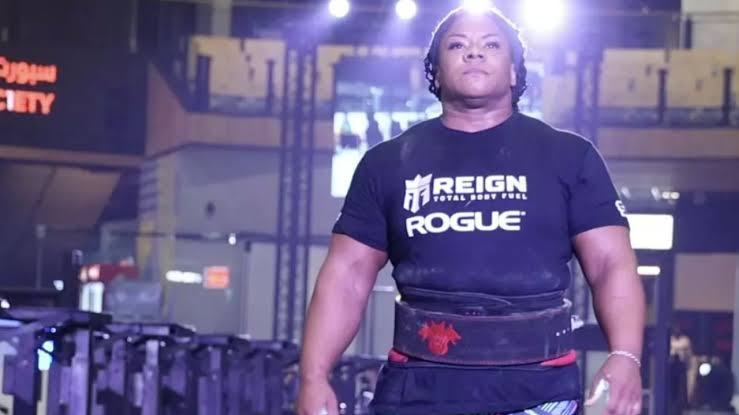
Iron Archives
Two-time World’s Strongest Woman and multiple record-setter
Active athlete
Andrea Thompson is a British strongwoman from Suffolk, a two-time World’s Strongest Woman champion (2018 and 2025) and four-time Britain’s Strongest Woman winner (2016–2019). She discovered strength sport through CrossFit in 2013 and became particularly accomplished in deadlifting and overhead pressing: a Guinness-recognised 140 kg log lift (2022), a then-world-record 290 kg conventional deadlift (2020), a 363 kg Hummer Tire Deadlift (2022), and a 304 kg Elephant Bar deadlift (2025). A mother of two, personal trainer and professional assessor, she has helped raise the profile of women’s strength sports. Her 2025 world title was awarded after an official standings revision.
In the recent history of strength sports, Andrea Thompson deserves a place that cannot be explained by a list of medals alone. The British competitor from Suffolk became one of the athletes through whom strongwoman moved from a niche activity, held in small venues and followed largely by dedicated insiders, towards international events capable of reaching mainstream audiences. She won World’s Strongest Woman in 2018 and, after an official revision of the standings, again in 2025. She won four consecutive Britain’s Strongest Woman titles between 2016 and 2019. Her name is associated with landmark performances in log pressing, conventional deadlifting and the specialised deadlift variations unique to strongman. What distinguishes her competitive identity is the combination of maximal strength, effectiveness overhead, an ability to collect points across different events and a career long enough to require repeated adaptation as the standard of opposition rose. This account follows documented events through October 2026 and carefully distinguishes records established at a particular moment from records subsequently surpassed, official contest standings from interpretative sporting analysis, and publicly confirmed personal details from matters that remain unknown.
Her story does not follow the conventional path of a child selected for an Olympic discipline and developed through an established national talent system. Thompson discovered strength sports as an adult. Very quickly, she realised she could perform feats that neither she nor the people around her had expected. Her first years combined the excitement of an unexpected talent with the organisational limitations of early modern strongwoman. Local competitions offered relatively few opportunities for women; conditions varied enormously; exceptional athletic results did not necessarily bring income, sponsorship or public recognition. Years later, the same competitor appeared in national media and in major Arnold, Giants Live and Rogue events. That transition was not inevitable. It was built through repeated competition, physical work and the willingness to continue at times when financial rewards were small. To understand her significance, it is necessary to examine both her results and the less visible circumstances under which those results were produced.
Biographical accounts associate Andrea Thompson with Melton in Suffolk, eastern England. Public sources describe someone who organised her sporting career alongside paid employment and family life, rather than a celebrity whose entire livelihood depended on prize money. She is the mother of two daughters, Olivia and Violet, a fact mentioned in organiser profiles and in her own interviews. Thompson has described how preparation for major competitions changes the rhythm of a household: training sessions may finish late, dinner may be delayed, and international travel requires additional planning. These realities matter particularly in women’s strength sports, where transport, accommodation, recovery and equipment expenses have often fallen directly on competitors. In Thompson’s case, motherhood and competitive performance are neither mutually exclusive nor two unrelated stories. They are responsibilities carried simultaneously. Describing them together does not diminish her athletic achievements; it gives those achievements their full practical context.
The Giants Live athlete profile also describes her work as a part-time assessor and in the fields of personal training and nutrition. These details illustrate how sporting expertise can coexist with professional commitments beyond the arena, but they do not justify inventing a list of qualifications, identifying an unconfirmed present employer or claiming that she currently owns a particular gym. Likewise, although interviews establish her approximate age at particular dates, the readily available reliable sources do not establish an exact birth date sufficiently well to warrant a day-and-month entry. Responsible biography has to preserve this distinction between what is known and what might merely seem plausible. Her home region, family responsibilities and publicly described professional roles are documented. The precise administrative details of every employment period are not. More broadly, Thompson’s circumstances demonstrate a recurring feature of sports with developing commercial markets: world-class sporting achievement may coexist with the need to sustain a separate working life.
Thompson dates the beginning of her training journey to 2013. Her sister was getting married, and Andrea wanted to improve her fitness before the wedding. She joined CrossFit classes without initially planning a strongwoman career and without a particular interest in televised World’s Strongest Man contests. In a September 2023 interview with The Guardian, she recalled the rapid development of her deadlift, reaching roughly 160 kilograms unusually early in her training. For an adult novice, that was an eye-catching achievement, and instructors noticed. One encouraged her to enter a strength competition. From that point on, the gym ceased to be solely a way of changing her physical condition; it became an opportunity to explore an athletic ability she had not previously recognised. This detail is significant both chronologically and psychologically. Thompson did not execute a prearranged sporting plan. She responded to surprising evidence of aptitude, accepted encouragement from someone with experience and then tested herself in real competition. Her eventual career grew from a sequence of practical discoveries rather than a childhood ambition to become a world champion.
CrossFit gave her an accessible starting environment in which barbell exercises, functional movements and demanding conditioning sessions were brought together. The move into strongwoman was nevertheless far from automatic. Unlike a standardised powerlifting meet, a strongman event requires force to be applied to irregular objects: logs of different diameters, awkwardly packed sandbags, Atlas stones, tyres, vehicles and metal carrying frames. Barbell technique provides useful foundations but must be adapted to changing centres of gravity, grip requirements and balance. Thompson’s early development involved precisely this movement from predictable gym equipment to objects that resisted convenient handling. It also introduced the tactical reality of multi-event competition. A competitor may possess an outstanding deadlift and still lose many points in loading, carrying or stone events. Although Thompson became especially famous for pulling and pressing, she developed enough all-round ability to win entire competitions, not merely isolated disciplines.
At the time, women’s competitions were scarce in her area. Thompson has explained that she entered local contests staged primarily for men because dedicated women’s divisions were difficult to find. According to her recollection, her results became so strong that some male competitors were reluctant to enter against her; one promoter even suggested that she referee instead of competing. The anecdote is revealing, but it should be read carefully. It does not establish universal superiority over male strength athletes; rather, it illustrates the dynamics of small local contests and the limited infrastructure available for female participation. Those experiences also gave Thompson access to tests unavailable in ordinary commercial gyms: pulling trucks, flipping heavy tyres and loading Atlas stones. Each local competition therefore served three purposes at once: a performance test, a learning opportunity and an introduction to a community that was gradually expanding.
Early victories did not mean she had mastered every demand of the sport. Raw strength is not the same thing as technical proficiency across all events. Spherical stones require different positions and methods of securing the load than a barbell deadlift. Truck pulling is affected by friction, foot placement, body angle and pacing. A medley may be decided less by the heaviest object than by the time lost changing between implements. These were skills that had to be learned. Competition offered exposure to genuine equipment, but it could not replace structured, event-specific preparation. A central theme of Thompson’s development was therefore established early: an athlete with unusually high baseline strength learning to translate that advantage into repeatable results, including disciplines that did not naturally favour her physical attributes or prior experience.
Giants Live records a third-place finish for Thompson at Britain’s Strongest Woman in 2015. It was an important result for someone who had walked into a CrossFit class with no strongwoman ambitions only two years earlier. In 2016, she captured her first major national title, beginning a run of four consecutive wins that continued through 2017, 2018 and 2019. Such a sequence means more than a number of trophies. Event line-ups, weights, orders and opponents change. Competitors improve from one season to another. Preparation must respond to different strengths and weaknesses. Winning across four consecutive seasons requires more than one extraordinary performance; it suggests a sustained ability to earn decisive points in favoured disciplines while limiting losses elsewhere. National dominance also created the platform for Thompson’s next challenge: testing herself against international athletes who had developed in different training environments and arrived with their own experience of major stages.
The year 2016 also marks the beginning of her recorded international contest history in Strongman Archives. At the Arnold Amateur Strongwoman World Championships in Columbus, she finished fifth of ten. Later, at World’s Strongest Woman in Doncaster, she placed eighth of fourteen. Viewed retrospectively beside her later titles, those finishes might appear ordinary. In fact, they capture the distance between a powerful national contender and the concentration of talent at the global level. Thompson herself has recalled feeling uncertain after finishing eighth in her first world championship. The result challenged her assumptions about how far she could go and encouraged a reassessment of her preparation. This was not a smooth, inevitable ascent. It was a confrontation with stronger competition, followed by a process of technical and strategic improvement that would produce increasingly impressive results over the next two seasons.
By 2017, Thompson was no longer a newcomer in British strongwoman. She was defending a national title while seeking to narrow the gap to competitors who consistently performed well in the biggest international events. At the Arnold Amateur Strongwoman World Championships in Columbus, she finished third of ten. Later that season she placed sixth at Strongest Woman in the World in Las Vegas and, in December, climbed to fourth at World’s Strongest Woman in Raleigh. The movement from eighth at the world championship in 2016 to fourth in 2017 matters both statistically and as evidence of adaptation. It was not simply a matter of adding weight to a maximum deadlift. It involved becoming a contestant able to manage effort, technical risk and scoring across a succession of very different events. For someone still relatively new to international competition, that progression showed that a world title was no longer an implausible ambition.
The detailed results from 2017 already reveal the characteristics that would define her later success. At World’s Strongest Woman, Andrea won the car deadlift, placed second in the super yoke and lifted a 116 kg log in the maximum log event, finishing third in that discipline. Yet she placed ninth in Atlas stones after completing four stones out of five. The contrast is instructive. A strongwoman contest cannot be reduced to a single measurement because the athlete encounters both favourable and unfavourable events. A successful performance requires a competitor to take maximum advantage of her specialities while protecting her overall standing in the others. From this perspective, fourth place in 2017 reflected an exceptional foundation of strength while also revealing the technical details that still needed attention. Success did not eliminate the requirement to improve; stone handling and other awkward-object disciplines remained areas where additional points could be recovered.
The year 2018 marked the first major summit of Thompson’s career. After winning another British championship, she travelled to Raleigh, North Carolina, for December’s World’s Strongest Woman, joining ten finalists in the Open division. The field included established names, with fellow British athlete Donna Moore among the most formidable opponents. Thompson won by a single point, turning the uncertainty of her first world championship appearance into a global title. The narrow winning margin adds to the significance of the achievement. This was not a competition settled by one spectacular lift. It was decided by points accumulated across six events in a closely fought contest. In a sport where a minor technical error or a slow transition between implements can change several places, Raleigh rewarded composure and consistency alongside absolute power. It also confirmed Thompson’s standing within a remarkable generation of British strongwomen whose results were helping to reshape the international competitive landscape.
The Raleigh event data make it possible to assess her performance more precisely than simply calling her the strongest. Thompson won the deadlift ladder, completing four progressively heavier lifts, approximately 166 to 234 kg, in 17.51 seconds. She also won the wheelbarrow carry, completing four elements in 46.38 seconds. In a medley involving a 272 kg yoke and a 100 kg bag, she finished second, as she did in an overhead medley combining axle, log, dumbbell and keg. She took third in the sandbag toss and fourth in Atlas stones, loading five stones in 53.38 seconds. That distribution explains the championship: two event victories, two second places and sufficiently strong finishes in the remaining disciplines. The absence of a catastrophic loss of points was as important as the event wins. Against a field of talented rivals, the overall pattern, rather than a single peak, made the difference.
The title also carried particular resonance in Britain. Donna Moore, winner of the 2016 and 2017 World’s Strongest Woman titles, was beaten by a compatriot, and both women finished at the top of the standings. Their rivalry demonstrates that strongwoman’s progress was not the work of one exceptional champion operating in isolation. Several British athletes were raising the level simultaneously, which encouraged more specialised preparation and higher standards. In public terms, becoming world champion gave Thompson a platform from which to represent a discipline that badly needed broader recognition. Yet fame did not automatically resolve the practical problems of financing, employment or scheduling. This is one of the central contradictions of an emerging sport: the public can admire a world champion without the financial system behind that champion resembling the support available in established professional sports.
A single victory, however impressive, does not by itself establish sustained dominance. Thompson’s 2019 season supplied further evidence. She captured her fourth straight Britain’s Strongest Woman title, completing the sequence begun in 2016. In March she finished third at the Arnold Pro Strongwoman in Columbus and, in November, took bronze at World’s Strongest Woman in Daytona Beach. Strongman Archives records third place at the 2019 world championship, although some secondary biographies incorrectly describe her as runner-up. Using the archived contest result matters to the accuracy of this profile. Bronze was hardly a disappointment in the broader context. One year after claiming the championship, Thompson remained among the small number of athletes capable of reaching the podium at multiple major international competitions. The season demonstrated that 2018 had not been an isolated success, but the expression of a stable elite standard.
At the 2019 Arnold Pro Strongwoman, Andrea won frame carry and axle press, performing twelve repetitions in the latter. She placed second in a fourteen-repetition deadlift event and third in stone to shoulder, with six repetitions. An eighth place in stone carry, however, cost her valuable points. These results show her strengths clearly. In short, explosive carries, mechanical efficiency and grip could combine to put her first. In axle pressing, her ability to transfer force from the torso to the arms was exceptional. In some awkward carries, the outcome was less favourable. At the 2019 World’s Strongest Woman she won the deadlift ladder and Viking press and placed second in axle press, but only seventh in farmer’s walk. This pattern is a useful antidote to simplified descriptions. Thompson did not win every strength event or dominate every type of carry. She was, however, extraordinarily effective in disciplines built around overhead pressing and pulling power.
In strongwoman, the overall ranking is the sum of event scores, not a universal measurement of physical strength. A competitor may finish first in a maximum deadlift and last in a sandbag medley; the effect of both performances depends on the scoring system of the particular contest. Any analysis of Thompson must therefore distinguish individual records from results in complete competitions. A log lift record demonstrates extraordinary capability in a precisely defined movement. The 2018 world title demonstrates the ability to defeat a field across a six-event combination. Neither achievement can simply replace the other. This distinction also matters when comparing athletes from different eras. Implements, bar heights, surfaces, equipment rules and contest structures change. The same unit, the kilogram, can describe biomechanically different tasks when applied to conventional deadlifting, the Elephant Bar, Hummer Tire deadlifting and lifting from an eighteen-inch starting height.
Thompson’s career is particularly revealing because detailed results survive for so many individual events. They show an athlete who won log, axle and Viking press challenges, routinely performed near the top in deadlifting, and learned to limit losses in less favourable disciplines. In some contests stones remained a vulnerability; in others, carrying events delivered vital points. A professional profile should contain both sides of the story. Absolute statements such as “best at everything” or “impossible to beat” would distort the sporting record. Thompson offers a more compelling example: a champion whose success can be understood through the interaction of remarkable abilities, tactical weaknesses, event selection and the capacity to return from difficult periods. What made her exceptional was not an absence of weaknesses, but a repeated ability to find ways of competing successfully despite them.
During 2020, Andrea Thompson strengthened another dimension of her reputation: that of an athlete capable of advancing the measurable limits of specific strength events. In March, at events associated with the Arnold Sports Festival, she produced an Elephant Bar deadlift of approximately 281.7 kg, reported at the time as a new women’s world mark in that particular format. Accounts published immediately after the lift can vary slightly because weights are converted or rounded between pounds and kilograms. The important distinction is not the last decimal place but the apparatus: an Elephant Bar is not identical to a standard powerlifting bar, and its results must be understood under the relevant event rules. At the 2020 Arnold Pro Strongwoman contest, Thompson finished fifth of nine. She won an eighteen-inch deadlift for repetitions with fourteen reps and finished second in a carrying medley. The overall result, outside the podium, is a reminder that spectacular success in an individual event does not automatically translate into victory in a multi-event contest.
The same year was disrupted by the global pandemic, which reduced or changed sporting calendars across the world. Some strength competitions moved towards filmed demonstrations and remotely staged events, governed by rules intended to document the validity of performances. World’s Ultimate Strongman promoted its Feats of Strength series, providing a platform where athletes could attempt individual records in front of audiences watching online. For Thompson, the change created a format particularly well suited to her strengths. Instead of accumulating points over a succession of events, she could concentrate preparation on one movement and show the result in a clear presentation. The sport had not become easier: loads remained extreme, public scrutiny continued, and technical standards mattered enormously. What changed was the setting, allowing two of her most significant achievements to reach viewers far beyond the traditional audience for strongwoman competitions.
In July 2020, Thompson pressed a 135 kg log during the WUS Feats of Strength series, improving the women’s world record of the time. At a superficial glance, log lifting may resemble pressing a barbell overhead, but the implement fundamentally changes the movement. Its large diameter requires a specific clean to the chest, while the neutral grip and weight distribution demand unusual stability and coordination. A successful attempt draws on posterior-chain strength, abdominal and back control, thoracic mobility and the ability to transmit force from the legs into the arms. At 135 kg, small positioning errors become costly. The achievement was therefore more than a new number. It confirmed a rare technical proficiency. Thompson would return to the record and improve it again, showing that the performance was not simply the product of one perfect day but a repeatable ability that could be refined through further training.
Her record pursuits also highlighted the sporting relationship between Andrea and former strongman champion Laurence “Big Loz” Shahlaei. Specialist reports describe him as her coach during documented periods of preparation, and in 2022 the pair filmed training sessions for the Big Loz Official YouTube audience. Referring to him as a historically documented coach is supported by published sources. Assuming that exactly the same coaching arrangement remains continuously in place in October 2026 would exceed the available evidence. The relationship is significant because it illustrates knowledge transfer between the men’s and women’s branches of strength sport. Experience in stones, logs and carrying events can be adapted to a female athlete, but it cannot simply be copied mechanically. Load selection, technical training, maximal attempts, recovery and event selection must be individualised. Thompson’s results make the value of high-level specialisation apparent without giving outsiders unrestricted knowledge of every detail of her private training programme.
On 4 October 2020, Thompson pulled 290 kg in a conventional deadlift during a WUS Feats of Strength event. The performance was a women’s world record when achieved and surpassed the previous benchmark associated with Melissa Edwards. Contemporary accounts record her intermediate attempts and progression to the final weight, but the essential point is straightforward: 290 kg in a standard deadlift, without the mechanical advantage of a higher starting position. For readers following the sport’s changing records, the date must remain attached to the achievement. The mark was later surpassed, including during the rapid rise of athletes such as Lucy Underdown. It should not be presented in 2026 as the current absolute world record. It is a historical record established by Thompson. Its importance does not disappear when another athlete surpasses it. On the contrary, later performances can be understood in relation to the barriers made attainable by earlier generations.
A deadlift of that magnitude involves considerably more than “back strength”, an often-repeated but incomplete description. The lift demands coordinated extension at the hips and knees, trunk stabilisation, force transmission through the upper limbs and an efficient bar path. Among elite competitors, limb proportions, starting position, permitted equipment, footwear and attempt selection can all influence the result. For a strongwoman who must also run with heavy objects and press awkward implements overhead, specialisation cannot consume the entire training programme. This is where Thompson’s status becomes clear. She was capable of approaching the absolute limits of conventional deadlifting while remaining competitive in multi-event contests. To understand the 290 kg record in the context of her broader career is therefore to recognise both the weight on the bar and the sustained preparation needed to achieve it.
The year 2021 is not defined in Thompson’s result archive by a world championship, but it provides a useful picture of her consistency. In September, she competed in World’s Ultimate Strongwoman in Dubai and finished fourth of eight. She won the log lift for repetitions with seven lifts, placed third in the super yoke for distance and fourth in the farmer’s walk. Conversely, she finished last in the Atlas stones event. Those outcomes repeated, several years later, a pattern already visible in 2017: elite overhead performance, competitive carrying ability and a substantial points cost in certain stone events. To an attentive observer, fourth place overall should be neither glorified nor treated as failure. It reflects a solid international standard during a period in which competitive formats and calendars were adjusting to broader changes.
From a career perspective, 2020 and 2021 also introduced a mental challenge. Individual records create immense expectations, and the person who establishes a benchmark becomes permanently associated with the possibility of breaking it again. Yet an entire strongwoman contest rewards a wider range of qualities than a single maximal display. An athlete must accept that she may possess a historic result in one movement and still lose valuable points elsewhere. In Thompson’s case, this tension never completely disappeared. It influenced how spectators interpreted her results and how maximal strength featured in her public image. Her continued international participation after the record-setting year confirmed that she did not regard herself solely as the owner of a particular number. She still sought to prove herself as a complete competitor.
In March 2022, Andrea Thompson finished second at the Arnold Pro Strongwoman, behind American competitor Victoria Long. For an athlete known for deadlifting, the defining moment was the Hummer Tire Deadlift: 363 kg, approximately 800 pounds. This was a record-level performance in the specific format, but it should never be confused with a standard floor deadlift using a conventional barbell. The implement employs unusually large tyres and a distinct mechanical setup; strongman records are separated by apparatus for good reason. Thompson won the deadlift event, won Viking Press with twenty repetitions, and took second in both the yoke ladder and stone over bar. Once again, the contrast between an extraordinary lift and the overall standing is revealing. The huge deadlift coexisted with a runner-up finish in a contest won by a rival whose accumulated points were sufficient across the full field of events.
Her 2022 Arnold scorecard shows a mature and versatile competitor. The yoke ladder required moving loads of approximately 272, 318 and 363 kg over short distances; she placed second in 34.94 seconds. She was second in stone over bar with 147 kg, but ninth in sandbag toss. She finished third in the wheelbarrow carry. This spread tells us two things. First, the 363 kg deadlift was not an isolated performance by a specialist unable to move heavy implements. The same athlete could achieve near-winning scores in yoke and carrying events. Second, not all throwing or awkward-object disciplines were equally effective for her. Thompson collected major points from several strengths while remaining vulnerable where time, trajectory or the peculiarities of an implement better suited another competitor.
On 9 October 2022, in Ipswich, Andrea Thompson pressed a 140 kg log overhead at the SBD World Log Lift Championships. Guinness World Records identifies the athlete, location and date in its official entry. The documented progression included successful lifts of 125 kg, 132.5 kg and 137.5 kg before the final 140 kg performance. This was not a chance lift in an informal gym session. It was a competition in which the athlete built through successive attempts before moving beyond the 300-pound barrier. The sporting significance lies both in the load and in the difficulty of the event: cleaning an unusually bulky implement to the chest, stabilising the torso and achieving the final overhead lockout. For the history of strongwoman, the performance is especially easy to trace because an independent record-keeping source and a documented competitive setting exist.
The Ipswich record exceeded her own previous mark of 135 kg from July 2020 by five kilograms. The continuity between those performances matters. Thompson did not appear at the limit of the sport once and then disappear; she returned two years later with a superior result. To a casual viewer, five kilograms may sound like a small increment, but in elite maximal overhead pressing every improvement represents a significant technical and physical step. The weight is not conveniently distributed, the implement lacks the handling characteristics of a standard barbell and a successful finish requires precision. Her publicly documented preparation with Laurence Shahlaei accompanied the attempt, and specialist reports note that Thompson had declared 140 kg as her goal before the contest. This is an important distinction from sporting myths constructed after an event. The target had been publicly identified in advance, and the subsequent lift fulfilled that ambition.
At the 2022 World’s Strongest Woman in Daytona Beach, Thompson finished second among ten competitors, behind Ukrainian athlete Olga Liashchuk. It was not a contest that the British athlete dominated without opposition. She won several events but surrendered substantial points in others. Thompson placed first in the dumbbell medley, completing four implements in 30.90 seconds, first in the farmer’s walk in 17.25 seconds, and first in Viking Press with twenty-two repetitions. She was second in the car walk and third in the axle deadlift for repetitions. Yet she finished tenth in sandbag to shoulder and seventh in the Atlas stone series. The overall result exemplifies a longstanding competitive pattern: the ability to win several events in the same contest, combined with disciplines sufficiently difficult to prevent overall victory.
Runner-up status in 2022 was especially significant because it arrived at a mature stage of her sporting career. Thompson was no longer an unexpected newcomer or a champion defending her title the following year. She was an experienced athlete, with major historical records already established and opponents capable of raising the standard in every discipline. Daytona Beach demonstrated that her strength remained sufficient to challenge for the title, while also showing how a world championship can be decided by events receiving less public attention. Winning Viking Press or a dumbbell medley delivers a limited number of points; a last-place finish in a difficult sandbag event may erase much of the advantage. For that reason, silver should not be dismissed as a consolation prize. It documents her continued place in the Open elite almost a decade after entering the sport.
In January 2023, Thompson travelled to Australia for Australia’s Strongest International, finishing second of seven. She won the maximum log lift with 120 kg and the Ukrainian deadlift event, once again confirming her preferred disciplines. In the maximum Atlas stone, she loaded 140 kg and placed fourth, a result good enough to support her overall standing without dominating that event. In March, she finished third at the Arnold Strongwoman Classic in Columbus. The archive records a 293 kg Elephant Bar deadlift, third in that event, and victory in the American Oak with five repetitions at 122 kg. This overhead implement differs from an ordinary log in its geometry, but it tests a related set of attributes. In September, she returned to Britain’s Strongest Woman and placed third in Doncaster, against an increasingly competitive generation of challengers.
Her most important title late in the year came in December 2023 at Masters World’s Strongest Woman in Charleston, West Virginia. Thompson won the Masters division ahead of nine opponents, adding another distinct chapter to her career. The events show that her success did not depend solely on a maximum deadlift. She won the deadlift ladder, completing five bars in 19.65 seconds, the overhead medley and the sandbag toss. She finished second in load and drag and in the carrying medley, while placing seventh in Atlas stones. The scoring pattern somewhat resembles her 2018 world title: strong performances across multiple disciplines and weaknesses managed effectively enough to secure the overall result. The Masters championship showed how accumulated competition experience, careful tactical decisions and persistent training can produce world-level results after many years of maximal physical effort.
Participation in both Open and Masters contests requires some clarification. Open generally refers to the primary unrestricted age division and, in many strongwoman events, also to the heavyweight or openweight field; the precise meaning varies by organiser. Masters refers to an age-based category that may use its own rules and event weights. Winning Masters World’s Strongest Woman is not the same result as winning the Open World’s Strongest Woman championship, but neither is it a meaningless prize. It is a distinct title that speaks to competitive longevity. Both forms of achievement coexist in Thompson’s career. She continued to secure strong international Open placings while proving capable of winning a dedicated Masters world championship. A carefully constructed honours list must preserve these distinctions rather than combine titles from different categories without explanation.
To readers primarily interested in maximum weights, a Masters appearance may seem secondary. In fact, it brings athletic durability into focus. Extremely heavy training creates substantial demands on the musculoskeletal system, while preparing for a season of travel, multiple events and recovery differs from preparing for one record attempt. Athletes must balance exposure to maximal loading with enough volume to maintain work capacity and sufficient recovery to stay competition-ready. Thompson’s complete training diary is not publicly available, and it would be irresponsible to present invented exercises, sets or medical procedures as fact. Her long-term results nevertheless demonstrate an ability to remain competitive in different forms of the sport. That is itself an important achievement: not simply reaching one strength peak, but retaining the ability to return to major competition after years of demanding preparation.
One important episode in the growth of the sport’s visibility was World’s Strongest Nation in 2022, a team event pitting Great Britain against the United States in a mixed-gender format. Andrea Thompson joined the British side alongside other leading athletes including Donna Moore and Rebecca Roberts. In 2023, The Guardian described the transformation from competitions staged in car parks or modest gyms to events held in major arenas with lighting, music and large audiences. For an athlete who had begun in an environment where dedicated women’s divisions were difficult to find, that change had obvious personal significance. It represented not only her own progress but an opening of public recognition for women in strength sport. Sharing a stage with male competitors did not instantly eliminate disparities in funding and media coverage, but it helped change perceptions of the event’s entertainment and athletic value. Thompson was among the competitors whose sustained effort made that transition possible.
In 2024, Thompson’s overall results became less even, although this did not erase her extraordinary capacity to produce elite individual performances. At the Arnold Strongwoman Classic in Columbus, she finished eighth of twelve. She took second in the Elephant Bar deadlift with 291 kg and won the timber carry, moving the implement without straps in 8.43 seconds. In the dumbbell press, however, she recorded no successful repetitions at 80 kg, while several stone and carrying events delivered modest scores. This reflects the intensifying level of competition. An athlete may win one discipline and finish second in another yet fall into the lower half of the final rankings if too many points are lost elsewhere. That should not automatically be confused with a lack of training progress or interpreted as evidence of a particular medical condition. It is a feature of multi-event scoring and the challenges of preparing for a full competition.
In March 2024, Thompson also entered Arnold UK Strongwoman in Birmingham, finishing fourth of nine. She was second in deadlift for repetitions and American Oak, completing four repetitions at 122 kg, and third in a farmer’s walk for distance. In June, she finished sixth of twelve at Britain’s Strongest Woman in York. She took third in deadlift and second in dumbbell press but finished last in the loading race. In November, at the Rogue Invitational in Aberdeen, she placed eighth of ten. There she pulled 302 kg in the deadlift, the second-best result, and also finished second in carry and press, while other events yielded relatively few points. The season shows an athlete who retained exceptional specialist abilities and faced increasing difficulty converting those strengths into consistently high overall standings.
In March 2025, Thompson returned to the Arnold Strongwoman Classic and finished fourth of twelve, a clear improvement on the previous year’s overall placing. She produced a 304 kg Elephant Bar deadlift, placing second in that event, and a 135 kg Big Jerk, good for third. She was second in the overhead medley, earning an excellent score across several different lifts, and fifth in timber carry. By contrast, carry and drag resulted in tenth place, and stone to shoulder was less favourable. For those interested in deadlift progression, the 304 kg figure is a documented contest mark, higher than her earlier Elephant Bar results. It should not be automatically presented as the current world record or confused with her 290 kg conventional deadlift from 2020. These are different movements performed at different stages of her career.
At Britain’s Strongest Woman in York in July 2025, Andrea again finished fourth, this time from twelve entrants. She won log lift with eight repetitions and deadlift ladder, completing four bars from 190 to 250 kg in 16.54 seconds. She took second in the super yoke in 13.52 seconds but placed only tenth in shield carry and ninth in the sandbag medley. The overall standings thus reflected a familiar situation: two event victories and one second-place performance were not enough for a podium finish. Considered together, the Arnold and British contests of 2025 demonstrate that Thompson was not merely living on her earlier reputation. She could still defeat elite rivals in individual events, including members of a younger generation, while the overall competitive standard demanded reliable results across almost every discipline. As strongwoman became increasingly sophisticated, that demand was harder to meet consistently.
At the 2025 Rogue Invitational in Aberdeen, Scotland, Thompson placed sixth among ten women. One representative result came in the eighteen-inch deadlift, performed raw with straps, where she lifted 318 kg and took second. This event starts the bar at a different height from the conventional deadlift and can substantially change the mechanical demands, including which portion of the movement presents the greatest difficulty. The 318 kg figure is therefore not equivalent to an ordinary 318 kg floor deadlift. Andrea was also second in the overhead medley and third in Viking Press with eighteen repetitions. In events such as stones without tacky and the power drive, she finished further down the standings. Once again, elite lifting and pressing coexisted with a mid-table overall result. The contest is an excellent example of why modern archives must preserve exact event names alongside the weights achieved.
The 2025 World’s Strongest Woman contest, part of the Official Strongman Games in Arlington, Texas, produced an important moment in Thompson’s career and an unusual regulatory situation. Andrea initially finished second with 46 points, one behind Jammie Booker. After the event, organisers announced that the original first-place finisher had been disqualified under their eligibility rules for the women’s category. Booker, a transgender woman, had been admitted and had competed; organisers subsequently said they had not possessed the relevant information before the event. Following the official decision, Andrea was declared World’s Strongest Woman for a second time, following her 2018 championship. A careful historical account needs to preserve both facts: the initial on-platform standings and the subsequently revised official title. Omitting either would give an incomplete picture of how the final result was determined.
The 2025 decision prompted public debate concerning eligibility rules, registration procedures and transparency. These matters should be reported without attributing remarks to athletes that they did not make or turning Thompson’s biography into a general debate about identity. BBC Sport covered the organisers’ decision and subsequent reactions; the official standings list Thompson as champion. Apart from the controversy, her competitive performance was very strong in its own right. She won log lift with four repetitions at 113 kg, won the deadlift ladder by completing four bars up to 272 kg and won the dumbbell ladder, completing four implements in 39.25 seconds. She placed second in frame carry but lost points in some stone and sandbag events. Her second title was therefore the consequence of a post-event regulatory decision, but it was not awarded in the absence of an elite athletic performance. Both elements belong in the historical record.
In March 2026, Thompson entered the Arnold Strongwoman Classic in Columbus as one of the sport’s major established names, but her preparation had been disrupted by a physical problem. According to Fitness Volt’s reporting, she had sustained a hamstring injury approximately one week before the competition. She completed the opening Elephant Bar deadlift with 270 kg, placing sixth of ten in that event, and then withdrew before the next discipline. The official overall results ultimately recorded her tenth, with points obtained only in the deadlift. That requires accurate explanation: tenth place does not mean she completed every event and lost across the board. It means she withdrew after one event. It would also be wrong to infer that withdrawal meant her permanent retirement from strongwoman. As of this profile update, sufficiently reliable confirmation of retirement is lacking, so an active sporting status remains the more cautious editorial classification.
The 2026 setback adds a realistic dimension to the portrait of a champion. In strength sports, preparation and competition cannot be separated from health, recovery and the accumulated strain of an athletic career. An experienced competitor may conclude that an opening-event result does not justify the risk of continuing. Spectators usually see the final ranking without knowing every circumstance behind that decision. In this case, there is journalistic reporting about the muscular injury and the fact of withdrawal. There is no basis for inventing further diagnoses, treatments, medical procedures or precise predictions about her return. The profile therefore records what can be checked: 270 kg in the deadlift, sixth place in that event, withdrawal before the second event and tenth place in the final administrative standings. Anything beyond those facts belongs either to the athlete’s private life or to potential future statements.
One of the most valuable aspects of Andrea Thompson’s public testimony is the distance between the image of a champion on stage and the financial reality of preparing for major competitions. In a 2023 interview with The Guardian, she explained that attending the 2022 World’s Strongest Woman cost her approximately £1,200 in transport and accommodation, while the prize money for finishing second was roughly the same amount. In practical terms, becoming world runner-up barely covered the travel expenses. That example should not be turned into a universal financial statistic for all strongwoman athletes, but it demonstrates why titles and records do not automatically guarantee financial security. For competitors who train alongside paid employment and family responsibilities, the costs are both monetary and temporal. Training consumes hours unavailable for other activities, and major contest preparation can reshape the energy and schedule of an entire household.
Thompson has discussed these realities without reducing her identity to sacrifice alone. She has described her pride when her children recognise her achievements and when strangers say that watching her compete gave them the confidence to enter a gym. These accounts allow insight into her personal life without intrusion. Her daughters are important to her story, and elite competition has affected the family’s routine, but there is no justification for inventing details about their schools, health or private relationships. In a sport where audiences are drawn to the extraordinary spectacle of lifting huge objects, everyday domestic experience can become invisible. Bringing the two dimensions together makes her biography more complete. Thompson did not become a champion in a world detached from ordinary responsibilities. She pursued elite performance while managing demands familiar to many working parents.
Andrea has also spoken about negative reactions that accompanied greater public visibility. In her conversation with The Guardian, she recalled hostile online comments and dismissive attitudes from some people who treated women’s strength events as a lesser companion to men’s competitions. This context helps explain why her role extends beyond her results. When a woman becomes world champion and establishes measurable world records, she provides a direct counterexample to the notion that female athletes should remain within narrow conventional expectations of physical activity. There is no need to turn this observation into a political manifesto attributed to Thompson. The documented sporting record and her own account of the experience are enough. She moved from an environment with few women’s contests to major international stages and continued competing despite hostility. The public significance of that path comes from the visibility she achieved and the concrete example she offered other women interested in strength training.
Comparison with Donna Moore and Rebecca Roberts is useful because it shows the variety of careers that contributed to British strongwoman’s development. The three athletes followed different routes, lived different family and working lives and established distinct strengths, yet repeatedly met in national and international competitions and promotional events. Thompson became known for record log presses and several forms of deadlifting. Moore is especially associated with major Atlas stone achievements. Roberts developed into a formidable contender in full Open competitions. Presenting them as rivals should not obscure their shared contribution to the sport’s growth. The Guardian’s coverage of World’s Strongest Nation demonstrates that the same women who fought each other for championship points could represent a common team and a common discipline. That coexistence of rivalry and mutual recognition became part of the identity of modern strongwoman competition.
From a mechanical and competitive perspective, Thompson is recognisable above all for pulling strength and overhead pressing. Her 290 kg conventional deadlift, 363 kg Hummer Tire deadlift and 140 kg log lift are distinct feats accomplished under different conditions; together, they indicate extraordinary full-body strength. Strong Viking Press, Axle Press and American Oak performances complete the picture. Yet technical analysis must not turn every victory into proof of an invented secret training method. Her entire periodisation, nutrition plan, recovery practices and season-by-season workloads are not available to outside observers. What can be established is the result: an athlete combining a very high base of maximal strength with the ability to perform repeated lifts quickly and to adapt to awkward implements. This versatility explains why her sporting relevance continued well beyond the year in which any single record was set.
Her competitive history also shows that advantages were not evenly distributed across every discipline. In several contests, Atlas stones, particular sandbag medleys and loading races yielded comparatively weak scores. Acknowledging such limits does not diminish the athlete’s achievements; it offers a realistic account of the sport. Strongwoman is not the expression of a single physical quality. A maximal lift demands a particular relationship between muscular tension and coordination, while a carrying race with several objects requires speed, movement economy and the ability to work while fatigued. Thompson excelled systematically in the first family of efforts and, at many points in her career, also delivered outstanding results in the second. When she won full championships, she did so by overcoming these contrasting demands. That, rather than merely adding together individual personal records, is the competitive measure of a great strongwoman.
Certain landmarks define Andrea Thompson’s contribution regardless of what happens to records in future years. She won World’s Strongest Woman in 2018 in a competition decided by one point. She captured four consecutive British titles from 2016 through 2019. In 2020, she set a then-world-record conventional deadlift of 290 kg. She moved the women’s log lift record to 135 kg in 2020 and then to a Guinness-recognised 140 kg in 2022. She pulled 363 kg in the Hummer Tire deadlift at the 2022 Arnold, won Masters World’s Strongest Woman in 2023 and received a second Open world title in 2025 after an official revision of the standings. She continued entering major events into 2026. None of these facts needs embellishment. Their sequence and variety are enough to establish an outstanding sporting career.
Strongman Archives · contests, events and records
Giants Live · biography, family and national titles
Guinness World Records · 140 kg log lift, 2022
The Guardian · Andrea Thompson interview, September 2023
BBC Sport · the 2025 title and organiser decision
BBC Sport · interview following the 2025 contest
Generation Iron · detailed 2025 WSW results
Fitness Volt · 2026 Arnold withdrawal
Arnold Sports Festival · official 2026 standings
Breaking Muscle · 2022 log lift record
Fitness Volt · 290 kg deadlift record, 2020
Andrea Thompson Linktree · coaching and public projects
Profile updated for October 2026. Event placings and contest results were checked primarily against Strongman Archives. Giants Live provides the core background on her family life, professional activity and British national titles. First-person biographical accounts come from her September 2023 interview with The Guardian. Guinness World Records independently documents the 140 kg log lift. For the 2025 world championship, this profile uses BBC Sport reporting alongside competition standings; for her withdrawal from the 2026 Arnold, it draws on contest results and contemporary specialist reporting. Historical world records are identified by date and implement, rather than presented as though they necessarily remain current. Details not securely established in the available sources, including an exact date of birth and current affiliation with a particular training facility, have deliberately been left unspecified. This is an editorial decision in favour of accuracy, not an omission to be filled with speculation.
Selected sources: https://strongmanarchives.com/viewAthlete.php?id=1473 ; https://giants-live.com/athlete/andrea-thompson/ ; https://www.guinnessworldrecords.es/world-records/632302-heaviest-log-lift-female ; https://www.theguardian.com/lifeandstyle/2023/sep/16/it-takes-over-your-life-britains-world-champion-strongwomen-on-the-joy-of-pulling-trucks-and-flipping-tyres ; https://www.bbc.co.uk/sport/weightlifting/articles/c33meyrd3vro ; https://www.bbc.co.uk/sport/weightlifting/articles/cd7455qv8zpo ; https://generationiron.com/2025-worlds-strongest-woman-full-results/ ; https://fitnessvolt.com/andrea-thompson-withdraws-2026-arnold-strongwoman-classic/ ; https://www.arnoldsports.com/sports-events/sports/strongman/arnold-strongwoman-classic/ ; https://breakingmuscle.com/andrea-thompson-log-lift-world-record-140-kilograms/ .
Iron Hall data
140 KG
Log lift, world record when achieved · 9 October 2022, Ipswich; Guinness record
Verified
290 KG
Conventional deadlift, former world record · WUS Feats of Strength, 4 October 2020
Verified
304 KG
Elephant-bar deadlift · 2025 Arnold Strongwoman Classic, competition result
Verified
363 KG
Hummer Tire deadlift, former world record · 2022 Arnold Pro Strongwoman
Verified
318 KG
18-inch deadlift · 2025 Rogue Invitational, raw with straps
Verified
110 KG
Strict axle press, reported best · Giants Live profile; precise contest context unspecified
Verified
2015
First major national podium
3rd
2016
First of four consecutive crowns
Champion
2016
World debut in Doncaster
8th of 14
2017
Second straight title
Champion
2017
Significant advance in world standings
4th of 10
2017
Podium in Columbus
3rd of 10
2018
Third British title
Champion
2018
Raleigh; one-point win over Donna Moore
World champion
2019
Fourth consecutive British crown
Champion
2019
Bronze in Daytona Beach
3rd of 10
2019
Arnold podium
3rd of 10
2020
Improved to 140 kg in 2022
135 kg world record
2020
Conventional deadlift milestone
290 kg world record
2020
Overall contest result
5th of 9
2022
363 kg Hummer Tire Deadlift
Runner-up
2022
Guinness recognised; Ipswich
140 kg world record
2022
Runner-up to Olga Liashchuk
2nd of 10
2023
Won log lift and Ukrainian deadlift events
2nd of 7
2023
Bronze medal
3rd of 10
2023
Podium in Doncaster
3rd of 13
2023
Charleston, West Virginia
Masters champion
2024
First in Timber Carry
8th of 12
2024
York
6th of 12
2024
302 kg deadlift, second in event
8th of 10
2025
304 kg Elephant Bar, second in event
4th of 12
2025
Won log lift and deadlift ladder
4th of 12
2025
318 kg 18-inch deadlift
6th of 10
2025
Title after disqualification of the original first-place finisher
World champion
2026
270 kg Elephant Bar; hamstring injury
Withdrew after first event