
2022
Italy's Strongest Man — FI.S.MAN, Vicopisano
First Open national title. Strongman Italia reported 19.5 points across five events.
Champion
Iron Archives
Italian champion, SCL winner and three-time Guinness World Records holder
Active athlete
Andrea Invernizzi is an Italian strongman, mechanical engineer, entrepreneur and coach, born in 1985 and closely associated with Peschiera Borromeo in the Milan metropolitan area. After an athletic background in canoeing and roughly a decade spent working in Taiwan, he moved toward strongman around 2016 and returned to Italy in 2020 with the stated goal of reaching the top level of the sport. He won the 2022 Italy's Strongest Man title in the FI.S.MAN national circuit, finished runner-up in 2023, became the first Italian to reach the Strongman Champions League World Finals in 2023 and placed fifth there. In 2024 he earned his first major international victory at SCL Poland, and in 2025 he won SCL World's Strongest Latino. He is especially associated with deadlift, grip, hold events and overhead strength; Strongman Italia records a 401 kg raw deadlift for him. Away from competition, he co-founded ELEVA, works as a coach, has organized strongman events, collaborated with the Italian television program “Lo Show dei Record,” and holds three Guinness World Records titles. In 2026 he also appeared on Netflix's “Physical Italia: da 100 a 1.”
Andrea Invernizzi: elite strength and the building of an ecosystem. In Italian strongman of the 2020s, Andrea Invernizzi occupies an unusual place not only because of results but because he has connected competitive strength with mechanical engineering, entrepreneurship, coaching, event organization and television. Born in 1985 and closely associated with Peschiera Borromeo in the Milan metropolitan area, he arrived relatively late at high-level strength sport after a long period in which studies, work and roughly a decade of professional life in Taiwan formed the center of his adult identity. When he returned to Italy in 2020, he did not come back as a young prospect free to organize every day around training. He was already an engineer, entrepreneur, husband and father, carrying the responsibilities of an established adult life. Within a few seasons he won the 2022 FI.S.MAN Italy's Strongest Man title, became the first Italian to qualify for the Strongman Champions League World Finals, placed fifth in that 2023 final, won SCL Poland in 2024 and won World's Strongest Latino in 2025. Alongside those results, Strongman Italia records a 401 kg raw barbell deadlift, while Guinness World Records documents three television-era record titles achieved on Lo Show dei Record. Strongman Archives records a dense international schedule between 2022 and 2025, with two international wins and repeated event victories in grip, deadlift and overhead disciplines. His career cannot be reduced to one championship. It is the story of an athlete who reached the international level late, travelled extensively through the SCL circuit and then used what he learned to help build ELEVA with Alessandro Castelli and to create a more professional pathway for Italian strength sport.
Identity, body size and sources that do not always agree. Strongman Archives lists Andrea Invernizzi as born on 28 May 1985, standing 1.95 m and competing at approximately 156 kg. Some local reporting has published a height of 1.98 m, while television and promotional material often rounds his bodyweight to roughly 160 kg. Such differences are normal in an open-weight sport where body mass can change with training blocks, recovery, travel and competition goals. This profile therefore uses 195 cm and 156 kg as practical reference values because they come from the specialist database that also tracks his international results. A more interesting discrepancy concerns the birth date. A FIDAL profile for an athlete with the same name shows 26 May 1985, whereas specialist strongman sources and recent athlete biographies use 28 May. Without a personal document or a direct updated confirmation, the profile follows the specialist consensus while preserving the fact that a discrepancy exists. Invernizzi competes in the Open or heavyweight division, with no upper bodyweight cap, and is publicly recognizable through the handle @big_andre_one, which also supplies the informal moniker Big Andre One. Physically, he represents the absolute-strength end of modern strongman: a very large frame, long levers, substantial body mass and the capacity to create high force under static loads. Yet his results show that size alone does not explain the career. Statistical summaries place grip and deadlift among his strongest event families, while the progression through SCL demonstrates an ability to convert raw strength into repeatable points across multi-event competitions. Bodyweight is an instrument in that system, not the whole explanation. The same 156 kg that helps him stabilize a deadlift or vehicle pull can become a liability in fast loading races or balance tasks, a contrast that became dramatically visible on Physical Italia in 2026.
Bettola and Peschiera Borromeo: a champion formed outside a traditional strength academy. Local newspaper 7giorni describes Invernizzi as born and raised in Bettola, part of Peschiera Borromeo east of Milan. That local connection remained constant even after an international career took him through Portugal, Serbia, Finland, the Netherlands, Cyprus, Poland, Turkey, South Africa, the United Arab Emirates and the United States. His rise matters partly because Italy did not historically possess the depth of strongman infrastructure found in Britain, Iceland, the United States or the Nordic countries. Athletes of his generation often had to build access to implements, knowledgeable training partners and quality competitions almost at the same time that they were building their own careers. In that environment, an Italian athlete becoming competitive in SCL carried a representative meaning beyond one score sheet. In local interviews Invernizzi has emphasized that strongman is not merely an exhibition of large men moving impossible objects. It is a structured sport with categories, rules, progression and a culture in which rivals may help one another in training before competing against each other. That perspective helps explain his later work as organizer and coach. Peschiera Borromeo is therefore more than a location line in the biography. It is where he trained, where local media followed his development, where community relationships remained visible and where event organization later became part of the story. In a sport whose global image is often built around spectacular world titles, Invernizzi retained an identity connected to the Milan area and to the idea that international performance can grow from infrastructure patiently built at home. His career is one example of how a smaller strongman nation develops: not through a single heroic lift but through a local network of training spaces, rivals, coaches, promoters, media and athletes willing to travel far enough to bring knowledge back.
Before strongman: canoeing and a long-term relationship with sport. Biographical material from L.A. Design Factory and ELEVA notes that Invernizzi began as a canoeist and remained physically active well before logs, Atlas Stones and vehicle pulls defined his public identity. Local reporting in 2022 also described him as a canoe instructor. That background matters because it changes the standard strongman origin story. He was not a teenage powerlifting prodigy who moved directly into professional strongman in his early twenties. Canoeing is a cyclical, technical endurance sport in which movement economy, trunk control, repeated force production and tolerance for sustained work are fundamental. There is no simple biological line from paddling to a 401 kg deadlift, but there is continuity in discipline. Modern strongman is not a collection of isolated maximum lifts. An athlete must repeat effort with an elevated heart rate, recover between events, preserve technique when the forearms are flooded and make tactical decisions under fatigue. Those are learned sporting behaviors as much as expressions of muscle. Invernizzi has also spoken publicly about strongman as a discipline that can be practiced across levels because weight categories and structured progression allow athletes to enter without pretending to be open-weight professionals. That view makes sense from someone whose sporting identity existed before absolute strength. Canoeing is evidence that he knew training as a process long before he rebuilt his body into that of a 150-plus-kilogram strongman. The transition was therefore not the birth of an athlete but the reconstruction of one. He moved from a sport where efficiency helps propel a light craft through water to one where efficiency helps move objects that resist being moved at all. The visual worlds could hardly look more different, yet both punish wasted motion.
The mechanical engineer. Recent biographies consistently describe Invernizzi as a mechanical engineer, and his 2026 talent profile places that profession beside his identities as strongman and coach. This matters because his competitive career was not built from the beginning inside a full-time professional athlete structure. Engineering remained part of his adult life while strength sport expanded around it. The habits of the profession are surprisingly compatible with strongman. Mechanical engineering deals in geometry, leverage, tolerances, material behavior, load paths and the management of variables. Strongman equipment makes those ideas physical. A log does not behave like a barbell. A car deadlift may use a lever that changes the resistance curve. A sled behaves differently on concrete, turf or asphalt. A hold event can be altered radically by handle position and arm angle. The number written beside an implement is never the entire mechanical problem. Invernizzi has also been associated with sports design and technical consulting, especially through professional material connected to Taiwan and later event work. That gives him an unusual double perspective: he can experience a device as an athlete at the limit of human force and think about it as an object that must be designed, constructed, transported and used safely. Strongman has always carried the romance of improvised objects, but modern professional competition requires far more engineering than the audience sees. A spectacular implement must still have safe welds, predictable dimensions, stable anchor points and repeatable rules. Invernizzi's career therefore links two worlds that only appear opposite from a distance: calculation and controlled brutality. Under a 400 kg pull there is always mechanics. Under a sustainable athletic career there is always some form of design.
A decade in Taiwan and the maturation of an adult professional. ELEVA states that Invernizzi lived in Taiwan for approximately ten years before returning to Italy in 2020, while his agency materials connect him with professional and design work in the country. The Asian period is one of the most distinctive parts of his biography because it places the development of strength inside a broader adult life rather than inside a conventional athletic pipeline. For many European athletes, moving into another cultural and professional system can interrupt sport. In Invernizzi's case, the period appears to have become part of the transformation. Some secondary biographical accounts describe an encounter in Taiwan with a former American serviceman who encouraged him to take strength training more seriously, although that detail is not repeated with equal clarity across all primary material and should therefore be treated cautiously. What is directly supported by ELEVA is the outcome: when Invernizzi returned to Italy, he did so with the explicit objective of becoming the country's strongest man. Reaching that point required a profound physical reconstruction. Moving from a canoe background toward an open-weight strongman body above 150 kg takes years of progressive training, eating and adaptation. ELEVA describes periods in which food intake approached 8,000 calories per day and training took place deep into the night after work and family responsibilities. The story is not attractive because extreme hours or calorie numbers should be copied. It is important because it demonstrates that the transformation was neither quick nor convenient. Taiwan became the laboratory in which an engineer and former endurance athlete began to build a second athletic identity. The professional did not disappear when the strongman emerged. The two identities learned to coexist, and later they would merge in coaching, event design and entrepreneurship.
Entering strongman: 2016 as the beginning of the discipline, 2018 as the beginning of competition. Sources do not use exactly the same date for Invernizzi's start. L.A. Design Factory says he came to strongman in 2016, while a 2022 7giorni interview says that he began competing in 2018. Those statements are compatible if one distinguishes between specific training and formal competition. This profile therefore uses 2016 as the start of his strongman activity and treats 2018 as the earliest publicly described competitive phase. At that time, the Italian scene was far smaller than it would become several years later. Access to specialist equipment was limited, the calendar was thinner and the pathway into major international circuits was not obvious. A large athlete coming from a demanding professional life had to learn more than how to increase his deadlift. He needed a technical library: log clean and press, yoke, farmer's walk, stones, sandbags, frames, vehicle pulls, different deadlift heights and static holds. Each object changes the angles, grip and rhythm. Powerlifting allows intense specialization around three lifts. Strongman rewards being sufficiently competent across dozens of movement families, some of which may appear only once in a season. Invernizzi compensated for the late start through volume of experience. His agency now refers to more than fifty-five competitions at different levels, while specialist archives count a smaller number because they include only competitions present in their databases. The totals should not be forced into false agreement; they measure different universes. What matters is the density. Once he entered international competition, he competed frequently and turned repeated exposure into accelerated education. By the time an event felt familiar, the next promoter was already changing the implement.
Family, work and training at impossible hours. ELEVA's coaching page states clearly that Invernizzi is a father of three and an entrepreneur with activity in Italy and Taiwan. The same material describes periods in which, after a full workday and family responsibilities, he trained from roughly 11 p.m. until 4 a.m. That detail is easy to romanticize, but it deserves a more careful reading. Regular high-performance training deep into the night is not a universal model for health or recovery. It is evidence of a genuine logistical conflict between profession, family and elite sporting ambition. Invernizzi did not have the luxury of organizing every day around one training session, massage and meal preparation. He needed an unusual structure to keep several identities functioning at once. He has also described the difficulty of maintaining a bodyweight above 160 kg and consuming enough food to support the workload. To the public, strongman eating can look like a reward. For the elite athlete, eating becomes another scheduled task, sometimes uncomfortable and repetitive. His private family life has remained mostly protected, and a responsible profile should preserve that boundary. A wife is mentioned in local reporting, particularly around the third Guinness World Records title, and three children are directly confirmed by ELEVA. There is no value in filling the remaining private space with speculation. What matters to the sporting biography is the equation: the career was built not in the absence of adult obligations but inside them. That fact also matters to his later coaching identity. Someone who has trained around work and children understands a problem that many recreational and semi-professional strength athletes face. The relevant lesson is not to copy his extreme schedule. It is that programming only works when it can survive the life in which it is placed.
2020: returning to Italy with a goal that was no longer vague. According to ELEVA, Invernizzi came back in 2020 after roughly a decade in Taiwan with an explicit objective: win the national strongman title. The timing could hardly have been worse. The COVID-19 pandemic interrupted competitions, limited access to gyms and removed the gatherings on which small sports depend. Local reporting notes that after the pandemic pause he resumed systematic preparation in 2021. In athletic terms, the period acted like a compression chamber. Without an immediate scoreboard to validate the work, he had to build the base. For an open strongman, that means more than squat and deadlift strength. It means sufficient body mass, grip capacity, work tolerance, implement technique and the ability to recover from repeated high-force exposures. When competition returned, the accumulated work became visible quickly. By 2022 he was not merely competitive in Italy. He was already placing in the middle of the field in Strongman Champions League events. The return to Italy also changed the network around him. Alessandro Castelli, a multiple national champion, became a training partner, rival and later business partner. That relationship matters because strongman is individual on the score sheet but rarely individual in development. Athletes need implements, knowledgeable spotters, people who can load and reset equipment, technical feedback and partners strong enough to normalize unusual weights. Around Invernizzi, that infrastructure began to form at the same moment that competitions reopened. The pandemic delayed the public result, but it did not erase the objective. When the 2022 national title finally arrived, it looked sudden from outside. In reality it was the visible end of a process that had continued through a period when there had been very little to show.
Alessandro Castelli, Bulwark and a partnership built before the company. In 2022, 7giorni reported that Invernizzi trained both at home for several hours a day and at Bulwark CrossFit in Milan, the gym associated with three-time Italian champion Alessandro Castelli. The relationship soon moved beyond a conventional coach-athlete or gym-partner arrangement. ELEVA describes their story as one in which they met through training, became training partners, teammates and direct rivals. For the Italian strongman scene, that relationship is nearly structural. Castelli represented a generation that had already shown that an Italian athlete could sustain serious competition. Invernizzi brought international professional experience, engineering and a different competitive trajectory. Instead of allowing national rivalry to fracture cooperation, they converted it into shared infrastructure. When Invernizzi won the 2022 national title, local reporting noted that some of the first congratulations came from Castelli, whom he described as a close friend. That detail says more about strongman culture than many speeches about sportsmanship. Saturday's rival may be Monday's training partner, the person who loads an implement or notices a technical mistake before it becomes an injury. The two later founded ELEVA, a project combining coaching, events, products and community development. It would be inaccurate to explain Invernizzi's progress as a solitary achievement. The physical work was his, but sustainable elite performance is almost always networked. Castelli, coach Luke Fullbrook, nutrition professional Davide Gariboldi, local training partners and event crews all belong to that network. Maximum strength is individual at the instant the implement leaves the ground. The conditions that make that instant possible are collective.
The 2022 season: the moment he entered the international map for real. Strongman Archives begins Invernizzi's documented international sequence in August 2022 at SCL Portugal, where he placed seventh of twelve. In September he again finished seventh at SCL Romania in Sibiu, followed by ninth in Gibraltar. Those numbers are not spectacular if stripped of context, but they reveal an important baseline. He did not enter Strongman Champions League as an overwhelmed newcomer learning from the bottom of the table. He arrived as a middle-of-the-field athlete in an international series. SCL is built around variety and constant travel. One weekend may combine log, deadlift and truck pull; another may feature stones, farmer's walk, medleys and static holds. For a new competitor, the problem is not only strength. It is unfamiliar equipment, different judging, travel routines, recovery, food logistics and the ability to perform when the exact feel of an implement cannot be replicated at home. Invernizzi used 2022 as accelerated education. The results also gave him a reference point before the Italian final. At home he was already among the strongest competitors. In SCL he could measure the remaining distance to athletes capable of winning stages. One year later he would be on an international podium. Two years later he would win a stage. That progression is one of the clearest lines in his career: placements around seven to nine in the first international season, podium level in 2023, then victory in 2024. It is not the trajectory of an athlete carried by one freakish record. It is the trajectory of someone learning how to convert strength into points against changing opposition. In a sport with substantial injury risk, simply accumulating international starts while improving is itself evidence of successful body management.
Italy's Strongest Man 2022: the return-home objective becomes fact. On 22 October 2022 in Vicopisano, Invernizzi won the FI.S.MAN Open title. Strongman Italia recorded 19.5 points after five events, ahead of Matteo Toninelli and Paolo Acquaviva. Local media in Peschiera Borromeo framed the result as his first national championship and emphasized the unconventional biography behind it: a 37-year-old mechanical engineer, returned to Italy after years abroad, who had turned a relatively short period of focused strongman competition into the country's leading Open result. The victory mattered symbolically because the title of a country's strongest man carries special narrative force, but in Invernizzi's case it was also the validation of a goal publicly associated with his return from Taiwan. It was not a marketing label invented after success. It had been the target. From that point, the career entered another phase. Strongman Champions League was no longer merely international experience. It became the next arena in which he had to prove that Italian success could be translated into results against a global field. His public status changed as well. Local press began following him consistently, and his name became increasingly connected with the development of strength sport around Milan. The title does require organizational precision. In later years, similarly named Italian events were promoted by different structures, including Italian Strength League. For that reason, this profile identifies the organization and location whenever a title could be confused. The 2022 victory in Vicopisano is the FI.S.MAN national championship documented by both Strongman Italia and Strongman Archives. That distinction becomes important when discussing the separate Montichiari event he won in 2024.
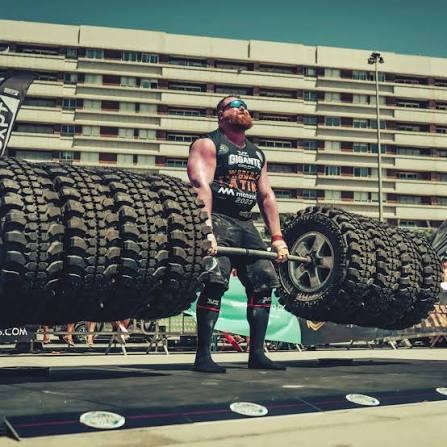
401 kilograms: the number that fixed his identity as a deadlifter. In December 2022 at Maxima, Invernizzi pulled 401 kg in the barbell deadlift, a performance listed by Strongman Italia as the Open Men's national record. Separately, Strongman Italia's tire-deadlift records show another 401 kg result from April 2022, later surpassed by Luca Prada. The two lifts must be kept separate because they came from different implements and contexts, but together they explain why deadlift became one of Invernizzi's defining event families. In strongman, the word deadlift covers a mechanical ecosystem rather than one standardized movement: conventional bar, axle, frame, car deadlift, wagon wheels, elevated pulls, tire setups and lever systems. The number of kilograms cannot be compared directly across all of them. What transfers is the ability to create force through the hips and knees, brace the torso, hold the implement and adapt the start position to changing geometry. Invernizzi's SCL results show that this transfer was real. He won the deadlift at World's Strongest Viking 2023, placed second in the car deadlift at the 2023 SCL World Finals, won the car deadlift in Serbia 2024 with eleven repetitions, won the deadlift in SCL Poland 2024 with ten repetitions and placed second in the car deadlift at World's Strongest Latino 2025. The 401 kg mark is therefore not an isolated gym number sitting outside the rest of his career. It is the maximal expression of a quality that repeatedly returned as competition points under different rules. Deadlift also became a strategic stabilizer. After a mediocre moving event, Invernizzi could often regain positions with a top pull. That capacity explains why many of his best overall competitions include a strong deadlift somewhere in the middle of the program.
What the first SCL season really meant. A circuit such as Strongman Champions League tests the ability to live inside a moving calendar. In 2022, Invernizzi competed in Portugal, Romania and Gibraltar before the national championship. That means flights, equipment transport, hotel beds, meals away from home and a basic but important problem for a 150-plus-kilogram athlete: how to recover and eat enough when the normal routine disappears. For someone with family and professional responsibilities, logistics can become almost as decisive as programming. The experience accumulated in 2022 became visible the following year. At first, his results clustered around places seven to nine. In 2023, the same variety of events was no longer entirely new, and he began winning individual events and challenging for overall podiums. Progress in strongman does not always appear as a bigger one-repetition maximum. It may be a faster transition in a medley, a better hand position in a hold, a tactical choice that prevents wasted energy or the ability to stop one attempt before fatigue becomes injury. Invernizzi became more competitively efficient. He learned to turn his best events into wins and to contain losses where he had less advantage. That logic would eventually produce the most important victory of his 2024 season in Poland, where he did not need to dominate every moment in order to dominate the final score. The 2022 campaign was therefore a travelling school. The Italian title gave him legitimacy at home. SCL gave him the experience that later converted legitimacy into international results. It also introduced the recovery problem that would define the next stage of his career: how to remain strong enough, healthy enough and technically sharp enough to perform across a long sequence of countries rather than peak for one weekend.
Vaasa 2023: from participant to potential winner. On 6 May 2023 at SCL Finland, Invernizzi finished second of twelve. It was the first major indication that the progress from his debut season was more than impression. Strongman Archives shows him winning the Hercules Hold with 69.31 seconds, an event perfectly suited to his grip profile, and scoring enough across the rest of the contest to earn his first major international podium in the database. A result like that changes the psychology of a season. Seventh place tells an athlete that he belongs in the circuit. Second place tells him that victory is possible. In a multi-event points sport, the difference between those positions is not simply more strength. It is the ability to avoid collapse in unfavorable events while maximizing exactly the moments in which an advantage exists. Finland exposed one of the specialities that would define Invernizzi over the following years: static holds. Wrecking Ball Hold, Hercules Hold, Front Hold and related tests appear repeatedly among his best event results. A 156 kg athlete can create enormous posterior-chain force, but a hold asks for something different: tolerance for forearm pain, economical posture and a relationship with time in which there is no clear repetition to complete. There are only seconds that stretch until the fingers open. Invernizzi became exceptionally good in that space. The podium in Finland was followed by more strong placements in 2023 and opened the road to the world final. Retrospectively, Vaasa is where his international identity changes. He is no longer the Italian champion testing himself abroad. He is an SCL athlete capable of taking maximum points from anyone in the right event and of remaining high enough elsewhere to challenge the overall standings.
2023, the season in which he learned to live inside the top five. After second place in Finland, Invernizzi finished fourth at SCL Serbia, ninth in the Netherlands, fifth at World's Strongest Latino, sixth at SCL Portugal, fourth at World's Strongest Viking and sixth in Cyprus. The sequence matters more than any isolated result. It shows an athlete repeatedly entering the upper half of international fields while remaining vulnerable to combinations of events that could quickly cost points. In Serbia, Viking Press brought him second place in the event. At World's Strongest Viking he won the deadlift. In Portugal he won the Frame Carry. In Cyprus he won the Log Lift. By the middle of the season he therefore had event victories or near-victories in four distinct families: pressing, deadlift, carrying and log. That makes the label of one-dimensional static specialist too simple. At the same time, stones, loading and certain movement events could pull the total down sharply. The interaction between very high event peaks and clear weaknesses made the season instructive. To reach a circuit final, an athlete does not need to be the most complete strongman alive, but he must collect enough results for his best qualities to outweigh his costly moments. Invernizzi did exactly that. The pace of competition also became intense. Repeated travel, recovery and changing equipment require the body to remain close to competitive readiness for months. For an athlete already in his late thirties, that calls for careful control of volume and fatigue. The fact that the season culminated in a world final rather than ending in accumulated injury suggests that his preparation was becoming more professional. He was not simply stronger than in 2022. He was better at being a travelling strongman.
The 2023 Italian final: second overall but a more accomplished international athlete. On 28 October 2023 in Vicopisano, Invernizzi did not retain the FI.S.MAN title. Nicolas Cambi won, with Invernizzi second and Alessandro Castelli behind them. If the career is viewed only as a sequence of national titles, the result can look like regression. The event breakdown is more revealing. Strongman Archives lists Invernizzi first in the wagon-wheel deadlift with ten repetitions and first in the sandbag toss, while he placed second in the log and carry medley. Stone Over Bar was the event in which he lost the most ground. The structure is almost a miniature of his competitive profile: exceptional deadlift, useful throwing ability, very strong overhead and carry performance, then a larger vulnerability on stones. Losing a championship on a day when two events are won does not necessarily mean the athlete became worse. It means strongman is complex enough that one weaker event can reshape the table. The timing also matters. The national final came after months of international travel and only weeks before the SCL World Finals in Sarajevo. Invernizzi's season was no longer centered exclusively on one Italian contest. Cambi earned the national title, and Invernizzi's second place simultaneously showed that the domestic scene was becoming more competitive. That development was healthy for Italian strongman. A country does not grow because one athlete wins forever. It grows when several athletes are capable of taking points from each other and carrying that standard abroad. The rivalry among Invernizzi, Cambi, Castelli, Acquaviva and newer Italian competitors made the national field less predictable and, in the long term, more internationally useful.
Sarajevo 2023: the final that turned a strong season into a historic marker. Strongman Italia presented Invernizzi's November 2023 SCL World Finals appearance as the first Italian qualification to that level and described his eventual fifth place as the highest point then reached by an Italian athlete in the Strongman Champions League system. The contest also contained a serious physical problem. According to Strongman Italia's report, Invernizzi suffered food poisoning the previous day and fainted during the 150 kg log-lift event. With three events remaining he had been the provisional overall leader. He recovered enough to complete a log repetition and continue the competition. Strongman Archives helps explain why he had climbed so high: second in the Farmer's Walk, second in the car deadlift and fifth in the truck pull before the later loss of points. The episode should be described without romanticizing risk. Fainting during an overhead event is dangerous, and continuing after a medical problem is not a universal model for athletes to imitate. Competitively, however, the final demonstrated the level Invernizzi had reached. Even in compromised condition, he remained fifth in an international final and collected major points in the events that suited him. The result also had representational value. Italian audiences no longer had to view elite strongman only as a spectacle imported from countries with deeper traditions. An athlete developed largely through the Italian scene could temporarily lead an SCL World Final. From that moment, the goal changed. It was no longer necessary to prove that an Italian could reach the stage. The next question was whether an Italian could win an international SCL contest. Invernizzi would answer that question in Poland the following year.
Why fifth place in 2023 mattered more than the number suggests. Strongman is fragmented across promoters, circuits and titles, while the general public often compresses the entire discipline into World's Strongest Man. For an athlete from a nation with a smaller infrastructure, Strongman Champions League can have enormous practical importance. It offers a long international calendar, repeated exposure to high-level opponents and the chance to accumulate technical experience across many countries. Reaching the World Finals therefore reflects more than one fortunate invitation. It requires a season of results, availability and recovery. Invernizzi turned that series into his principal competitive laboratory. Fifth in Sarajevo did not make him the strongest man in the world, and it should not be described as directly equivalent to a World's Strongest Man final. It is important in the exact context in which it occurred. He showed that an athlete coming out of the Italian national system could enter a real fight for a high SCL final placing. More importantly, he created precedent. After that result, Italian appearances in international strongman could no longer be dismissed as novelty invitations. There was evidence of competitive capacity. Precedent matters in small sports because it affects sponsors, gym owners, promoters and young athletes. One result changes what seems possible. Invernizzi then used the visibility to expand coaching, events and ELEVA, converting individual performance into capital for the wider ecosystem. This is a recurring theme in his career: results do not remain suspended in archives. They are reinvested in projects that make the next generation less dependent on improvisation. If 2022 was the year of the Italian title, 2023 was the year his name became an internationally recognizable reference inside the SCL world.
Competitive profile: grip, deadlift and overhead before everything else. Statistical summaries of Invernizzi's available results place grip events at the top of his event profile, followed by deadlift and overhead work. Strongman Archives confirms the pattern through repeated wins in Hercules Hold, Wrecking Ball Hold, Front Hold, deadlift, car deadlift, frame carries and log or pressing variations. That does not mean he is flawless in every static event. Strongman is too variable for such labels. It means that his body and technique are optimized to create and sustain large force. Grip is the clearest example. In 2025 he won the Wrecking Ball Hold at Iceman and the Hercules Hold at SCL Italy, and he was second in the same Hercules Hold at the 2025 World Finals despite a difficult overall contest. Front Hold became another weapon, including wins in Cyprus 2024 and SCL USA 2025. These events share a brutal simplicity: weakness cannot be hidden with speed. The athlete remains in an uncomfortable position until the system fails. Deadlift adds the dimension of producing force from the floor or an elevated start. Overhead results show that his mass is not passive. He can stabilize and accelerate large loads above the head. On the other side, available data point to larger problems in loading races and some stone sequences. That contrast makes the profile credible. A real strongman is not a character with every attribute maximized. He is a collection of advantages and vulnerabilities that promoters rearrange every weekend. Invernizzi became dangerous not because he eliminated every weakness, but because he learned to make his strongest events worth enough points that the weaknesses could sometimes be survived.
Grip: the event family in which time becomes the opponent. If there is one category that describes Invernizzi better than any photograph of a heavily loaded bar, it is grip. His international results include victories in the Hercules Hold, Wrecking Ball Hold and Front Hold, events in which the athlete cannot accelerate the finish through one violent effort. He has to endure. At SCL Finland 2023 he won the Hercules Hold with 69.31 seconds. In Cyprus 2024 he won the Front Hold. At Iceman 2025 he won the Wrecking Ball Hold and placed second in the Front Hold. At the Italian SCL stage in 2025 he won the Hercules Hold with 76.56 seconds, while at the World Finals in South Africa he finished second in the same event. Those results explain why statistical profiles place grip at the top of his event families. Biomechanically, a hold distributes the problem through the forearms, fingers, shoulder girdle, trunk and overall posture. An athlete who fights the implement only with the arms spends energy rapidly. One who can turn the entire body into a stable structure reduces tiny slips that become full seconds. To the audience, the difference is nearly invisible until the handles suddenly leave the hands. To the competitor, every second becomes a negotiation between pain, breathing and position. Invernizzi turned that environment into a reliable source of points, even during contests in which his overall placing was mediocre. That consistency says something important about his principal strength. Form can fluctuate, a medley can unravel, a stone can refuse to reach a platform, but his ability to hold difficult loads remained one of the most predictable elements of the career. Grip, in his case, is not an accessory to strength. It is one of the ways in which strength is converted into time.
Deadlift as a language rather than one movement. The 401 kg record is the easiest number in Invernizzi's résumé to understand, but the career shows that his more important quality is adaptability across deadlift variations. He won the deadlift at World's Strongest Viking 2023, placed second in the car deadlift at the 2023 SCL World Finals, won the car deadlift in Serbia 2024 with eleven repetitions, won the deadlift in Poland 2024 with ten repetitions and took second in the car deadlift at World's Strongest Latino 2025. Each event uses a familiar basic chain while changing the actual mechanical experience. A car deadlift may use side handles and a lever that alters resistance through the range. A frame changes hand position and the relationship between the load and the body. Oversized wheels raise the starting point. In strongman, athletes cannot confuse the number printed beside an event with its true difficulty. This is where Invernizzi's technical experience matters. He is not simply a man who once pulled 401 kg. He transferred pulling strength into repetitions, different implements, competition fatigue and different surfaces. That versatility is harder to summarize in one record but more valuable on a score sheet. Deadlift often worked as a strategic recovery event for him as well. After losing positions in a fast loading race, he could regain substantial points through a top pulling result. Many of his best contests include precisely that pattern. The pull re-stabilizes the table. This makes the deadlift part of his competitive identity in a deeper sense than personal-record culture usually allows. It is a reliable way of reasserting the qualities around which his body was built: bracing, posterior-chain force, patience off the floor and the willingness to make difficult weights look repeatable.
Overhead strength: log, Viking Press and the problem of efficiency. Another pillar of Invernizzi's profile is pressing above the head. He won the Log Lift in Cyprus 2023, finished second in the Viking Press in Serbia that year and won the Log Lift at World's Strongest Latino 2025. Those results matter because overhead in strongman is not one discipline. The log demands an efficient clean, fast transfer from lap or belt into the rack position and then coordinated leg, trunk and arm drive into lockout. Viking Press guides the path but can impose brutal repetition demands. The giant dumbbell changes everything again. Invernizzi is not defined by a world-record log, yet his results indicate a level high enough to win SCL events when the load and format suit his combination of power and repetition capacity. In a sport where otherwise excellent athletes can lose entire contests through one weak overhead discipline, that competence has disproportionate value. It also illustrates the difference between gym strength and competition scoring. A perfect log while rested earns nothing if, after a truck pull and farmer's walk, the clean slows and each lockout costs extra seconds. Invernizzi learned to press in that environment. He was not always among the top athletes, but often enough for overhead to become a productive category. In 2025, the log victory in Esposende formed part of the near-flawless opening sequence that built the World's Strongest Latino title. At his best, overhead does not look like a separate trick added to a deadlifter's profile. It looks like part of the same architecture: large absolute force, trunk rigidity and enough technical economy to repeat the movement after the body is already tired.
Weaknesses belong in the profile rather than in a footnote. Available statistics and competition sheets suggest that Invernizzi loses more points on average in loading races and certain stone events than in grip, deadlift or overhead. At the 2023 Italian final, Stone Over Bar was the event that cost him most in the contest with Nicolas Cambi. In other competitions, Atlas Stones or fast medleys pulled down totals that had been constructed through top static placings. The pattern is logical for a very large athlete. Body mass supports stability and absolute strength, but it becomes a tax when the athlete must repeatedly accelerate, decelerate and reposition himself. In loading, the object must be lifted, carried, adjusted and placed, often inside a minute. It is not enough to be stronger than the stone or sandbag. The athlete must be more efficient than the opponent. Invernizzi has also produced strong moving-event results, including a Frame Carry victory in Portugal 2023 and a Sandbag Toss win at World's Strongest Latino 2025, so it would be wrong to call him simply slow. The difference is variability. Moving and loading events produced a wider range of outcomes than grip or deadlift. That contrast is essential to a serious evaluation. A biography that lists only records creates a cardboard superhero. A real competitive profile includes where the points disappear. Invernizzi became dangerous in SCL not because every weakness vanished, but because he learned to limit the damage enough for his event wins to decide contests. Poland 2024 and Esposende 2025 are the clearest examples. Neither required perfection. Both required his strongest qualities to be worth more than his weaker ones cost.
The first half of 2024: consistency without the final explosion. Invernizzi opened the international year with fifth at SCL Hungary, then fifth in Serbia, where he won the car deadlift with eleven repetitions. He followed with thirteenth in the Netherlands, one of his weakest results of the year, then seventh at World Record Breakers and tenth in Estonia. Viewed in isolation, the sequence can look like a contradiction of the progress made in 2023. In reality, it shows how unstable strongman standings can be when the events change completely from weekend to weekend. An athlete may win one discipline and still finish in the bottom half if two or three other events are poor. Invernizzi nevertheless kept accumulating starts and searching for the right competitive combination. That is one advantage of a circuit with many stages: a bad result can become information rather than the verdict on an entire season. Recovery was also becoming a larger variable. Every contest brings inflammation, minor tissue damage, travel stress and days in which normal training must be modified. For an athlete approaching forty, a dense international calendar requires careful autoregulation. The fact that Invernizzi continued to compete frequently suggests an acceptance that not every stage could be a perfect peak. During the summer, the accumulated experience began to convert into results. Second place in Portugal and victory in Poland transformed the meaning of the year. The first half becomes important precisely because it was not triumphant. It shows how much ordinary work and how many uncelebrated placings can precede the one weekend that becomes part of a career headline.
Esposende 2024: second place and the sign that victory was close. In August 2024 at SCL Portugal, Invernizzi finished second overall. Strongman Archives records him winning the Truck Pull and placing strongly enough across the rest of the contest to challenge for the title. The result matters because of continuity. More than a year had passed since the podium in Finland, and several months of mixed results had followed. Another international second place demonstrated that 2023 had not been an isolated peak. Truck Pull is an event in which large body mass can become an advantage if the athlete finds the correct angle and turns each step into continuous extension. Yet the vehicle, surface, rope and gradient can change the difficulty completely, making direct comparisons between competitions unreliable. For Invernizzi, the event win offered another reminder that his profile was not static-only. More importantly, the overall placing came through a balanced contest rather than one victory surrounded by poor finishes. That is the type of performance required to win a stage. First in one event delivers maximum points and an obvious highlight, but overall championships are frequently built through second, third and fourth places. By this stage Invernizzi was learning to manage the table rather than simply attack an implement. Portugal was the general rehearsal. A few weeks later in Gdańsk, the same mature consistency would be enough for the first SCL victory of his career. Taken together, the two contests form the strongest international phase of his 2024 season and show how tactical maturity can compensate for the fact that speed and stones are not always at the same level as grip and deadlift.
Gdańsk 2024: the first SCL victory. On 24 August 2024, Andrea Invernizzi won Strongman Champions League Poland with 45 points, ahead of Peter Juhasz on 40 and Oskar Ziółkowski on 38. FitnessVolt described the result as his first major international title, while Strongman Archives confirms the overall victory. What makes the contest important is not only first place but the method. Invernizzi won the deadlift and accumulated enough strong finishes elsewhere to build a five-point margin at the end. He did not need to turn every discipline into a demonstration. He did what mature multi-event competitors do: maximize the strongest areas and refuse to surrender too much in the rest. For an athlete who had entered SCL in 2022 around places seven to nine, the road to victory is almost textbook. First he learned the circuit. Then he reached a podium. Then he reached the World Final. Only after that did he win. There was no miraculous invitation or single record lift that artificially elevated his name. The victory came after dozens of starts, travel days and event variations. For Italian strongman, the result carried additional weight. Invernizzi was no longer merely a domestic champion who could survive internationally. He could beat a field of professional strongmen from several countries over an entire competition. The phrase first Italian SCL finalist now had a second chapter: qualification had become victory. Gdańsk therefore stands among the central markers of his career and among the strongest arguments for the broader project he was building at home. International credibility makes domestic infrastructure easier to believe in.
Montichiari 2024 and the problem of championships with similar names. Local reporting and ELEVA record Invernizzi winning an event called Italy Strongest Man on 5 October 2024 in Montichiari, organized within the Italian Strength League framework. Some promotional material refers to it as his second Italian title. At the same time, Strongman Archives records a separate 2024 FI.S.MAN Italy's Strongest Man final in Vicopisano won by Emanuele Greco. Both statements can be true if the organizations are kept distinct, and this profile deliberately refuses to merge them. Niche sports often contain federations and promoters using very similar competition names. To a casual reader, the result can look contradictory; to an archive, it is a nomenclature problem. For that reason, Invernizzi's 2024 achievement is recorded here specifically as victory at the Italian Strength League event in Montichiari, not as a replacement for the FI.S.MAN result in Vicopisano. The clarification does not diminish the performance. It places it correctly. Invernizzi entered the event after winning SCL Poland and while ELEVA was itself becoming part of the infrastructure promoting Italian strongman. His career was becoming dual in nature: competitor and builder of competitive platforms. When an athlete is also commercially involved in the surrounding ecosystem, clarity about organizers becomes even more important. This profile therefore separates FI.S.MAN, SCL and ISL achievements rather than compressing differently governed titles into a more spectacular but less accurate statistic. Precision is part of respecting the sport.
The end of 2024: Cyprus, Alanya and the lesson that one victory solves nothing permanently. After Poland and the Montichiari event, Invernizzi continued his SCL season. In Cyprus he finished fifth and won the Front Hold, another confirmation of his strength in static endurance. At the SCL World Finals in Alanya, Turkey, however, he finished eleventh of twelve. For anyone who tries to read athletic careers as straight lines, the gap between an August victory and an eleventh-place final may appear inexplicable. Strongman offers very few guarantees. Event selection, accumulated fatigue, daily form and a handful of seconds can move an athlete dramatically through the table. A title does not immunize anyone against a poor competition. The World Final also arrived at the end of a season in which Invernizzi had travelled repeatedly and accumulated a large workload. This part of the year matters in a mature assessment. The 2024 season should not be summarized only by Gdańsk. It contained placements ranging from thirteenth to first, revealing both a high ceiling and significant variability. For an athlete whose reputation increasingly rested on reliability, eleventh is information just as real as victory. At the same time, qualifying for the final for a second consecutive year demonstrated that his presence in the circuit was not accidental. He had learned how to survive a long season. The next challenge was to show that one international victory could be repeated. In 2025, he would not win the World Final, but he would capture a second major SCL title at World's Strongest Latino.
Guinness World Records: where strongman meets television. The first of three Guinness titles attributed to Invernizzi was achieved on 15 December 2023 in Monza on the set of Lo Show dei Record: the fastest time to flip five cars over 50 metres, 1 minute 7.10 seconds. On 1 February 2024 in Milan he established a second record, eleven lifts of a double throne in one minute. These are spectacle-oriented challenges, very different from a standard SCL event, but that difference helps explain his versatility. Guinness requires a measurable, verifiable rule. Television requires an immediately readable image. Strongman supplies objects that look impossible. Invernizzi sits at the intersection of those three systems. Flipping five cars demands force, rhythm and rapid repositioning after each object. Repeatedly lifting a double throne turns an unfamiliar object into a timed repetition test. Neither performance should be compared directly with a 401 kg deadlift or an SCL championship because the purposes and standards differ. They do, however, have public value. For a niche sport, high-audience television and certified records put the athlete in front of viewers who may never watch an SCL World Final. Invernizzi became not only a competitor but an interpreter of strength for mainstream television. His agency describes him as both athlete and consultant for Lo Show dei Record across multiple seasons, suggesting that his role extended beyond appearing in front of the camera. For a mechanical engineer who competes in strongman, that combination is logical. Spectacle requires safe mechanics before it can appear impossible.
The third Guinness title, 2025: fifteen repetitions and a consolidated media identity. Guinness World Records records that on 3 February 2025 in Milan, Andrea Invernizzi completed fifteen lifts in one minute in an event using barrels mounted on a standing chest-press machine. Local media in Peschiera Borromeo presented the performance as his third Guinness title and described the spectacular television setup as a structure carrying twenty beer barrels, with a total announced mass of roughly 525 kg in the show's configuration. That number should not be confused with a free 525 kg press. The machine, lever system and geometry define the effective resistance, which is precisely why the official Guinness title is framed around repetitions on the specified apparatus rather than simplified into an equivalent bench press or log press. The distinction matters in a social-media environment where spectacular video can turn a complicated mechanical challenge into a false kilogram claim within hours. Invernizzi understood the communication power of the image without needing to distort it. A line of barrels moving above a strongman communicates physical force instantly in a way that an SCL points table requires explanation to achieve. Lo Show dei Record therefore helped him build a public identity beyond dedicated strength-sport audiences. Local reporting also connected the third record with a personal dedication to his wife, offering a brief glimpse of family without turning private life into permanent content. That balance is notable. Public visibility expanded, but intimate details remained mostly protected. In biographical terms, the third Guinness record is not simply another entry in a list. It marks the consolidation of a parallel career as a television figure of strength, while his SCL results continued to prove that the media persona still belonged to an active international competitor.
2025: a season in which the specialities remained alive. Invernizzi opened the international year with fourth at SCL Iceman in Joensuu, Finland. He won the Wrecking Ball Hold and placed second in the Front Hold, an almost perfect confirmation of his grip profile. In Serbia he finished sixth, then in May at SCL Italy in Crema he placed fifth and won the Hercules Hold with 76.56 seconds. In the Netherlands he was tenth, and at World's Strongest Viking in Hämeenlinna he finished sixth. By the middle of the year there was no overall podium yet, but event wins showed that the physical foundation remained internationally useful. For an athlete turning forty, that continuity deserves attention. High-level strongman creates substantial wear on the spine, hips, knees, biceps and tendons, and a long travel schedule leaves relatively few perfect blocks for uninterrupted construction. Invernizzi did not choose a strategy of appearing only once or twice a year under ideal conditions. He continued to compete frequently, gaining experience but also accepting weekends on which peak form was impossible. The 2025 season displays both the advantage and the cost of that choice. Mid-table overall placings coexist with winner-level results in particular events. That means a suitable competition can suddenly change the direction of the year. In August at Esposende, that is exactly what happened. The combination of log, sandbag toss, car deadlift, truck pull and the rest of the program met an Invernizzi who was efficient and healthy enough to turn his best qualities into an overall win. The season did not build smoothly toward the title. It arrived through persistence until the right configuration appeared.
World's Strongest Latino 2025: the second major international title. On 2 August 2025 in Esposende, Portugal, Invernizzi won SCL World's Strongest Latino with 52 points, ahead of fellow Italian Gianluca Ardenghi on 47 and France's Alexandre Hulin on 44. FitnessVolt noted that he did not finish lower than second in any of the first four events. He won the Sandbag Toss and Log Lift and took second in the Car Deadlift and Truck Pull. It is close to the ideal model for winning strongman: not one absurd performance, but a refusal to give points away. The sandbags displayed explosive coordination, the log activated one of his better overhead skills, the car deadlift used his posterior-chain strength and the truck pull converted body mass into traction. When four consecutive events expose four different qualities and the athlete remains in the top two in all of them, the overall table begins to build itself. The contest was also meaningful for Italian strongman because the top two places went to Italians, Invernizzi and Ardenghi. Only a few years earlier, that kind of result at an international stage would have looked improbable. By 2025 it had become concrete evidence of a developing national scene. For Invernizzi personally, the title confirmed that Poland 2024 had not been an isolated exception. He could win again in SCL under different conditions and in a different country. At forty, the second major international victory carried special weight. A late-starting career had not entered a ceremonial maintenance phase. It was still producing peaks. Alongside Gdańsk and the 2023 World Final, World's Strongest Latino forms one of the three clearest markers of his elite international period.
The second half of 2025: after the peak, the circuit becomes difficult again. Following World's Strongest Latino, Invernizzi continued competing. At the World Truck Pull Championships he finished in the lower part of the field, then at SCL USA he placed tenth but won the Front Hold. In Dubai he finished twelfth, and at the SCL World Finals in Upington, South Africa, he was eleventh of twelve while still taking second in the Hercules Hold. The sequence shows why a peak performance should never be confused with a new permanent level. Strongman is a sport of form windows. Invernizzi could be the best athlete in an international field in August and then fight near the back of a different field a few months later. There is no contradiction. Some programs activate grip, deadlift, pressing and pulling, while others emphasize speed, loading or combinations that cost him more. Seasonal fatigue matters too. The title of the contest does not change the arithmetic: eleventh remains eleventh and belongs in a complete biography. The value of the 2025 season is precisely that poor results do not erase the victory, just as the victory does not erase poor results. Together they produce the portrait of an international athlete who still possessed a championship ceiling without consistent domination. A third SCL World Finals appearance was itself evidence of continuity, even if the result could not match fifth place from 2023. Second place in the Hercules Hold at the final also showed that his defining speciality remained competitive at the end of a long year. For a forty-year-old athlete, persistence at that level is one of the most important statistical stories of the season.
ELEVA: from personal career to infrastructure. In 2022, Andrea Invernizzi and Alessandro Castelli founded ELEVA Srls, a project combining coaching, events, products and the development of strength sport. For Invernizzi's biography, ELEVA matters because it marks the point at which experience stops being only personal capital. Years of training, engineering, competition and international professional work are converted into a structure that other athletes can use. The company explicitly frames its goal around raising the standard of Italian strongman, and even the name functions like a mission statement. Invernizzi and Castelli did not build their partnership out of a theoretical business exercise. They arrived through real competitive rivalry and the practical need for equipment, knowledge and events. That gives the project a different kind of credibility. They know a competition from inside the lane and from behind the barriers. For Invernizzi, entrepreneurship is also a natural extension of engineering. An event must be budgeted, designed, assembled, judged and made safe. A coaching program must fit the individual. A product must survive the forces imposed on it. At the same time, when an active athlete is commercially involved in the surrounding ecosystem, a responsible archive must distinguish promotion from independent evidence. This profile therefore treats company claims as valuable first-party context while using Strongman Archives, Guinness and specialist media to verify competition results. ELEVA can explain the project's intentions; independent records explain what happened on the field. Together, the source types show an athlete beginning to build something capable of surviving his eventual retirement. That may become the more durable part of the story.
The coach who first remained a student. ELEVA's coaching material presents Invernizzi as a coach while also naming Luke Fullbrook in connection with his own preparation and Davide Gariboldi in connection with nutrition. That information matters because it contradicts the popular image of the elite strongman as a pure autodidact who succeeds by instinct and aggression. Invernizzi sought expertise and worked inside a system. A good coach does not remove the athlete's autonomy; the coach structures it. For someone with an engineering background and a natural tendency to analyze, external coaching can also act as a brake on the urge to turn every successful training day into a maximal test. In his own coaching, ELEVA emphasizes individualized planning and the compatibility of programming with the athlete's actual life. Invernizzi's personal experience is useful here because he knows what it means to train around work, children and business obligations. Some extreme features of his own story, including very late-night sessions and unusually high calorie intake during periods of maximal body mass, should not be presented as universal recommendations. They were contextual solutions inside the life of an elite Open strongman, not general health prescriptions. His value as a coach is not the ability to make clients copy his schedule. It lies in translating principles: progression, specificity, technical efficiency, recovery and adaptation to a clearly defined goal. The movement from athlete receiving coaching to professional providing it is therefore one of the important developments of his later career. It also reinforces a central theme in his biography: knowledge is valuable when it can move beyond the person who first paid for it with years of trial, fatigue and mistakes.
Event organization and the bridge to international strongman. Invernizzi's agency material mentions his involvement in organizing an Italian Strongman Champions League stage in 2025, while ELEVA has consistently promoted competitions, workshops and community initiatives. This role is essential to understanding his broader impact. An athlete can inspire through results, but infrastructure appears only when somebody books the venue, secures sponsors, builds implements, coordinates judging, solves transport and convinces an audience to attend. Italy did not inherit the same strongman logistics as the major historical nations of the sport. Bringing a series such as SCL onto Italian ground reduces the distance between domestic athletes and international standards. The agency also lists workshops or collaborations involving names such as Martins Licis and Rayno Nel. Events of that kind create a form of value that does not appear immediately in results. They accelerate knowledge transfer. A younger athlete can learn in one day technical details that might otherwise require years of inefficient experimentation. Invernizzi, who began in a period of more limited access to specialist knowledge, appears to be investing precisely in the problem he once experienced. This is legacy work before retirement. An athlete does not need to wait until the final contest to influence the next generation. He can compete on Saturday and help build the environment in which someone else will compete the following year. For a complete profile, that work matters as much as another fifth place in a stage. The scoreboard says how good the athlete was on one weekend. Infrastructure reveals whether his presence changed the environment in which the sport continues.
Engineering, design and objects that must survive very strong people. Professional material about Invernizzi mentions sports-design activity and technical consulting, including experience connected to Taiwan. In strongman, that is more than an interesting line on a résumé. The sport depends on objects designed for unusual loads: frames, yokes, handles, hold structures, car-deadlift mechanisms, ramps, axles and vehicle-pull systems. When users can create forces many times beyond ordinary fitness demands, the margin for structural error must be treated seriously. A weak weld, poor anchor point or badly calculated lever can transform spectacle into injury. Invernizzi has the rare advantage of understanding the object from both ends: as an engineer who can think about how it is constructed and as an athlete capable of stressing it near its intended limits. That dual perspective naturally supports later work in event and television consulting. A television producer can imagine a spectacular challenge. An engineer-strongman can ask whether it can be built, transported, measured, judged and performed safely. Not every implement used on a show can or should be individually attributed to him, because public documentation does not support such a claim. The broader professional identity, however, is well established. It adds depth to the idea of a modern strongman. The athlete is not necessarily only the end user of equipment. He can become designer, consultant and organizer. In Invernizzi's case, engineering did not disappear when strength became visible. It became one of the tools through which strength could be turned into projects.
Television and the construction of a public identity without abandoning sporting credibility. Lo Show dei Record gave Invernizzi a stage far larger than the spectator area at most SCL competitions. Mediaset presented him in visually immediate strength challenges, including appearances beside other strongmen such as Evans Nana, while Guinness certified three records achieved in the television environment. His agency describes multiple seasons of involvement as athlete and consultant. Exposure of that kind is double-edged. To a general audience, televised strongman can easily collapse into stunt logic: the big man moves the big object, the audience applauds and the program moves on. For an athlete, however, that platform can also show that years of preparation, rules and technical control sit behind the image. Invernizzi continued competing seriously in SCL while his media presence grew, preserving the distinction between active athlete and television performer. In 2024, while his Guinness profile and television visibility were expanding, he won SCL Poland. In 2025, the year of his third Guinness title, he won World's Strongest Latino. The overlap is essential. Television amplified the image, but sporting results continued to support it. His public handle @big_andre_one and ELEVA's communication also helped turn a local identity into an internationally recognizable one. The nickname does not construct an elaborate character separate from the man. It is a simple extension of name and size. In an era in which athletes are almost required to become their own media channels, that directness may be an advantage. The career never needed a fictional mythology because the actual combination of engineer, father, international strongman and record-show consultant was already unusual enough.
Physical Italia 2026 and the balance sheet of a career that remains open. In 2026, Andrea Invernizzi was included among the 100 contestants of Netflix's Physical Italia: da 100 a 1, the Italian adaptation of the Physical: 100 format. Official casting material identified him as a strongman, while coverage of the released episodes reported that his roughly 156 kg bodyweight, a major advantage in his own sport, became a disadvantage in the opening challenge, a balance test on bars suspended over water. He was eliminated early. The episode is almost a perfect metaphor for specificity. A body built to deadlift 401 kg and hold brutal handles for more than a minute is not automatically the ideal body for every athletic task. Strength is an adaptation, not a universal superpower. As of 29 September 2026, the date of this profile update, Invernizzi remains treated as an active athlete and continues to be connected with coaching, events and ELEVA. The biography should therefore be read as a living document rather than a completed legacy assessment. The strongest established markers are already clear: 2022 FI.S.MAN national champion, 2023 national runner-up, first Italian SCL World Finals qualifier, fifth in the 2023 SCL World Finals, SCL Poland 2024 winner, World's Strongest Latino 2025 winner, a 401 kg raw deadlift and three Guinness World Records titles. Beyond the scoreboard, his distinctive contribution is the convergence of professions: mechanical engineer, entrepreneur, father of three, coach, organizer, media consultant and strongman. Sources for this profile include Strongman Archives, Strongman Italia, specialist SCL reporting and statistical databases such as FitnessVolt, Guinness World Records, ELEVA, local newspaper 7giorni, L.A. Design Factory material and official Endemol or Netflix communications. Where those sources disagree, the difference is preserved and contextualized rather than converted into invented certainty. For a biography about strength, that is the appropriate conclusion: not mythology, but the exact weight of what can be demonstrated.
Body mass, food and the invisible cost of the Open division. One element that appears repeatedly in ELEVA material about Invernizzi is the difficulty of building and maintaining a body above 150 or 160 kg. To an outside observer, heavyweight strongman can create the impression that food is the easy part: eat more, become larger, lift more. The reality is more complicated. Useful mass takes years to build, and maintaining it while training hard, travelling and recovering can turn meals into scheduled work. ELEVA has described periods of intake around 8,000 calories per day, a figure that should be understood as contextual reporting about a very large Open strongman rather than a general nutrition recommendation. A 156 kg body uses substantial energy simply moving and regulating temperature before the first competition implement is touched. The same mass can provide stability and absolute-force advantages in deadlift, holds and truck pull, while increasing the metabolic cost of medleys, loading and speed events. Every kilogram therefore has two faces. Invernizzi had to find a point at which body mass produced more competitive value than it consumed. This is where nutrition planning and monitoring become as important as the strength program itself. Modern strongman can no longer treat food entirely through the folklore of giant meals. The athlete still has to breathe, move, sleep and recover between sessions. Those constraints become increasingly relevant with age. Invernizzi maintained a very high bodyweight into his forties while continuing to travel and compete, suggesting constant adjustment rather than a blind race toward the largest scale number possible. His profile shows why the Open division is ultimately an optimization problem: absolute strength rewards mass, but complete performance requires that the mass remain functional.
Age and the advantage of a late-starting career. In many sports, beginning serious competition after thirty would be almost incompatible with international success. Strongman has a different chronology. Maximal strength, implement technique and tactical experience can continue developing at ages when pure speed in other disciplines may already be declining. Invernizzi used that window unusually well. At thirty-seven he won the FI.S.MAN national title; at thirty-eight he placed fifth in the SCL World Finals; at thirty-nine he won SCL Poland; at forty he won World's Strongest Latino. That sequence is unusual and shows that his competitive peak arrived during a period when athletes in many other sports are already retired. The window should not be romanticized. Age also increases recovery cost, and dense calendars require more selective loading. Invernizzi's advantage was that professional maturity and adult experience entered the sport with him. He did not have to learn simultaneously how to become an adult and how to become an elite athlete. He already understood projects, deadlines, family and responsibility. The problem was learning how to fit strongman among them. A late beginning probably reduced the total number of years available at his absolute peak, but it also gave him a different kind of stability. There is a broader lesson for the development of Italian strength sport. A growing scene can discover high-level competitors not only among teenagers but among adults arriving from other sports and professions. Invernizzi is not proof that anyone can become a champion at forty. He is documented evidence that strength development can follow a much longer timeline than ordinary sporting culture often assumes. His career is therefore important not only because of age itself but because it expands the range of plausible routes into the sport.
His place in the transformation of Italian strongman. To understand Invernizzi's importance, he should be viewed not only against international rivals but alongside Alessandro Castelli, Nicolas Cambi, Paolo Acquaviva, Emanuele Greco, Gianluca Ardenghi and the other athletes who made the Italian scene denser. A country does not develop a sport through one champion. It develops through rivalries good enough for domestic competition to become real preparation for international fields. Invernizzi emerged while that transition was accelerating. His 2022 title followed the influence of an earlier generation; his second place in 2023 immediately showed that the new champion could be beaten; the Italian one-two at World's Strongest Latino 2025, with Invernizzi first and Ardenghi second, offered one of the clearest images of collective progress. At the same time, ELEVA, international stages and workshops began reducing technical isolation. If an Italian athlete a decade earlier had to travel for almost every direct contact with elite strongman knowledge, the following generation could increasingly encounter expertise at home. That effect is difficult to quantify but central to development. Invernizzi is not solely responsible for the evolution of an entire national scene, and it would be inaccurate to frame him that way. His role is more specific: he was simultaneously a competitor, a visible example of SCL access, an organizer and an entrepreneur during a period when all of those functions were needed. In the early history of a small sport, people who carry multiple roles can accelerate change because they connect domains that would otherwise remain separate. An international result attracts attention; attention can attract sponsors; sponsors make events possible; events give other athletes experience; experience produces new results. Invernizzi's career sits inside that feedback loop.
How sources about a niche sport should be read. Researching Andrea Invernizzi illustrates a broader problem in strongman history: no single archive is perfect. Strongman Archives is exceptionally useful for standings and event results but does not contain every regional contest or exhibition. National federation sites may preserve records that international databases omit. Promoters and talent agencies know personal biography but naturally present athletes in a favorable light. Local newspapers capture community and family context while sometimes simplifying championship names. Guinness is the primary source for Guinness titles, while Netflix and Endemol are the appropriate sources for participation in their own productions. A serious profile has to use these materials together rather than asking one source to answer every question. That is why this biography explicitly preserves the height discrepancy, the small disagreement around the exact birth date and the distinction between FI.S.MAN and Italian Strength League competitions. Similarly, the agency claim of more than fifty-five competitions is not presented as identical to the smaller Strongman Archives count. The first may include local competitions, exhibitions and events that the second database does not index. This caution does not weaken the profile. It makes it more useful. A good archive is not one that pretends every source is perfect. It allows readers to see where certainty is high and where context remains necessary. Strongman is still small enough that important results live across federation pages, PDFs, promoter posts and local journalism. Preserving its history therefore requires comparison. Invernizzi's biography is, in that sense, also an example of how to document a sport that is growing faster than its own archival infrastructure.
A legacy that cannot yet be closed. At the end of September 2026, it would be premature to speak about Andrea Invernizzi entirely in the past tense as an athlete. Current material still presents him as an active strongman, and his projects keep him central to the community even when he is not on a particular start list. If he stopped tomorrow, the résumé would already be substantial enough for a clear place in recent Italian strongman history: a FI.S.MAN title, SCL podiums and victories, the first SCL World Final appearance by an Italian, a 401 kg raw deadlift, three Guinness World Records titles and an entrepreneurial infrastructure built with Castelli. Yet the most interesting feature is that these elements do not form a conventional career sequence. Invernizzi did not abandon engineering for sport and then sport for business in clean stages. He layered them. He trained at night after work, travelled to competitions while raising a family, became a coach while remaining a student of his own coaches, organized events while still trying to win them and entered television without abandoning international scoreboards. That overlap may be his most distinctive contribution. He represents a contemporary model of strongman in which the athlete does not live only through trophies but builds a small economic and cultural system around accumulated experience. It remains to be seen how long he will continue competing and whether future athletes developed around ELEVA will surpass his results. If they do, that would not necessarily reduce his importance. It may become the best evidence that the infrastructure worked. In sport, legacy sometimes begins when the next generation no longer has to repeat every difficulty faced by the people who built the road.
Iron Hall data
401 KG
Barbell Deadlift · Italian Open Men's record listed by Strongman Italia; Maxima 2022, Vicopisano, 17 December 2022
Verified
401 KG
Tire Deadlift · Former Italian Open Men's record listed by Strongman Italia; Maxima 2022, Carpi, 23 April 2022
Verified
2022
First Open national title. Strongman Italia reported 19.5 points across five events.
Champion
2022
401 kg raw deadlift listed in the Strongman Italia record register.
Italian Open Men's record
2023
First major international podium recorded in the SCL circuit.
2nd place
2023
Continued his run of top finishes during the 2023 SCL season.
4th place
2023
Top-four finish in Hämeenlinna, Finland.
4th place
2023
National runner-up behind Nicolas Cambi.
2nd place
2023
First Italian to qualify for the SCL World Finals; Strongman Italia described the result as the highest point reached by an Italian athlete in the circuit to that date.
5th place
2023
Achieved in Monza on the set of “Lo Show dei Record” on 15 December 2023.
World record: 1:07.10
2024
Achieved in Milan on 1 February 2024.
World record: 11 lifts
2024
Top-five finish in a 13-man SCL field.
5th place
2024
Won the car-deadlift event with 11 repetitions.
5th place
2024
SCL podium in Esposende; won the truck pull and placed second in multiple events.
2nd place
2024
First major international SCL victory with 45 points; built on consistency, including first place in the deadlift according to Strongman Archives.
Champion
2024
Winner of the ISL event in Montichiari. This contest is distinct from the 2024 FI.S.MAN “Italy's Strongest Man” final held in Vicopisano.
Champion
2024
Second consecutive appearance at the SCL World Finals.
11th place
2025
Won the Wrecking Ball Hold and placed second in the Front Hold.
4th place
2025
Won the Hercules Hold with 76.56 seconds.
5th place
2025
Won with 52 points. Took event wins in the Sandbag Toss and Log Lift and placed second in the Car Deadlift and Truck Pull.
Champion
2025
Third Guinness title; achieved in Milan on 3 February 2025 and featured on “Lo Show dei Record.”
World record: 15 lifts
2025
Third SCL World Finals appearance; second place in the Hercules Hold.
11th place
2026
Selected among the 100 contestants in the first Italian edition. He was eliminated in the opening challenge, a balance test on bars above water.
Contestant